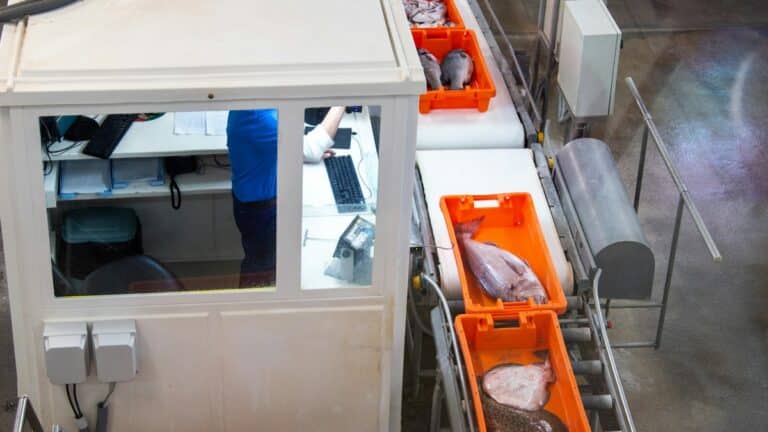

For private-label food sourcing in Iceland, the clearest documented contract or white-label route is Akraborg’s canned seafood production. Other relevant Icelandic manufacturers and development partners include Ísstormur, MS Iceland Dairies, KÚ Skyr, Góa-Linda, Nói Síríus and Lýsi. These seven businesses have different roles: some actively advertise custom products, while others are verified manufacturers whose willingness to make a retailer’s brand must be established before contracting.
Research checked 1 November 2026. This guide does not suggest all seven are confirmed private-label packers. It separates explicit white-label offers from custom-recipe services, licensing specialists and food factories that require a capabilities enquiry. Company history, revenue, employees, factory counts and product-market share are included only where the reporting entity, year and definition can be checked.
Seven Icelandic food manufacturing and private-label routes at a glance
| Business | Category | Evidence level |
|---|---|---|
| Akraborg | Canned cod liver and related seafood | Verified white-label canned fish producer |
| Ísstormur | Fish and seafood ready products and semi-finished goods | Icelandic seafood processor offering tailored recipes; contract-brand confirmation needed |
| MS Iceland Dairies (Mjólkursamsalan) | Skyr, cheese, butter, milk and cultured dairy | Verified dairy manufacturer; own-label contract acceptance not publicly established |
| KÚ Skyr | Skyr, lactose-free skyr and related protein products | Skyr development, licensing and partner-production specialist |
| Góa-Linda | Chocolate, liquorice, caramel and sweets | Icelandic confectionery producer; private-label availability to confirm |
| Nói Síríus | Chocolate bars, seasonal confectionery and boxed sweets | Icelandic chocolate maker owned by Orkla; private-label terms unconfirmed |
| Lýsi | Cod-liver oil, fish oils and bulk functional ingredients | Icelandic fish-oil and food ingredient manufacturer; consumer-pack contract terms to verify |
This is not a ranking by market share or financial size. A dairy formula consultant cannot be compared directly with a canned-fish plant. The correct shortlist depends on the product type, its actual factory location and whether the retailer wants custom manufacturing, licensed know-how or a branded wholesale arrangement.
1. Akraborg — Iceland sourcing profile
Akraborg is one of the clearest Icelandic matches for a private-label grocery brief. Its own site explicitly offers white-label production of canned cod liver products and says the company can develop recipes and finished goods to a buyer’s specifications. It traces its operations to 1989 and works with Icelandic fishing businesses, landings and raw-material suppliers.
The company identifies two fish-processing locations, Akranes and Ólafsvík, and says both have IFS food-safety certification and MSC-certified operations. An IFS badge is not an indefinite guarantee: buyers should request the current certificate for the specific plant, check its product scope and confirm which facility will supply their branded pack.
Akraborg is relevant for ambient canned fish, specialty private label and foodservice. Ask for can format, drained weight, oil or brine formulation, sterilisation data, microbiological controls, shelf life, allergen labelling and traceability. A buyer should also establish minimum print runs and how recipe ownership is treated. We did not find independently reconciled 2025 company sales, workforce or market share.
Although one manufacturing group can have more than one brand or production site, do not count the two Akraborg facilities as two separate companies. The contracting entity and its technical file must be named in the private-label agreement.
Buyer data: Established 1989. Operating location: Akranes and Ólafsvík. Products: Canned cod liver and related seafood. Contract-manufacturing status: Verified white-label canned fish producer. FY2025 sales, company market share and exact present workforce: undisclosed unless a dated figure is stated above.
2. Ísstormur — Iceland sourcing profile
Ísstormur describes itself as a family-run seafood business in south-west Iceland manufacturing finished and semi-finished fish products. Its own material says it can work with an individual customer and develop a unique recipe. That is useful evidence of custom production, but a statement about recipe flexibility is not identical to a formal retailer private-label service.
The firm lists seafood salads and other processed fish product categories on its site. Buyers should ask which products are actually manufactured at the Icelandic site, which are outsourced, and whether consumer-facing retailer packaging is permitted. Public financials, current employee count, annual output and product-by-product food-safety certification scope could not be fully verified.
For a new private-label fish range, start with samples and a detailed technical brief. Confirm allergens, raw-fish origin, temperature requirements, processing controls, shelf life after dispatch, label language and export documentation. A refrigerated seafood salad has very different shipping economics from a frozen fillet or ambient canned cod liver.
Because the company is smaller than major Icelandic seafood groups, a buyer should check capacity and realistic launch volumes without assuming a nationwide distribution network. A trial order and on-site audit are preferable to a large untested commitment.
Buyer data: Founding year not verified from primary source. Operating location: Suðurnesjabær, south-west Iceland. Products: Fish and seafood ready products and semi-finished goods. Contract-manufacturing status: Icelandic seafood processor offering tailored recipes; contract-brand confirmation needed. FY2025 sales, company market share and exact present workforce: undisclosed unless a dated figure is stated above.
3. MS Iceland Dairies (Mjólkursamsalan) — Iceland sourcing profile
MS Iceland Dairies is a major Icelandic co-operative dairy business. Its English company page describes more than 600 family-run milk farms and about 450 workers in non-farm roles. It makes skyr, cheese, butter and other dairy products and supplies Icelandic and export markets. These are useful facts for a food-buyer profile, but do not prove every factory will supply an outside retailer brand.
The company has extensive product and dairy-processing capability. A buyer should ask whether MS accepts third-party private-label contracts for the specific skyr or cheese category, or whether it prefers licensing and branded distribution. Country of manufacture also matters: an Icelandic-style skyr made elsewhere cannot automatically be labelled produced in Iceland.
Cold-chain compliance, fermentation cultures, fat and protein specification, allergens and packaging are core due-diligence items. For export, buyers should understand dairy import rules and the permissible origin claims for the destination. Employee counts are for the co-operative context, not a named production line. Comparable 2025 local turnover and private-label market share were not established.
A dairy manufacturer deserves a qualification enquiry based on actual processing capability, but readers should distinguish this from Akraborg, where white-label production is explicitly advertised. MS is presented as a potential manufacturer to contact, not a confirmed contract packer.
Buyer data: Current co-operative structure; full legal history must be verified by entity. Operating location: Iceland dairy production network. Products: Skyr, cheese, butter, milk and cultured dairy. Contract-manufacturing status: Verified dairy manufacturer; own-label contract acceptance not publicly established. FY2025 sales, company market share and exact present workforce: undisclosed unless a dated figure is stated above.
4. KÚ Skyr — Iceland sourcing profile
KÚ Skyr is an Icelandic skyr specialist established in 2009. Its website says it works with partner companies on consulting, licensing, sales and production, drawing on expertise in traditional and lactose-free skyr and other protein-oriented dairy products. This is a different model from owning a large supermarket-ready production factory.
The business describes development and production support, including work with partners in multiple markets. That can suit a retailer building an Icelandic-style dairy product, but it does not establish that the finished product would be manufactured in Iceland. Ask for the precise contract manufacturer, plant country, recipe ownership, intellectual-property terms and quality responsibilities.
For skyr projects, discuss fermentation, culture selection, milk source, protein concentration, texture, claims, lactose limits and transport life. A pilot formula should be tested at the real commercial factory before artwork is finalised. KÚ Skyr’s historical founding date can be quoted, but current company revenue, direct factory count and headcount are not verified.
This profile is included to help buyers identify a formulation or licensing route when straightforward domestic contract packing is unavailable. It should not be ranked as if it owned the same industrial facilities as MS Iceland Dairies.
Buyer data: Founded 2009; operations started in 2010. Operating location: Reykjavík business; partner manufacturing can occur internationally. Products: Skyr, lactose-free skyr and related protein products. Contract-manufacturing status: Skyr development, licensing and partner-production specialist. FY2025 sales, company market share and exact present workforce: undisclosed unless a dated figure is stated above.
5. Góa-Linda — Iceland sourcing profile
Góa began in January 1968 with a small caramel operation. Its own company history records the introduction of Hraun chocolate in 1973, the 1993 combination with Linda and a subsequent acquisition of another liquorice operation. The business makes well-known Icelandic confectionery products and distributes imported sweets.
Góa’s current website states that it employs approximately 50 people and describes itself as the country’s second-largest confectionery manufacturer. That employee statement is company-supplied, not a current national census of confectionery workers. A 2025 revenue number and retail market share suitable for a consistent comparison were not independently verified.
Grocery buyers can approach Góa for Icelandic sweets, gift formats, seasonal confectionery and potentially custom packs. Crucially, no public first-party page that definitively promises third-party private-label production was established. Any such opportunity should be confirmed by the company before issuing a tender or claiming contract-manufacturing capability.
Request a portfolio and ask about moulds, recipes, allergens, storage temperature, packaging material, export labelling and the minimum production run. Chocolate, liquorice and mixed sweets have different allergen and durability risks; one technical approval should not be applied to every category.
Buyer data: Góa established 1968; 1993 merger with Linda. Operating location: Garðabær, Iceland. Products: Chocolate, liquorice, caramel and sweets. Contract-manufacturing status: Icelandic confectionery producer; private-label availability to confirm. FY2025 sales, company market share and exact present workforce: undisclosed unless a dated figure is stated above.
6. Nói Síríus — Iceland sourcing profile
Nói Síríus is a long-established Icelandic chocolate manufacturer founded in 1920. Norwegian consumer-goods group Orkla acquired control in a transaction announced in 2021. Orkla’s acquisition statement described Nói’s Reykjavik-based manufacturing, its well-known Síríus and Nóa ranges, and the commercial relevance of confectionery in the Icelandic market.
Orkla’s original release quoted 2020 Nói Síríus turnover of approximately ISK 3.6bn and about 120 employees. These are five- to six-year-old historical facts, not current 2025 or 2026 revenue and headcount. We have not substituted Orkla’s huge international turnover for the Icelandic factory’s sales.
Retailers interested in own-label chocolate or a licensed Icelandic product should contact the company or its parent to ask whether contract manufacturing is offered. Its branded confectionery manufacturing capability is real, but public evidence of open third-party private-label programmes was not sufficient. It should be labelled a screening candidate rather than a verified co-packer.
For a potential project, clarify recipe and trademark ownership, allergen controls, manufacturing origin, bar and box formats, cocoa sourcing, shelf life and seasonal lead times. Christmas and Easter production can create demand spikes, so a supplier quote should specify the period of manufacture and allocation.
Buyer data: Founded 1920. Operating location: Reykjavík manufacturing base. Products: Chocolate bars, seasonal confectionery and boxed sweets. Contract-manufacturing status: Icelandic chocolate maker owned by Orkla; private-label terms unconfirmed. FY2025 sales, company market share and exact present workforce: undisclosed unless a dated figure is stated above.
7. Lýsi — Iceland sourcing profile
Lýsi was founded in 1938 by brothers Tryggvi and Þórður Ólafsson. Its company material explains that the business began with bulk cod-liver oil exports and added consumer packs in the 1950s. It now manufactures a range of marine-oil products for Icelandic and overseas customers, with a dedicated factory in Reykjavík built in 2005.
The company website states that the facility can process up to approximately 13,000 tonnes of finished fish oil annually. That is a capacity statement, not independently verified annual sales tonnage. Lýsi advertises relevant quality programmes including FSSC 22000, GMP, halal, MSC and Friend of the Sea; buyers should obtain current certificates applicable to their desired product and market.
For grocery sourcing, Lýsi may be relevant to packaged cod-liver oil, specialist oils and ingredients. It has visible industrial and consumer manufacturing capability, but the precise scope of third-party brand packaging should be confirmed in writing. No comparable 2025 turnover, workforce count or own-label market share was independently established for this guide.
Request oil composition, contaminants testing, oxidation controls, packaging material, protection from light, minimum order, formulation stability, product category and permissible health claims. Regulatory treatment of a supplement differs from a normal food, especially when the destination market is outside Iceland.
Buyer data: Founded 1938. Operating location: Reykjavík factory at Fiskislóð. Products: Cod-liver oil, fish oils and bulk functional ingredients. Contract-manufacturing status: Icelandic fish-oil and food ingredient manufacturer; consumer-pack contract terms to verify. FY2025 sales, company market share and exact present workforce: undisclosed unless a dated figure is stated above.
What private label actually means for Icelandic food buyers
Private label means a product is manufactured or sourced for a retailer’s own brand. The factory may be owned by the retailer, a supplier or a third party. It does not mean every branded Icelandic factory is willing to produce outside labels. A processor may only supply its own brand, offer a recipe licence, provide bulk ingredients or permit a brand owner’s packaging under contract.
A white-label producer usually offers standard or adaptable products that can be sold under a customer’s brand. A contract manufacturer may create a new formulation for a particular buyer. A co-packer might only pack ingredients provided by another party. Each model has different legal responsibility for recipes, allergens, trademarks, artwork, recalls and product development.
Buyers must also distinguish Icelandic style from Icelandic origin. Skyr produced under licence outside the country may be authentic in recipe terms while not being made in Iceland. Icelandic fish processed and packed overseas also has a different manufacturing-origin statement from seafood canned at an Icelandic plant. Label wording needs legal and documentary support.
Seven checks before contracting an Icelandic private-label producer
Confirm the legal business and exact food manufacturing site. Ask whether the supplier owns the factory, uses partners, or outsources any processing or packaging. The contract should name the facility and approved subcontractors. A company registered in Reykjavik may manufacture through partners elsewhere, so address details alone are not evidence of Icelandic production.
Request current food safety certification and scope. For seafood, verify IFS or other relevant standards, species identity, origin, fishery or aquaculture claims, traceability and contaminant requirements. For dairy, check milk origin, culture controls, allergens and cold-chain validation. Confectionery requires robust nut and milk allergen controls and precise ingredient declarations.
Define the full product specification, sample-approval process, packaging design ownership, minimum production run and realistic lead times. Include SKU, shelf life, delivery terms, pallet sizes, customs responsibilities, product recall protocols and liability insurance. Do not approve artwork based on an untested kitchen sample when the commercial line may handle ingredients differently.
Ask for references and a capacity statement from the actual plant. A supplier may have a strong Icelandic brand but only limited spare line time for outside customers. Seasonal fishing landings, export shipping and confectionery peaks can also disrupt planned delivery dates. A staged pilot and written allocation plan reduce risk.
Calculate delivered cost using Icelandic krona or agreed contract currency and explain exchange-rate treatment. Include customs documentation, refrigerated or frozen freight, port handling, shelf life remaining on arrival, quality claims, pallet utilisation and storage. A factory price can look attractive yet fail a retail tender once these costs are added.
Revenue and employee figures are not manufacturing capacity
Public company profiles often quote sales or employment from different years. Akraborg advertises two Icelandic facilities, while Lýsi quotes an annual oil production capacity. MS provides a co-operative employee estimate. Orkla’s 2020 Nói Síríus figures are historical. None of these can be converted automatically into a 2025 private-label market share or a factory’s uncommitted production volume.
Some supplier websites show global business figures without separating Iceland. Others publish only marketing descriptions. Rather than make up a ranking, this article marks comparable 2025 revenue and current staff undisclosed where they could not be verified. An important buyer document should show the exact legal entity, fiscal year, currency and source alongside every material number.
Which route suits each grocery category?
For canned cod liver, Akraborg is a clear first contact because white-label production is explicitly offered. For tailored seafood, Ísstormur warrants a capabilities discussion, but the written private-label terms must be checked. The product may need frozen or chilled transport, unlike an ambient canned range.
For skyr, buyers should compare production availability at MS Iceland Dairies with formulation or licensing arrangements through KÚ Skyr. Ask where the actual commercial line is located. For confectionery, Góa and Nói Síríus are real Icelandic producers, but a brand owner’s special request is not proof of a published contract manufacturing programme.
For marine oils, Lýsi is an established ingredient and consumer manufacturer. Check whether it can fill the precise retailer format or only supply ingredients. A retailer should shortlist by current production programme rather than the fame of the brand, ownership nationality or a large historic turnover figure.
Frequently asked buyer questions
Which Icelandic food manufacturer confirms white label directly? Akraborg expressly offers white-label canned cod liver on its company site and names two Icelandic processing plants. Any contract still requires certification and product-specific checks.
Can a private label skyr be made outside Iceland? Yes, an Icelandic-style product can be developed or licensed for production elsewhere, but it must not be marketed as manufactured in Iceland without evidence. Verify factory location and the legal rules for origin claims.
Are there ten confirmed Icelandic private-label food factories? A complete verified top-ten list was not established from supplier primary sources. Presenting ten by assuming every brand manufacturer will co-pack would mislead buyers, so this article profiles seven operators with clear capability qualifications.
Where can readers compare stores and sourcing markets? Our Iceland supermarket chains guide explains retailer ownership and potential buying routes. For another European country, see Luxembourg private-label supplier research and the June 2026 SPAR Iceland launch.
Final buyer recommendation
Start with the product and the manufacturer offering the appropriate service, not a copied list of well-known Icelandic brand names. Akraborg provides explicit white-label evidence, while other businesses should be approached with a precise brief and asked to confirm contract-manufacturing eligibility. Insist on plant-level documents, samples, origin control, commercial readiness and a costed delivery plan before a private-label launch.
Editor’s Note: The research reviewed company-owned production and private-label pages from Akraborg, Ísstormur, MS Iceland Dairies, KÚ Skyr, Góa, Nói Síríus/Orkla and Lýsi, together with company history and ownership announcements. Brand manufacturing, formulation services and white-label availability are explicitly distinguished. Historical figures are not relabelled as 2025 results.