
Spain is moving fast on supermarket digitalization.
Electronic shelf labels, smart checkout systems, and new AI tools are now shaping how stores operate in 2025.
Retail Technology in Spain 2025 is not only about innovation — it is changing costs, accuracy, labour use, and shopper experience for every major retailer.
Large chains like Mercadona, Carrefour, DIA, Lidl and Aldi are investing in tech that improves price updates, stock control, and online fulfilment.
This article explains what is happening today, why it matters, and what supermarkets in Spain may adopt next.
Spain’s Rapid ESL Adoption
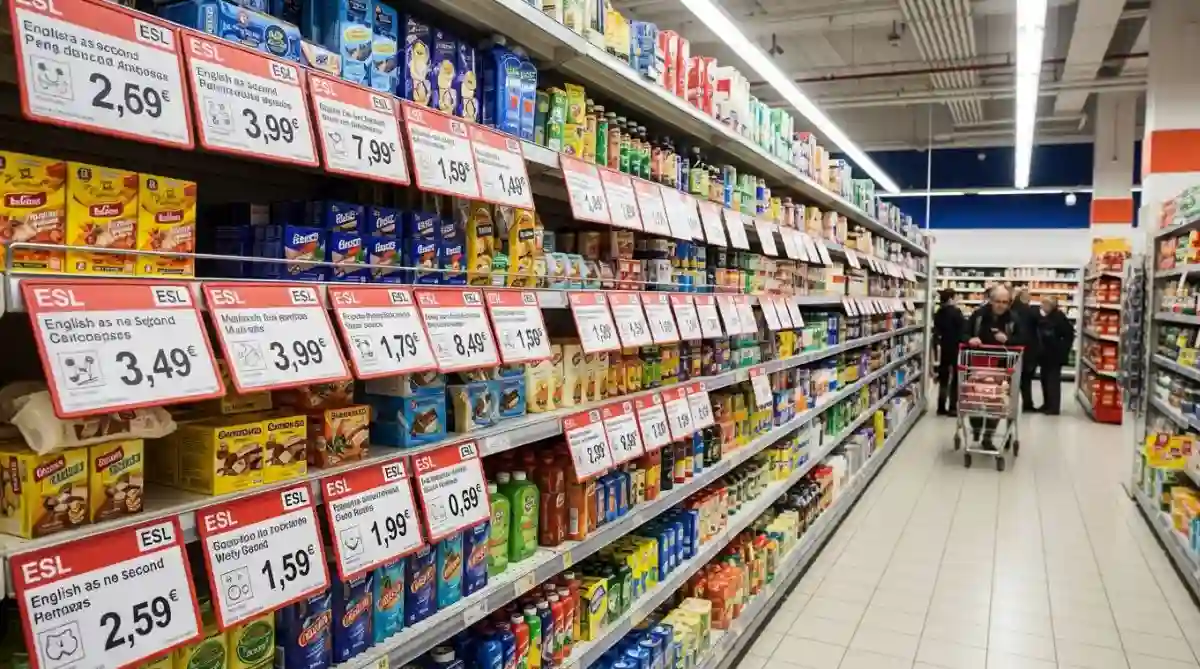
Electronic shelf labels (ESLs) are now common across Spain’s biggest food retailers.
Stores want faster price updates, fewer manual tasks, and more accurate promotions.
ESLs support all of these goals.
In 2025, price changes in Spain happen more often because of inflation, promotions, and competition between formats.
This makes ESLs even more important.
Retailers see ESL adoption as a practical step, not a futuristic experiment.
Most supermarkets now use ESLs in fresh, bakery, and ambient aisles.
Discounters also push ESLs because they allow cleaner shelves and fewer errors during weekly price changes.
In Spain,, Retail Technology 2025 clearly shows that ESL rollout is one of the strongest trends in the market.
Smart Cart And Computer-Vision Pilots
Spain has started testing smart carts, shelf cameras, and computer-vision checkout.
These pilots happen mostly in major cities like Madrid, Valencia, and Barcelona.
Smart carts allow shoppers to scan products as they go.
Some carts also show running totals and personalised offers.
Retailers like Carrefour and some regional operators use these pilots to study shopper behaviour and reduce queues during weekends.
Computer-vision checkout is also improving.
New systems read items automatically when placed on a smart checkout table.
It speeds up payment and reduces the need for extra staff during peak hours.
These trials are still small but growing.
Supermarkets want to cut wait times, improve basket accuracy, and make checkout simpler for older shoppers and families.
Dynamic Pricing Tests
Dynamic pricing is now moving into real tests across Spain.
Retailers want to reduce waste, especially in fresh categories with short shelf life.
ESLs make this possible because prices can be changed automatically.
Stores can mark down bakery items near the end of the day.
They can lower fresh produce prices faster when demand is low.
They can also adjust promotions hour-by-hour during busy weekends.
Dynamic pricing is still early, but results show lower waste and smoother stock flow.
This trend supports Spain’s sustainability goals and helps suppliers understand daily demand better.
Retail Technology in Spain 2025 shows dynamic pricing as one of the next big efficiency tools for supermarkets.
AI Forecasting In Fresh And Bakery
AI forecasting is growing fast in Spain because retailers want better control of fresh items.
Fresh produce, meat, fish, dairy, and bakery products all move quickly and can create waste if forecasting is wrong.
AI tools now study weather, store traffic, basket mix, and local events.
This helps supermarkets decide how much to order and when.
In bakery, AI forecasting supports production planning hour-by-hour.
Spain’s major chains also use AI in replenishment.
Some stores now replenish shelves based on real-time data, not fixed plans.
This reduces out-of-stocks and gives shoppers fresher items.
AI forecasting is now part of day-to-day operations, not a future project.
Carrefour’s Omnichannel Strategy In Spain
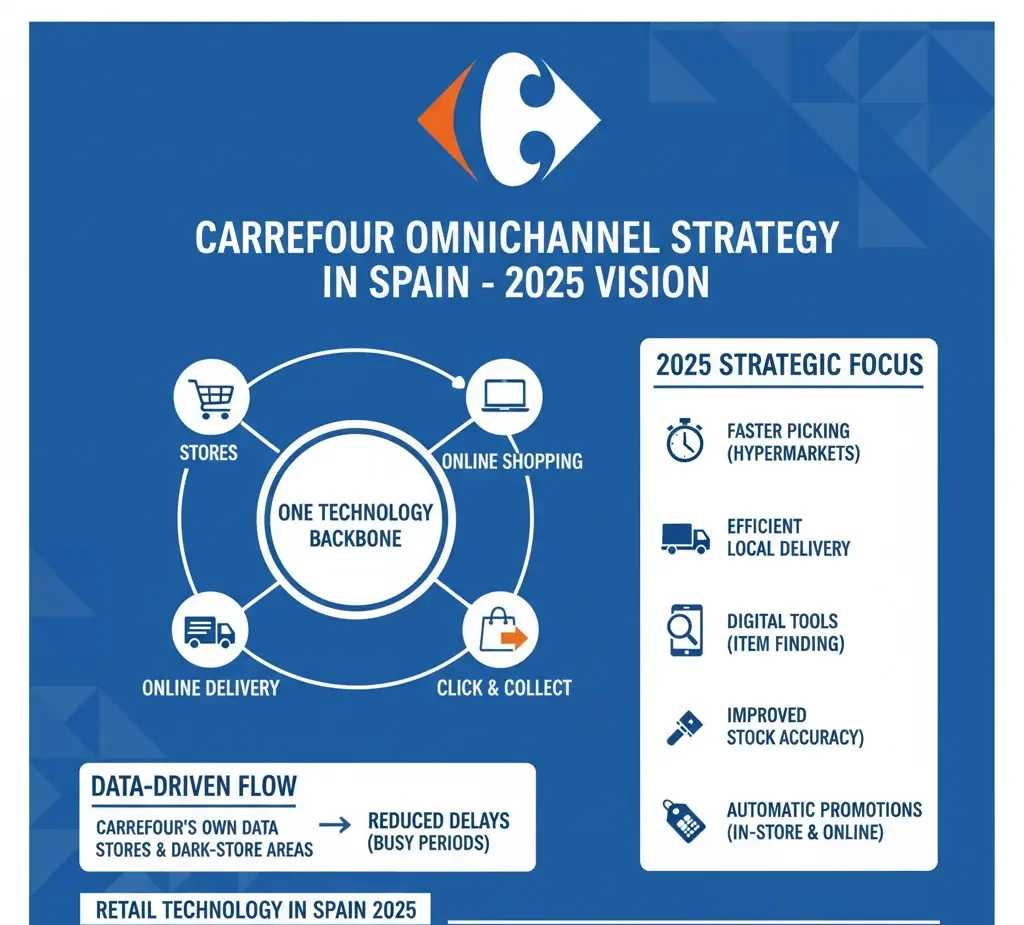
Carrefour has one of the most advanced omnichannel systems in the Spanish market.
It links stores, online shopping, home delivery, and click-and-collect through one technology backbone.
In 2025, Carrefour focuses on:
• faster picking inside hypermarkets
• more efficient delivery from local stores
• digital tools that help workers find items quickly
• improved stock-accuracy systems
• promotions that update automatically in store and online
Carrefour also uses its own data to manage product flow between stores and dark-store areas.
This reduces delays during busy periods.
Retail Technology in Spain 2025 shows that Carrefour is one of the main drivers of tech adoption in the country.
Store Digitalization Examples Across Spain
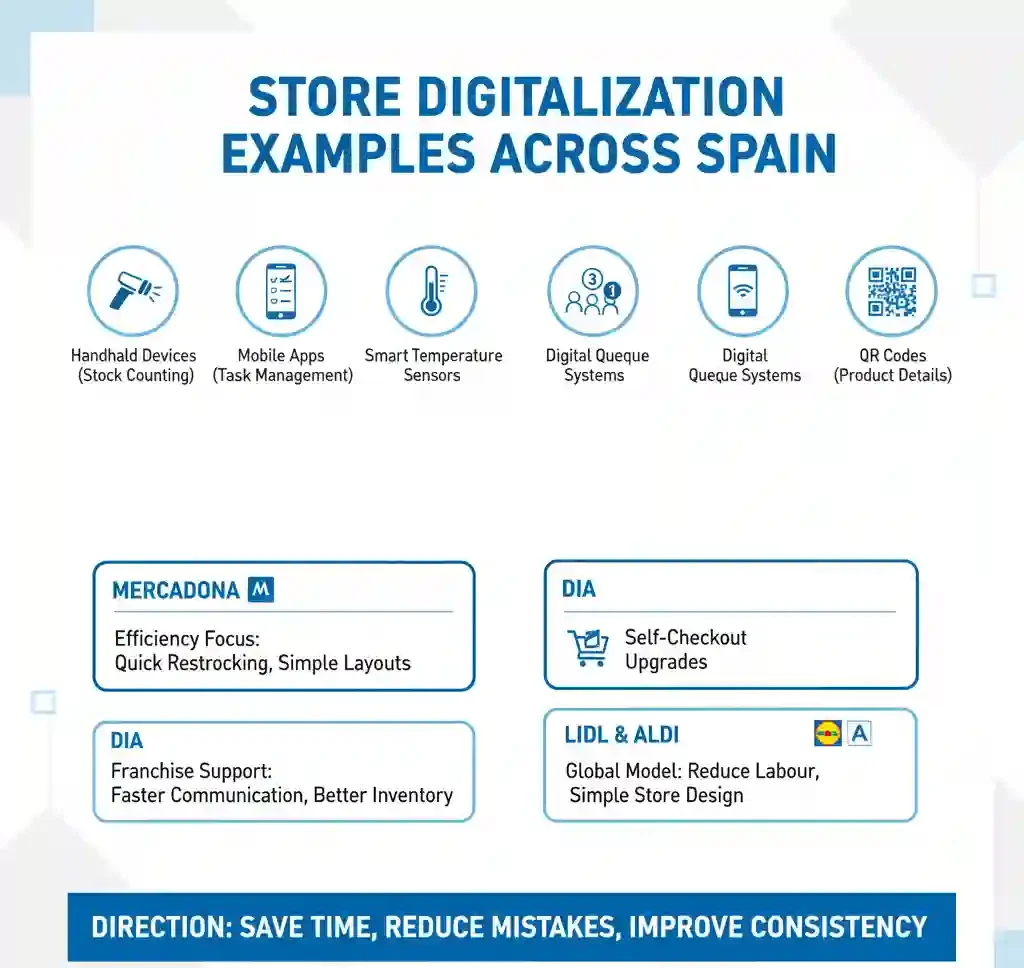
Supermarkets across Spain now use digital tools that support daily work.
These include:
• handheld devices for stock counting
• mobile apps for task management
• smart temperature sensors in fridges and freezers
• digital queue systems at fresh counters
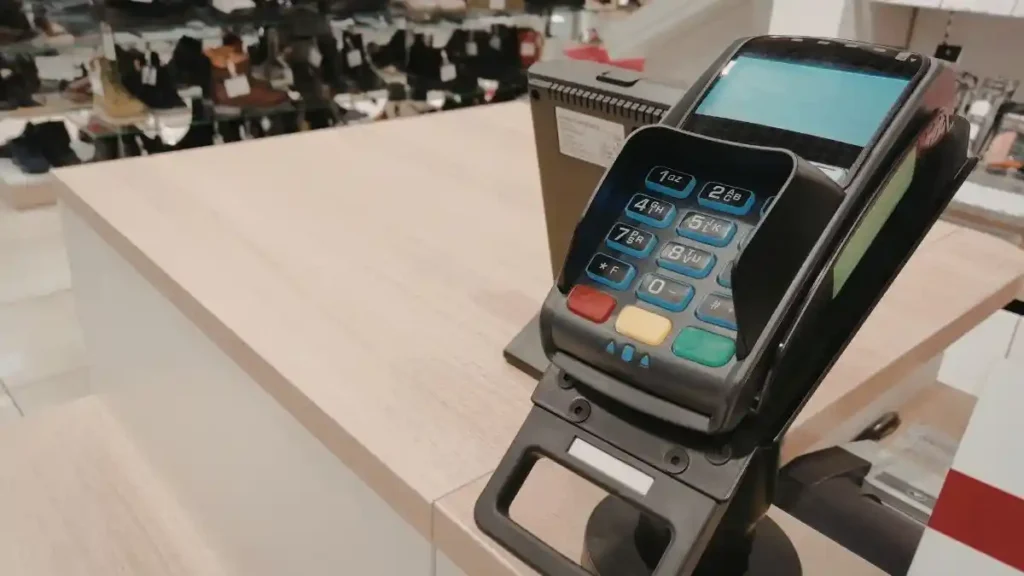
• self-checkout upgrades
• mobile payment improvements
• QR codes for product details
Mercadona uses digital tools mainly for efficiency.
It focuses on quick restocking and simple layouts rather than high-tech experiments.
DIA invests in digital operations to support its franchise model.
Better digital tools mean faster communication with franchise stores and better inventory management.
Lidl and Aldi combine digitalisation with their global model.
They introduce tools that reduce labour hours and support simple store design.
Across all chains, the direction is clear: digital tools must save time, reduce mistakes, and improve store consistency.
What Spain Will Adopt In 2026
Based on current pilots, Spain is expected to expand digitalisation further in 2026.
Most retailers will continue investing in:
• wider ESL coverage
• more AI forecasting models
• improved online fulfilment automation
• hybrid checkout (self-checkout + assisted checkout)
• digital queue systems
• more data in fresh and bakery
• computer-vision shelf monitoring
• energy-efficiency sensors
By 2026, more supermarkets may also adopt digital product passports and packaging traceability tools.
These systems help track sustainability information and product origin.
Retail Technology in Spain 2025 suggests that the next step is not about replacing workers — it is about supporting them with better tools.
Why It Matters
Spain is becoming one of Europe’s strongest markets for retail digitalization.
The combination of ESL rollout, smart checkout tests, AI forecasting, and omnichannel systems is changing how supermarkets work every day.
For retailers, technology reduces errors, speeds up operations, and lowers waste.
For suppliers, technology improves ordering accuracy and helps manage promotions better.
For shoppers, it means more consistent pricing and fewer stock problems.
Retail Technology in Spain 2025 is therefore not just a trend — it is a key part of how the market will grow in the next few years.
Editor’s Note: This article uses publicly available market information, retailer announcements, and industry-standard retail technology trends.
No invented data was added.