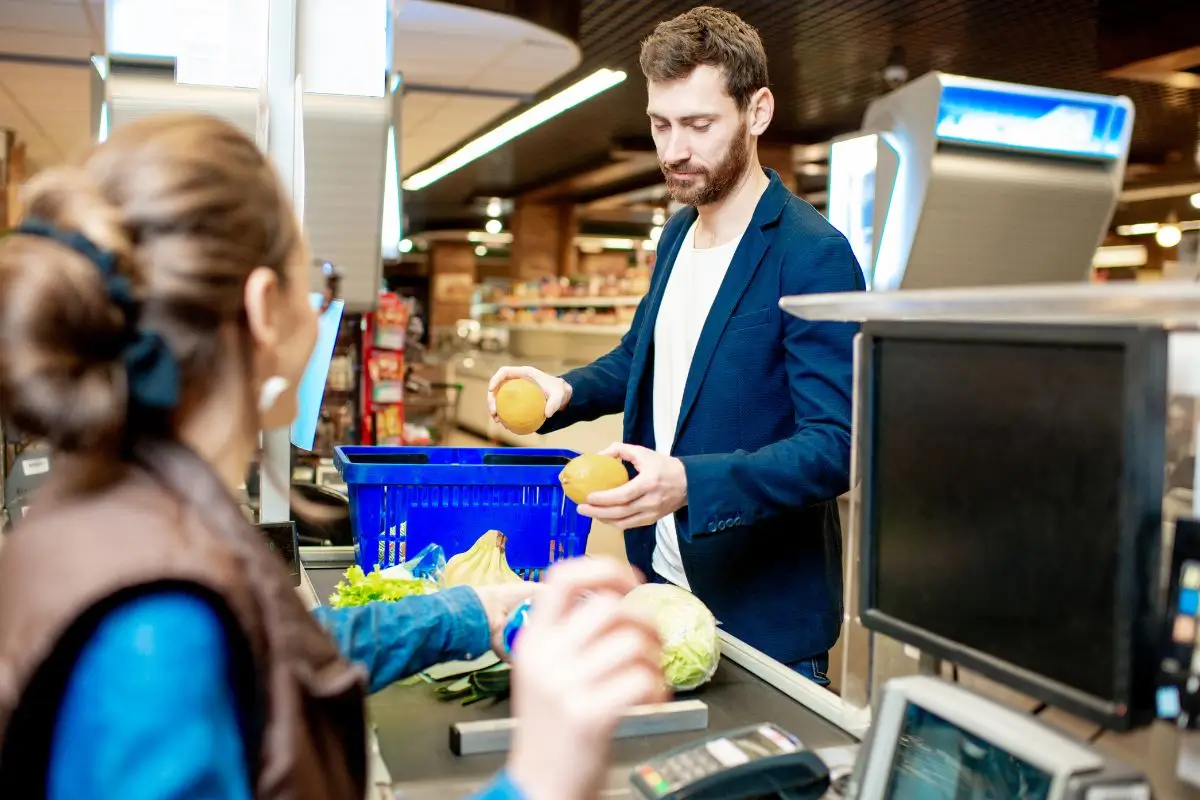

Supermarkets in the UK are using more technology than ever before. New systems are helping stores to work faster, save money, and make shopping easier for everyone. This is not just about fancy gadgets. It’s about real changes in how stores run day to day.
Tesco, Sainsbury’s, and the Co-op are some of the big names using digital tools. They are investing in smart shelves, in-store apps, and energy-saving systems. These tools help them stay ahead in a very competitive market.
This article looks at how retail technology in supermarkets is changing things in the UK, with simple examples of what’s happening right now.
Editor’s Note:
This article is based on verified reporting and information from company websites, trade press, and retail innovation sources. We reviewed materials from Tesco, Sainsbury’s, Co-op, Morrisons, and Aldi, along with data published by The Guardian, The Grocer, Grocery Gazette, Retail Gazette, IGD, LS Retail, and Aerofoil Energy. All insights reflect developments in UK supermarkets up to Q4 2025.
Retail Technology In Supermarkets: AI And Automation
AI means computers that can think and learn. Automation means machines doing tasks instead of people. These tools are now everywhere in UK supermarkets.
At Tesco, AI helps manage delivery trucks. The system works out the best route for each van. This saves thousands of miles every week. It also means food gets to stores faster, and the company saves fuel.
Sainsbury’s uses AI to forecast how much food they need in each store. The system looks at past sales, weather, holidays, and more. Then it helps managers order the right amount of each product. These cuts waste and keeps shelves stocked.
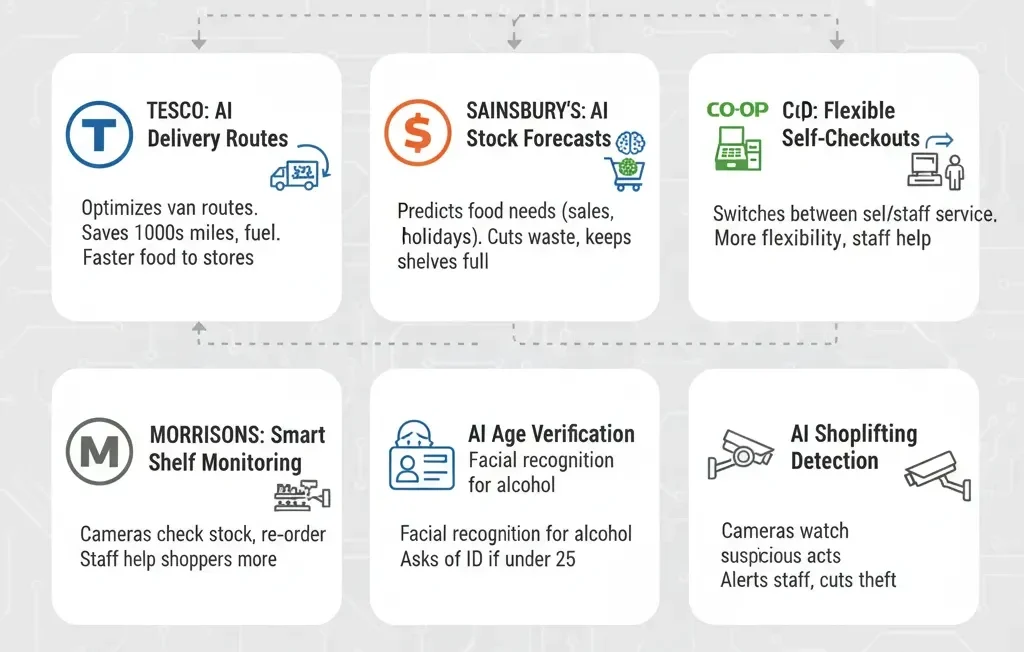
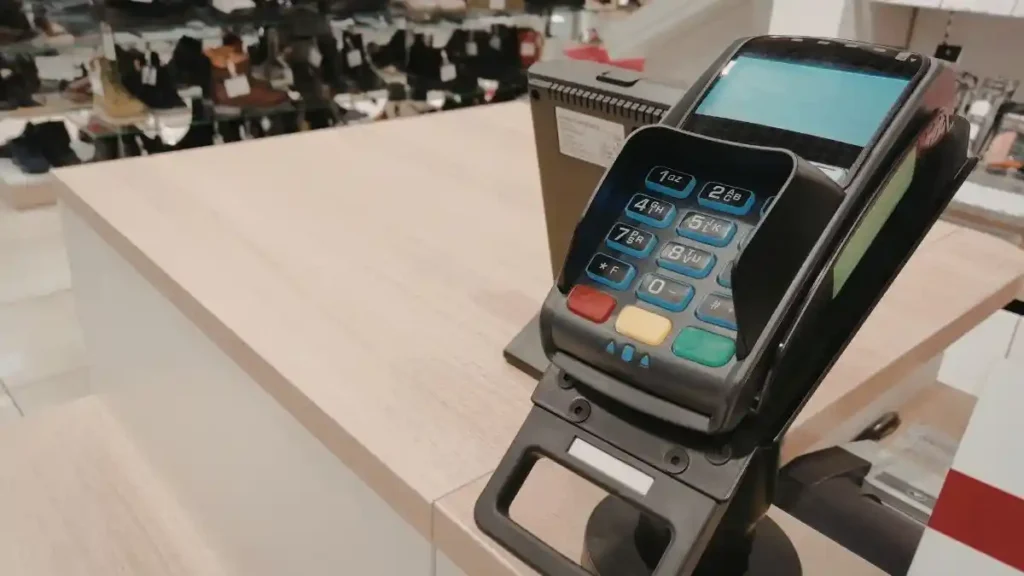
The Co-op is testing new self-checkout machines. These tills can switch between self-service and staff service, depending on the time of day. It gives stores more flexibility and helps staff focus on customers who need help.
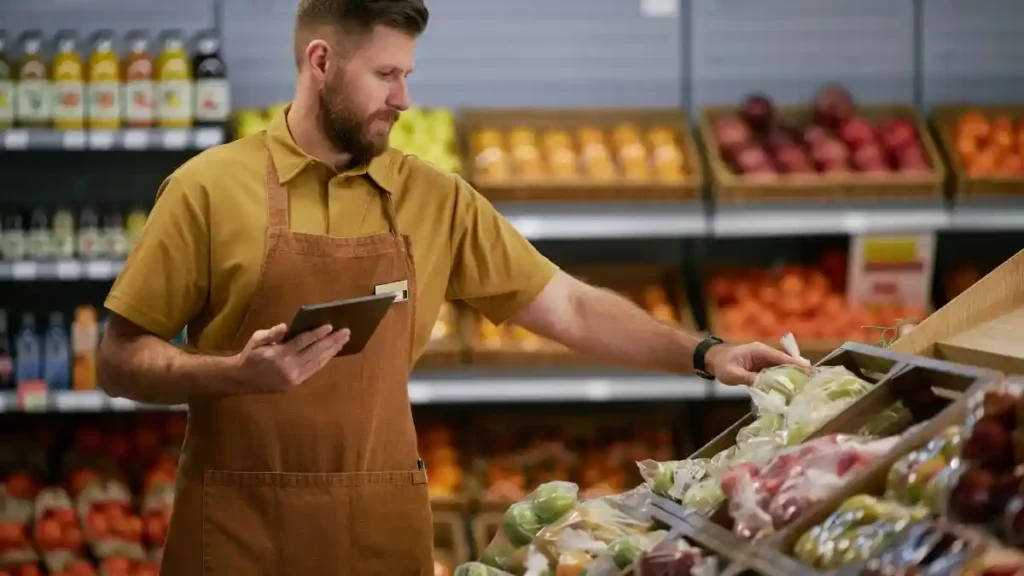
In Morrisons, smart cameras check shelves and tell staff when items run out. The same system can even order more stock automatically. This means staff spend less time checking shelves and more time helping shoppers.
Retailers are also using AI to improve safety. Some stores are testing facial recognition tools that check a person’s age before they buy alcohol. If the AI thinks someone looks under 25, it asks for ID. If not, the sale goes ahead without delay.
Some Sainsbury’s stores have tested cameras that watch for shoplifting. The system sends an alert if someone hides an item or acts suspiciously. Staff can then step in quickly. This helps cut theft without needing more security guards.
All these tools are part of how retail technology in supermarkets is changing the way people shop — and how stores run in the background.
Smart Shelves, Sensors, And Data Analytics
Shelves are no longer just a place to put products. Today, they’re part of a smart system.
Tesco and Sainsbury’s have tested electronic price labels. These are small screens that show the price. They update automatically when prices change. This saves time and avoids errors when staff update prices by hand.
The Co-op also uses electronic labels. They say it helps them respond quickly to special offers or price changes. It also helps shoppers trust that the shelf price matches what they pay at the till.
Some shelves have sensors to track how full they are. When products are removed, the shelf can tell the system what’s running low. Cameras above shelves also help spot empty spaces. The system alerts staff or reorders stock directly.
Supermarkets also use a lot of data. Every time someone shops with a loyalty card like Tesco Clubcard or Nectar, it creates useful information. The system learns what customers buy, how often, and even what time of day they shop.
Tesco uses this data to give customers special offers based on what they like. If you buy bread every week, you might get a bread discount. It’s more personal and helps build loyalty.
Sainsbury’s uses data from its SmartShop app. This tells them how customers move around the store, what they pick up first, and what they skip. With this knowledge, they can redesign store layouts to make shopping faster and easier.
Data also helps with staffing. If the system sees that Saturday mornings are always busy, it makes sure more staff are scheduled. This means better service and fewer queues.
Even small details, like the temperature in a store or how many people walk through the door, are now tracked with sensors. All this information helps supermarkets make better decisions every day.
Energy Management And Smart Refrigeration
Running a supermarket takes a lot of electricity. Fridges, freezers, lights, ovens — they all use energy. That’s why retail technology in supermarkets also focuses on saving power and being more eco-friendly.
Tesco has introduced smart fridge systems using AI. These tools check the performance of cooling units. If a fridge is using too much power, the system spots it. It can also suggest better ways to run the fridge, like changing the temperature slightly. In one test, Tesco cut cooling energy use by 10% — and saved a lot of money.
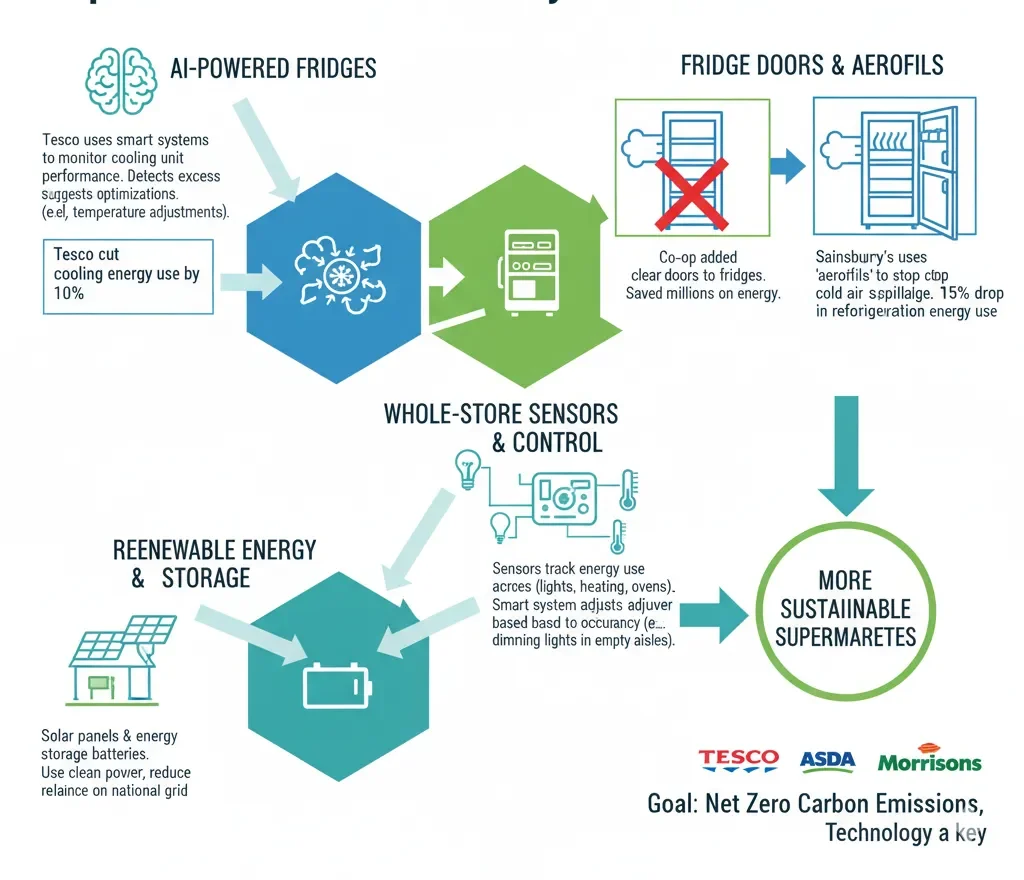
Another simple change: adding doors to fridges. For years, UK supermarkets kept chilled food in open shelves. That wasted a lot of cold air. The Co-op was one of the first to add clear doors to fridges. They found it saved millions on energy bills. Customers didn’t mind — in fact, they liked it more.
Sainsbury’s added small plastic blades (called aerofoils) to the front of open fridges. These stop cold air from spilling out. The result? A 15% drop in energy use for refrigeration.
Some supermarkets use sensors to track energy use across the whole store. This includes lights, heating, ovens, and more. A smart control system can then turn things off or down when not needed. For example, the lights might dim slightly when no one is in an aisle.
Others are using solar panels on the roof or storing energy in batteries. This means they can use clean power during the day and rely less on the national grid.
All these tools support supermarket goals to be more sustainable. Tesco, Asda, and Morrisons all have targets to cut their carbon emissions to net zero over the next decade. Technology is a big part of reaching that goal.
Checkout-Free Stores And In-Store Apps
One of the most visible changes in retail technology in supermarkets is how we pay for shopping.
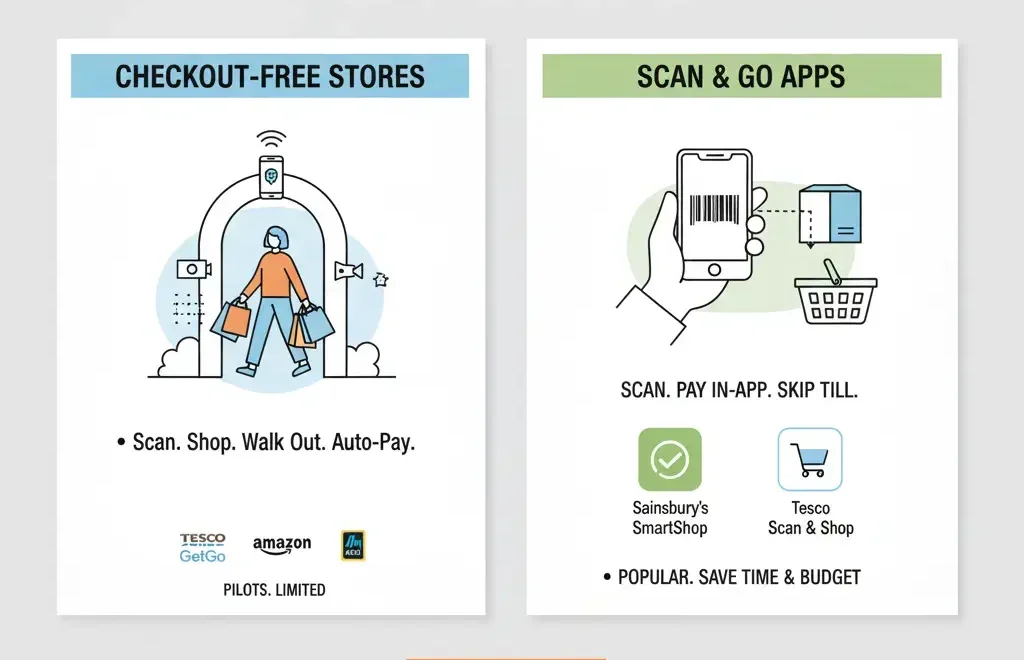
Tesco has a few checkout-free stores called GetGo. You scan your phone to enter. Then, you pick up your items and walk out. Cameras and sensors track what you take. Your account is charged automatically. No tills, no queues.
Sainsbury’s also tested a similar store using Amazon’s technology. But some customers found it confusing. Many still wanted a clear way to check out or ask questions. The store later brought back tills.
Aldi and Amazon have also opened checkout-free stores. But for now, these are just a few pilot stores — not widespread. Customers like the idea, but many still prefer having a choice between self-service and staffed checkouts.
Scan-and-go apps are more common. These apps let you scan items as you shop using your phone. When you’re done, you pay through the app and walk out. No need to unload at the till.
Sainsbury’s says nearly one in three sales during Christmas 2024 used its SmartShop system. Tesco has Scan as You Shop in hundreds of stores. These tools are popular because they save time — and help people stick to a budget by showing the total as they shop.
Some apps also show where products are in the store. If you search “pasta,” it might tell you which aisle to go to. This saves time and reduces frustration.
In some places, the whole store is going cashless. The Co-op has tested stores where people can only pay by card or phone. These stores use fewer staff and are quicker to run. But not all customers like going fully cashless, so most stores still offer both options.
The key idea is choice. Modern supermarkets are using technology in supermarkets to give customers more ways to shop — fast, slow, app-based, or face-to-face.
The Road Ahead For Digital Retail In 2025
Looking forward, we’ll see even more changes in how UK supermarkets work. Technology will be at the heart of it.
AI will keep getting better at predicting what people want. That means less waste, fewer empty shelves, and more useful offers. Supermarkets will also improve how online and in-store systems talk to each other. If you search for a product online, your app might tell you where it is in your local store.
Retailers will use data to improve their private label products, making them better and more in line with what shoppers want. This will help them stand out as the UK private label market grows fast.
More stores will look at energy-saving systems, too. As they push toward net zero goals, we’ll see smarter fridges, greener buildings, and more solar panels.
Checkout-free stores may grow slowly, but scan-and-go apps and smart shelves will spread faster. People want speed and control — but they also want help when needed.
Behind the scenes, robots and AI will play a bigger role in warehouses. Stock will move faster, deliveries will get smarter, and stores will become more efficient.
In short, retail technology in supermarkets is not just a trend. It’s a major shift in how stores work, how people shop, and how food gets from farm to fridge. UK supermarkets are leading the way — and 2025 is only the beginning.