

Supermarket sustainability Germany 2025 is moving fast.
German retailers are shifting to lower carbon footprints, cleaner energy, and stronger circular packaging systems across thousands of stores.
REWE, Lidl, Aldi, Edeka, and Kaufland now operate some of the most ambitious ESG strategies in Europe.
These plans include renewable power, low-emission refrigeration, zero-waste pilots, and large packaging redesign programmes.
Sustainability is no longer a separate project.
It is now part of daily supermarket operations — from the energy used in refrigeration to the materials found in private label packaging.
The progress also supports wider changes in the German market.
As we outline in Private Label Growth Germany, sustainable packaging plays a large role in shaping new own-brand development.
Retail Technology in German stores also helps track energy use, food waste, and recycling performance.
Supermarket sustainability Germany 2025 is therefore a combined effort: energy efficiency, packaging reform, circular waste systems, responsible sourcing, and strict ESG reporting.
Supermarket Sustainability Germany 2025: Carbon Goals and Progress
German supermarkets work under strict national and EU climate frameworks.
By 2025, carbon reduction targets are tied to energy use, logistics, refrigeration, and store design.
REWE has set some of the strongest climate goals among European retailers.
Its plan includes reducing operational emissions, switching stores to renewable electricity, and improving energy efficiency.
A major part of this work focuses on refrigeration, one of the highest energy users in supermarkets.
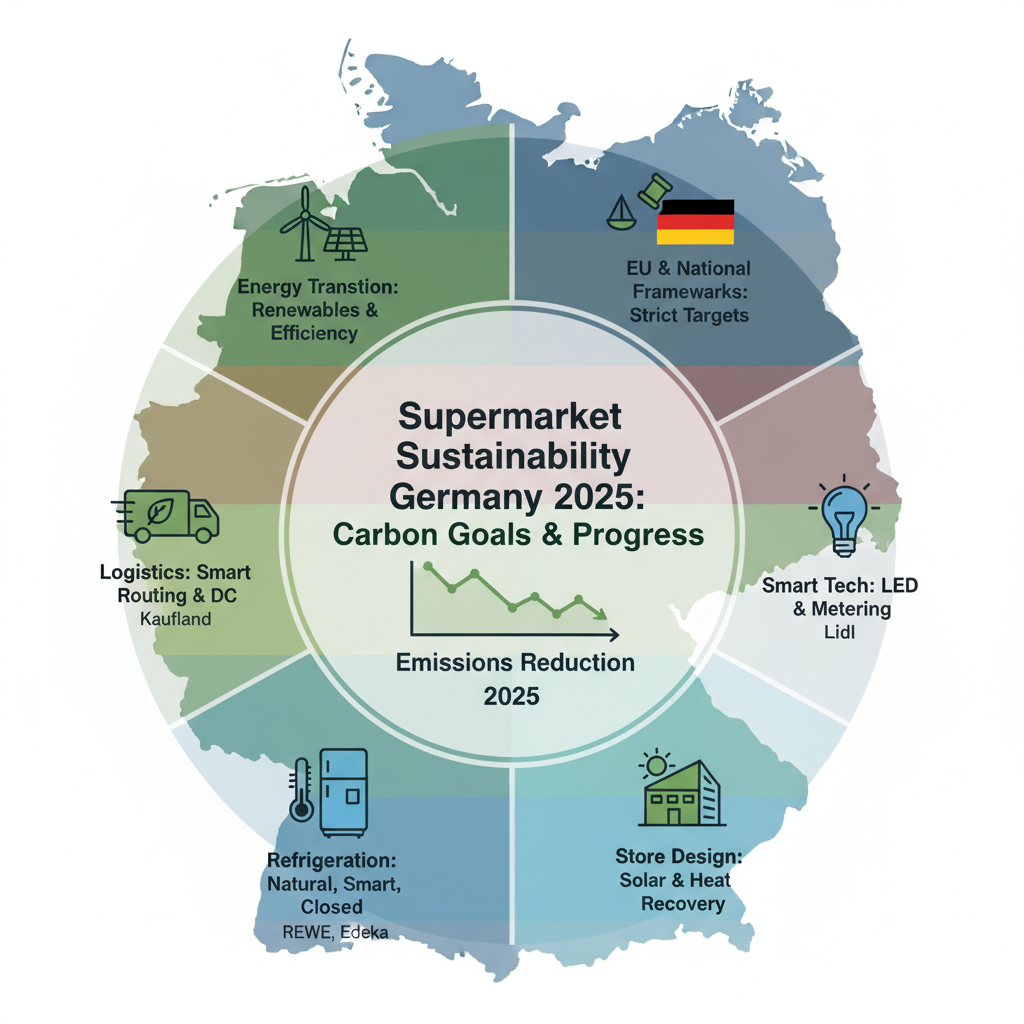
Natural refrigerants, smart sensors, closed cabinets, and automatic night blinds all help reduce energy load.
These changes lower emissions while also cutting electricity costs during peak periods.
Lidl also invests heavily in green store concepts.
New branches use more energy-efficient building materials, solar installations, and heat-recovery systems.
Waste heat from refrigeration is reused to warm the building, reducing dependence on conventional heating.
Aldi Süd and Aldi Nord follow a similar path.
They have rolled out thousands of LED lighting units and operate smart metering across many stores.
Smart meters display real-time consumption and highlight where energy can be reduced.
Kaufland uses a large network of distribution centres, where efficient logistics help lower emissions.
Its automated routing, temperature control, and warehouse management systems reduce unnecessary travel and cut food waste.
Edeka works closely with energy partners to implement local and regional climate solutions.
This includes CO₂-efficient refrigeration systems, energy-saving store retrofits, and monitoring tools to track electricity use daily.
These carbon-reduction measures support the broader transformation across the sector.
As covered in German Grocery Market Share 2025, the largest groups have the scale to invest in big sustainability upgrades — from thousands of stores to nationwide distribution hubs.
Sustainability also links directly to Germany’s national energy transition.
Retailers benefit from improved solar incentives, better access to green electricity, and wider public support for climate-friendly infrastructure.
Supermarket sustainability Germany 2025 is therefore driven by real structural change: strict targets, real timelines, and continuous improvement.
Packaging, Waste, and Energy Strategies
Packaging is one of the biggest parts of supermarket sustainability Germany 2025.
Private label ranges are being redesigned with clearer recycling instructions, simpler materials, and less unnecessary packaging.
Germany’s Packaging Act (VerpackG) pushes retailers to use recyclable materials, limit mixed plastics, and increase recycled content.
This leads to major changes in product design, especially for chilled convenience, fresh produce, and household goods.
REWE continues to upgrade packaging across its own brands.
Many items now use mono-material films, paper-based trays, or lightweight bottles that are easier to recycle.
Private label packaging carries clearer sorting instructions to support consumers.
Lidl and Kaufland publish supplier lists and packaging commitments.
They report progress on recycling rates, sustainable materials, and design improvements.
This transparency helps shoppers understand how packaging choices match wider climate goals.
Aldi’s packaging strategy focuses on clear design, limited colours, and easy-to-sort materials.
The group aims to remove unnecessary plastics and replace them with paper or recycled alternatives where possible.
Edeka promotes regional and organic lines with recyclable or compostable packaging.
Smaller producers are encouraged to follow retailer guidelines to meet the required standards.
Waste management is another central element.
Food-waste sensors and AI-supported forecasting help stores order the right amount of fresh goods.
Markdown systems encourage customers to buy items approaching their expiry date.
Reverse vending machines in German supermarkets make recycling simple.
These machines collect bottles, cans, and containers with high return rates.
Retailers invest in these systems to support circular packaging and national deposit schemes.
Energy strategies remain essential.
LED lighting, efficient ventilation, natural refrigerants, and automated building controls help stores reduce their environmental impact.
Solar panels on store roofs power lighting, refrigeration, and electric-vehicle charging.
Many stores now operate EV chargers for customers and service vehicles.
Heat-recovery systems repurpose waste heat from refrigeration to warm parts of the store.
This reduces dependence on external heating sources and improves overall efficiency.
Technology ties all of this together.
Digital systems help store managers track consumption, identify waste, and monitor sustainability targets.
These tools are part of the wider digital transformation described in Retail Technology Germany, where data drives cleaner and more efficient operations.
Supermarket sustainability Germany 2025 therefore mixes packaging reform, food-waste reduction, logistics optimisation, and energy control — all powered by technology and strong retailer commitment.
Retailers Aligning With EU Sustainability Targets
Germany’s supermarkets operate inside the larger framework of the EU Green Deal, which sets climate and environmental goals across all member states.
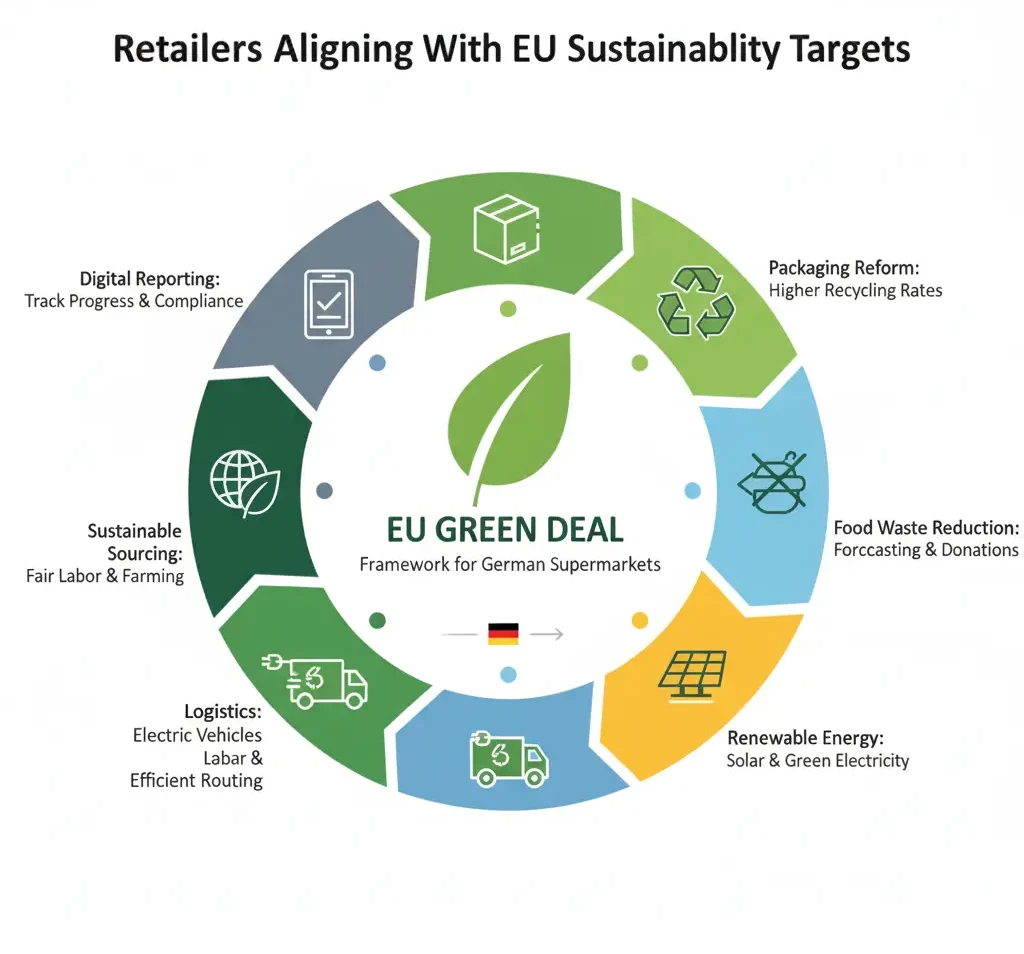
The EU Green Deal includes targets for emissions reduction, recycling, packaging reform, renewable energy, and sustainable supply chains.
German supermarkets must align their strategies with these goals to remain compliant and competitive.
Packaging is one of the key areas.
EU rules push for higher recycling rates, simpler packaging formats, and clear consumer guidance.
Retailers work with suppliers to reduce material complexity and increase recycled content.
Food waste is another major theme.
The EU aims to cut food waste significantly by 2030.
German supermarkets respond by using forecasting software, dynamic pricing, donation partnerships, and strict cold-chain routines.
Renewable energy requirements also influence store design.
Solar installations, green electricity contracts, and improved insulation help retailers meet EU energy targets.
Many new stores are built as low-energy or net-zero buildings.
Logistics must also align with climate goals.
Electric trucks, more efficient routing, and better cold-chain management help reduce emissions across distribution networks.
Kaufland and REWE invest heavily in these systems to future-proof their operations.
Sustainable sourcing is part of the picture.
Retailers review supply chains for fair labour practices, responsible farming, and long-term environmental impact.
This is especially important for private label, where retailers control product specifications.
Digital compliance reporting becomes more important under EU regulations.
Retailers must track emissions, recyclability, energy use, and progress toward sustainability targets.
Technology platforms help simplify this work.
These efforts tie closely to the initiatives seen in Packaging Innovation Germany, where new materials and recycling systems help retailers meet EU expectations.
The EU Green Deal encourages retailers to move faster on climate commitments.
German supermarkets respond with transparency, reporting, and public sustainability goals.
Supermarket sustainability Germany 2025 reflects these larger changes.
Retailers are not only improving operations but adapting to one of the strictest sustainability frameworks in the world.
Looking Ahead: The Next Stage of Sustainability in German Supermarkets
In the coming years, supermarket sustainability Germany 2025 will continue to influence how German retailers build, operate, and supply their stores.
Future store designs will include better insulation, smarter energy controls, and more advanced refrigeration units.
Solar installations and heat-recovery systems will expand across new and existing branches.
Packaging innovation will accelerate.
Retailers will use more mono-materials, fibre-based packaging, and returnable solutions.
Digital labels and QR codes may offer clearer recycling guidance.
AI and digital tools will help manage food waste more effectively.
Retailers will match stock to demand, plan markdowns, and support donation networks with better forecasting.
Logistics will become cleaner.
Electric delivery vans, improved temperature tracking, and route optimisation will cut emissions from transport.
Private label will continue to shape sustainability.
Retailers control product design, materials, and sourcing, which helps them move quickly on environmental goals.
This trend is covered in detail in our Private Label Growth Germany article.
The EU will tighten sustainability rules further.
Retailers will align packaging, sourcing, and energy systems with new standards across 2026-2030.
Consumers will expect more transparency.
They want clear recycling guidance, lower food waste, and verified sustainability claims.
German supermarkets will respond with stronger communication and more visible progress.
Sustainability will remain a competitive advantage.
Retailers that invest early will gain trust, lower costs, and build long-term resilience.
Supermarket sustainability Germany 2025 is not a short-term project.
It is a long-term shift shaping how the entire grocery sector operates.
Editor’s Note: This article is based on verified information from German supermarket groups, climate and energy reports, packaging guidelines, retailer sustainability strategies, and EU Green Deal updates. Sources include materials published by REWE, Lidl, Aldi, Edeka, Kaufland, German energy-efficiency programmes, and European sustainability frameworks up to Q4 2025.