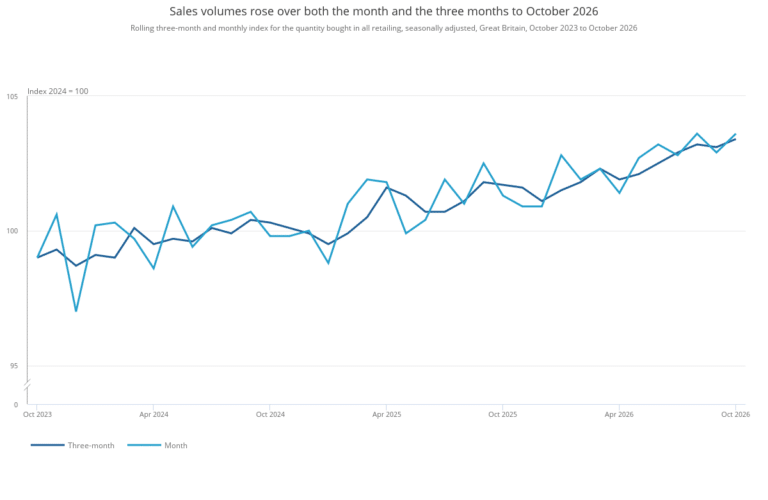

Food-store sales volumes rose in Great Britain in October 2026 as supermarkets reported stronger sales of long-life groceries, including tinned products and UHT milk, following government preparedness advice. The Office for National Statistics reported the trend on 20 November.
The change contributed to a 0.7% month-on-month rise in total retail sales volumes, following a revised fall of 0.6% in September. Across the three months to October, overall retail sales volumes increased by 0.4% compared with the previous three-month period.
The distinction matters. The 0.7% figure describes the quantity bought across all retailing, not the value of supermarket sales and not a 0.7% increase in food prices. Volume-based retail data adjust for price changes, providing a different view from headline spending growth.
Supermarkets told the ONS that sales of ambient products had strengthened following government advice on preparedness. Those reports are consistent with some shoppers adding shelf-stable foods to household supplies, but the data do not establish exactly how many households did so or how long the effect will last.
For food manufacturers and grocery purchasing teams, even a short-lived shift towards tins, UHT milk and other long-life products can create uneven demand across categories. Ambient suppliers may face additional orders while other lines see little change. But a monthly increase should not automatically be treated as a lasting change in shopping habits.
The ONS also cautions that monthly retail sales figures can be volatile and should be read alongside the smoother three-month trend. Total retail volumes were 1.7% above the comparable three-month period a year earlier, and October volumes were up 2.3% year on year.
The supermarket implications depend on whether this was an additional purchase or simply a change in timing. A household that buys extra canned goods in October could buy fewer of them later. For buyers, separating temporary stock-building from sustained consumption is essential when forecasting orders and avoiding excess inventory.
There are also category-level questions that the headline figures cannot answer: which ambient products gained the most, whether shoppers traded between brands and private label, and whether increases differed by chain or region. The national retail bulletin does not provide those retailer-level details.
The trend sits alongside GTN’s coverage of UK private-label competition and its guide to the largest UK supermarket groups, both important when considering how increased demand is divided across retailers and suppliers.
The next official retail sales bulletin is due on 18 December 2026. That release should help show whether October’s food-store increase was temporary or the beginning of a more persistent pattern.