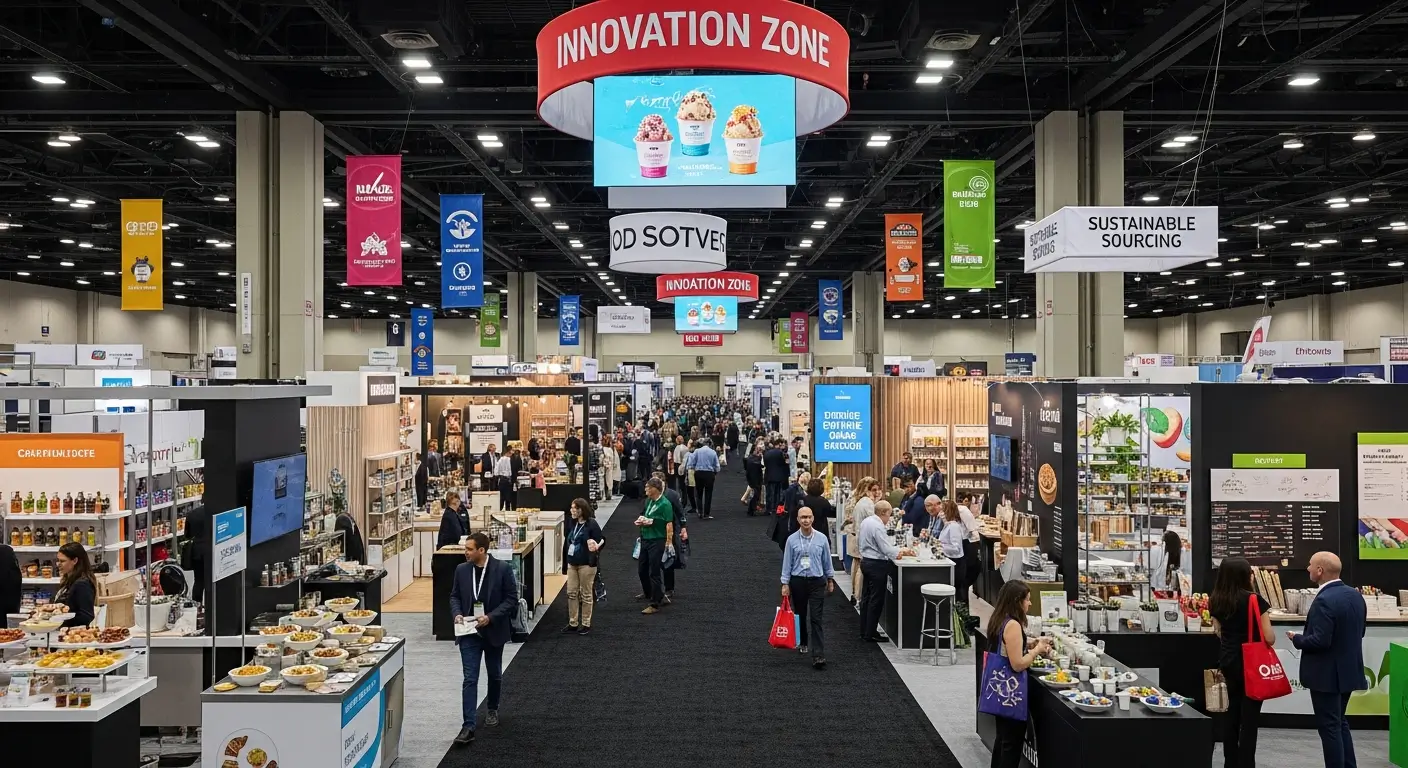

The US grocery industry is heading into another competitive year, and the pressure on sourcing, pricing, and innovation is only growing. That is why US grocery trade shows 2025 are becoming even more important. Retailers want ideas that help margins. Brands want visibility. Tech firms want proof points. And almost everyone is looking for partners who can deliver faster, cheaper, and with clearer value.
The US market has more events than almost any other region. Some influence strategy. Some are pure sourcing. Some are specialised shows that matter only if you work in natural foods, private label, or independent retail. This guide brings them all together in one practical overview.
Why US Grocery Trade Shows Matter in 2025
Trade events are not just marketing exercises anymore. In 2025 they are becoming decision points where retailers shape next-year assortments and test solutions that directly hit P&L.
Sourcing remains the biggest reason buyers attend. Rising costs, reformulation pressure, and supply-chain reliability are all major drivers. Many buyers are also building international supplier lists, something we covered recently in our Spain trade events overview, where global sourcing continues to accelerate.
Retail technology is another big focus. Every major US retailer is looking at automation, forecasting tools, loss-prevention tech, and store-format redesign. Our recent Retail Technology analysis showed how US supermarkets are now using events as scouting hubs to find realistic tools rather than future visions.
Category innovation also matters. Whether it is fresh, centre-store, frozen, beverages, supplements, or bakery, trade shows act as early testing grounds. If a trend lands at Expo West or Groceryshop, it often reaches mainstream shelves within a year.
The Big Strategic Shows
These are the events that shape how the US grocery industry thinks. Most retailers send senior teams, and suppliers use them to understand what matters for the next season.
NRF Big Show — January 12–14, 2025 (New York)
The National Retail Federation’s Big Show is not a grocery-specific event, but it sets the tone for the year. The 2025 edition will focus heavily on AI store operations, automation, robotics, computer vision, payments, fraud prevention, and workforce tools.
Grocery teams attend because NRF is where they can see what Walmart, Kroger and regional chains are testing long before it hits stores. Many of the proofs-of-concept showcased here end up in supermarkets within 12–24 months.
FMI Midwinter — January 29–February 2, 2025 (Orlando)
This is the most strategic event for US food retailers. FMI Midwinter brings together C-suite leaders from all major chains. Unlike other events, it is not a show floor; it is a high-level meeting environment.
Discussions in 2025 will focus on:
-
Inflation pressure
-
Supplier negotiations
-
Own-brand strategy
-
Workforce planning
-
Omnichannel profitability
It is where many of the big retailer–supplier plans for the year begin to take shape. For suppliers, the real value is in the private meetings, not the stage programme.
Groceryshop — September 15–18, 2025 (Las Vegas)
Groceryshop continues to be the most influential US event for digital grocery, last-mile delivery, fulfilment, and retail media. In 2025 the organiser is putting extra weight on AI forecasting, predictive inventory, loyalty personalisation, and automation partnerships.
Almost every major chain attends, along with a strong mix of CPGs, emerging brands, and tech vendors. For international exporters, it is one of the easiest entry points because buyers expect to meet new suppliers.
Category-Focused Shows
These events matter when retailers want depth — not general strategy. They offer more practical sourcing, more detailed category discussions, and more direct supplier contact.
NGA Show — March 9–11, 2025 (Las Vegas)
The National Grocers Association Show is the main event for independent grocers, wholesalers, and regional banners. In 2025 the themes include:
-
Fresh category performance
-
Store operations
-
Private label expansion
-
Community-based formats
-
Technology for small chains
If you supply deli, bakery, fresh produce, or centre-store essentials, this is where you meet the people who still make fast decisions.
Natural Products Expo West — March 4–8, 2025 (Anaheim)
Expo West is the most influential natural and organic food show in the world. It pulls more than 70,000 attendees and thousands of emerging brands.
Key 2025 themes include:
-
Better-for-you snacks
-
Plant-based and alt-protein
-
Functional beverages
-
Supplements and wellness
-
Clean-label reformulation
If a trend takes off here, it usually hits mass retail next. US supermarkets increasingly use Expo West to identify natural brands suitable for wider rollout, something we also see in our coverage of US supermarkets purchasing strategies.
PLMA Chicago — November 17–18, 2025 (Chicago)
The Private Label Manufacturers Association show is the most practical sourcing opportunity for US grocers focused on own brand. All categories are present: grocery, chilled, frozen, snacks, beverages, personal care, and household.
2025 will likely see more interest in:
-
Cost-reduction projects
-
Tiered private label architectures
-
Premium and wellness-focused PL ranges
-
Store-brand supply chain diversification
For exporters and mid-size manufacturers, PLMA is one of the easiest routes into a national chain.
How Retail Buyers Should Use These Events
Retail buyers often attend shows without a clear plan, but the teams that prepare properly tend to generate the best results.
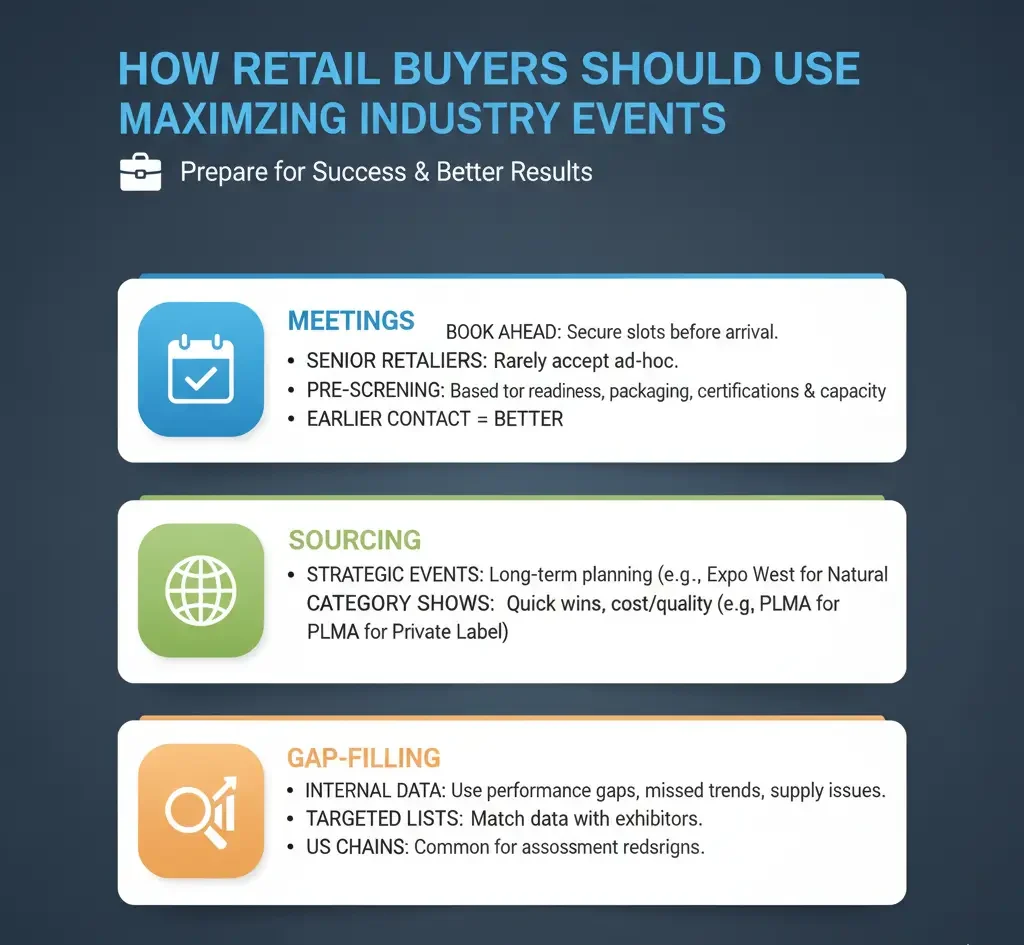
Meetings:
Book meetings before arrival. Senior retailers rarely take ad-hoc appointments. Many chains now pre-screen suppliers based on readiness, packaging, certifications, and capacity. The earlier the contact, the better.
Sourcing:
Use big strategic events for long-term planning and category shows for quick wins. For example, Expo West is ideal for natural innovation, while PLMA is better for private-label cost and quality improvements.
Gap-filling:
Retailers often bring internal data: performance gaps, missed trends, or supply issues. Matching these with exhibitors helps build targeted lists. This approach is becoming normal across US chains, especially those redesigning assortments.
How Exporters and Brands Should Prepare
For exporters, US retail can feel overwhelming. But preparation makes the difference between visibility and being overlooked.
Stands:
A clean, simple stand with clear retail pricing tiers works better than complex presentations. US buyers want quick understanding: category, pack formats, certifications, shelf-ready options, and capacity.
Samples:
Samples matter more in the US market than in many others. For food and beverage suppliers, high-quality tasting samples are expected. For non-food categories, show ready-to-ship packaging.
Follow-up:
Many suppliers lose momentum after events. US buyers expect follow-up within a week. Clear pricing sheets, certifications, and logistics details keep the conversation alive.
Major US Trade Shows 2025 — Dates, Cities, Focus
| Trade Show | Dates | City | Main Focus |
|---|---|---|---|
| NRF Big Show | Jan 12–14, 2025 | New York, NY | Retail tech, automation, AI, operations |
| FMI Midwinter | Jan 29–Feb 2, 2025 | Orlando, FL | Strategy, leadership, supplier meetings |
| NGA Show | Mar 9–11, 2025 | Las Vegas, NV | Independent grocery, sourcing, fresh |
| Expo West | Mar 4–8, 2025 | Anaheim, CA | Natural & organic, emerging brands |
| Groceryshop | Sep 15–18, 2025 | Las Vegas, NV | Digital, retail media, fulfilment |
| PLMA Chicago | Nov 17–18, 2025 | Chicago, IL | Private label sourcing, cost optimisation |
Practical Checklist: How to Get Maximum Value From a US Trade Show
Before the event
-
Build a targeted meeting list
-
Prepare short intro deck + pricing overview
-
Check retailer category strategies
-
Bring compliance documents (FDA, certifications)
During the event
-
Walk the floor early
-
Record key trends
-
Note packaging differences
-
Attend only the sessions you need
After the event
-
Send follow-ups within 5–7 days
-
Include pricing, capacity, lead times
-
Track buyer replies and next steps
Conclusion
The US market will be busy in 2025, and retailers want partners who can deliver innovation without adding complexity. The major events — from NRF to PLMA Chicago — help shape the year’s conversations and offer real sourcing opportunities. For suppliers, exporters, and tech firms, choosing the right shows is becoming a strategic decision, not a marketing one.
As competition grows, the companies that understand how to navigate US grocery trade shows 2025 will be the ones that build stronger visibility and faster entry into major retail channels.