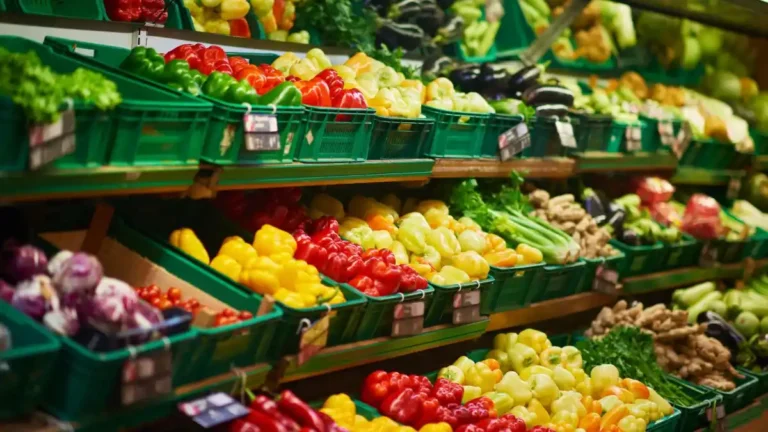

Bulgaria’s fresh produce sector is not led by global giants.
It is controlled by a tight group of companies that manage greenhouse production, export supply, and supermarket distribution. These businesses sit at the centre of how fruit and vegetables move across the country and into wider European markets.
In 2026, the leaders are not just growers. They combine production with logistics and retail-ready supply. That is where real market power sits.
This ranking covers the top 10 fresh produce companies in Bulgaria, based on a RevNow model — combining estimated annual revenue with real supply chain influence.
Top 10 Fresh Produce Companies in Bulgaria (RevNow)
| Rank | Company | Est. Annual Revenue (BGN) |
|---|---|---|
| 1 | Greens Ltd. | ~25–30M |
| 2 | Oranzherii Gimel II | ~17–20M |
| 3 | ET Yordan Velichkov – Vladi | ~15–18M |
| 4 | Biofruta | ~10–12M |
| 5 | Ecoterra | ~9–11M |
| 6 | Ekoplod Milevo | ~5–7M |
| 7 | Bata-2002 | ~5–6M |
| 8 | Euro Plants | ~4–5M |
| 9 | Eurofields BG | ~4–5M |
| 10 | Agrologic | ~3–4M |
1. Greens Ltd.
Founded: 2004
Greens Ltd. is the largest fresh produce company in Bulgaria by revenue.
The business is built on large-scale greenhouse production, mainly tomatoes and cucumbers. This allows year-round supply, which supermarkets depend on.
The company has managed to stay ahead even after energy cost shocks. Improved climate systems and controlled production have helped it capture high-value off-season demand.
Its scale and consistency make it a core supplier across the market.
2. Oranzherii Gimel II
Founded: 1995
Oranzherii Gimel II is one of the most advanced greenhouse operators in Bulgaria.
The company focuses on organic vegetables and premium segments. Its controlled growing systems support stable yields and consistent quality.
Like other greenhouse producers, it is exposed to energy costs. However, its ability to supply during off-season periods keeps it highly competitive.
3. ET Yordan Velichkov – Vladi
Founded: 1992
Vladi is one of the most important players in the Bulgarian fresh produce chain.
Operating as a sole trader, the company controls large parts of the wholesale distribution network. It connects farms to retail and export markets.
In 2026, the real bottleneck is not production — it is logistics.
That is why Vladi’s role as a supply chain controller is so critical.
4. Biofruta
Founded: 2007
Biofruta is part of the Italian Rigoni di Asiago group.
The company focuses on organic fruit, much of which goes into processing for export markets. Its business is closely tied to European organic supply chains.
Unlike domestic-focused suppliers, Biofruta’s strength lies in international demand rather than local retail visibility.
5. Ecoterra
Founded: 2008
Ecoterra operates alongside Biofruta within the same group structure.
It specializes in organic berries, including raspberries and strawberries. These products are in strong demand across Western Europe.
Together, Ecoterra and Biofruta form a major export platform, even if they are less visible to Bulgarian consumers.
6. Ekoplod Milevo
Founded: 2001
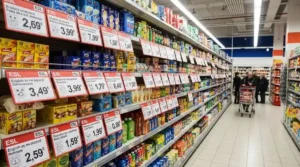
Ekoplod Milevo is built around supermarket supply.
The company manages the full chain — from production to packaging and delivery. This allows it to meet strict retail requirements.
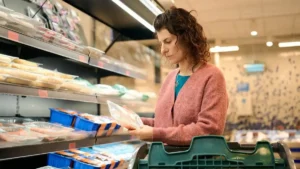
Its role reflects a wider shift in the market. Retailers now demand ready-to-sell formats, not just raw produce.
7. Bata-2002
Founded: 2002
Bata-2002 is a diversified agricultural company.
It produces fruit but also operates across cereals and other crops. This broader base supports its revenue scale.
For a pure fresh produce ranking, its position here is more accurate than in general agriculture lists, where it often ranks higher.
8. Euro Plants
Founded: 2013
Euro Plants focuses on strawberries and specialized cultivation.
The company uses modern techniques to improve yield and quality. This has supported strong growth over recent years.
It reflects a wider trend toward specialization in the Bulgarian market.
9. Eurofields BG
Founded: 2006
Eurofields BG combines production with research and development.
The company works on vegetable growing, seed development, and agricultural innovation. It is strongly export-focused.
Its role shows where long-term value is moving — toward technology-driven agriculture.
10. Agrologic
Founded: 2010
Agrologic operates as both a producer and a logistics hub.
It focuses on potatoes but plays a key role in distribution across the market. Its growth is linked to supply chain demand rather than production alone.
This reflects a broader shift in Bulgaria’s fresh produce sector.
What this ranking shows
The structure of the Bulgarian market is clear.
- Greenhouse producers lead in revenue
- Logistics players control supply
- Export-focused companies drive growth
There is no single dominant player.
Instead, the market works as a network of producers, packers, and distributors.
What happens next
The direction is already visible.
Greenhouse production will continue to expand.
Retailers will demand more packaged, ready-to-sell products.
Export markets will remain central to growth.
At the same time, energy costs and supply chain efficiency will decide which companies move ahead.
Those combining production, logistics, and retail integration will lead the next phase.
Conclusion
Bulgaria’s fresh produce sector is not about one dominant company — it is about control across the chain.
The leaders in this ranking show that success comes from combining greenhouse scale, logistics, and retail-ready supply. Companies like Greens Ltd. and Oranzherii Gimel II drive volume, while players such as ET Yordan Velichkov – Vladi shape how that volume actually reaches the market.
For buyers operating in Bulgaria supermarket, Bulgaria FMCG, and Bulgaria private label supply chains, this structure matters. Access is not just about production — it depends on who controls packing, cold-chain logistics, and delivery.
The next phase will favour companies that integrate these layers more tightly. Production alone will not be enough. The advantage will sit with those who can move faster, supply consistently, and meet retail standards without friction.
That shift is already underway — and this list reflects exactly where the power sits in 2026.
Editor’s Note: Based on 2024–2025 company data and industry rankings. Revenue figures are estimated using a RevNow model (revenue + market role). Some companies are diversified or part of larger groups. This ranking reflects supply chain influence, not just size.