
Spain’s private label supply base is no longer a secondary track to branded FMCG. It has become a core part of the country’s food manufacturing structure.
That structure is built on:
- Large-scale plants
- Strict retailer specifications
- Delivery schedules that align closely with supermarket replenishment cycles
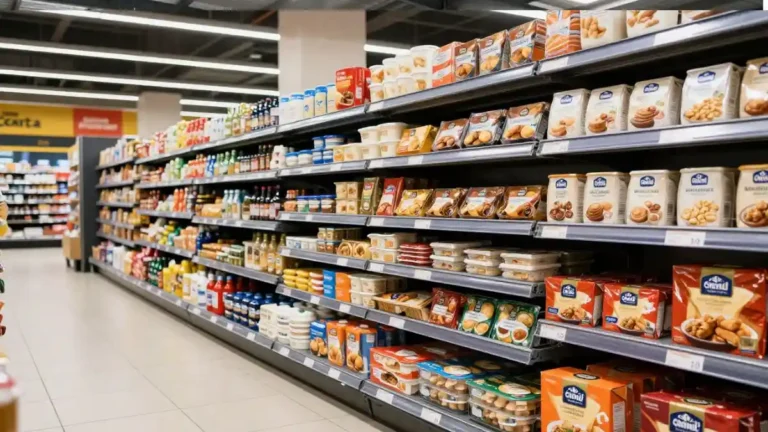
This is most visible in meat, bakery, snacks, dairy, ambient meals and nuts. In these categories, scale and consistency are as important as product development.
Many manufacturers supplying Spanish supermarket shelves now run hybrid models. They support their own brands while also running significant retailer programmes, contract production and customised formats for different chains.
This ranking of the Top 10 Private Label Manufacturers in Spain is based on FY2024 publicly available financial disclosures and company reporting. The revenue shown reflects total company turnover for FY2024. Private label-only sales are rarely disclosed in a consistent way.
Employee figures are included only where companies have publicly reported them.
In practical terms, private label manufacturers in Spain are food and beverage producers that make retailer own-label products at industrial scale.
Production is typically carried out under supermarket-defined specifications. These cover price architecture, quality standards, packaging formats and delivery performance.
Spain’s strongest private label capabilities are concentrated in:
- Meat processing, both fresh and cooked
- Frozen bakery and industrial bake-off formats
- Snacks, nuts, and cereal-based products
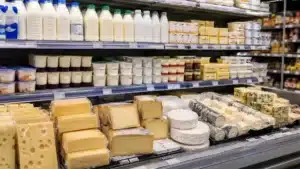
- Dairy and chilled everyday staples
- Ambient meals, vegetables, and shelf-stable convenience lines
Top 10 private label manufacturers in Spain
| Rank | Company | FY2024 Revenue | Core Strength | Founded | Employees (Public) |
|---|---|---|---|---|---|
| 1 | Vall Companys Group | €4.163bn | Meat & integrated agri-food | 1956 | 14,406 |
| 2 | Grupo Fuertes (Group) | €2.559bn | Protein & diversified food group | 1969 | 8,600+ |
| 3 | Europastry | €1.506bn | Frozen bakery, doughs, bake-off | 1987 | Not disclosed |
| 4 | Incarlopsa | €1.203bn | Pork processing & cooked meats | 1979 | Not disclosed |
| 5 | CAPSA FOOD | €996.7m | Dairy & chilled staples | 1969 | Not disclosed |
| 6 | Importaco | €898.5m | Nuts, snacks, bottled water | 1940s* | 2,503 |
| 7 | Vicky Foods | €707m | Bakery, pastries, sliced bread | 1952 | 3,600+ |
| 8 | Cerealto | €526m | Private label snacks & bakery | 2012 | Not disclosed |
| 9 | Grupo Alimentario IAN | €267m | Ambient meals, veg, convenience | 1974 | 841 (avg.) |
| 10 | Grupo APEX | €173m | Snacks & savoury categories | 2005* | Not disclosed |
*Founded years can vary by legal entity and group structure. Where a group is built through acquisitions, the “origin” year reflects the start of the core business commonly cited publicly.
1) Vall Companys Group
Vall Companys is one of Spain’s largest integrated agri-food groups. Its footprint covers feed, farming, processing and distribution across multiple protein categories.
That vertical integration gives it a structural advantage in retailer programmes. In these, supply assurance, price stability and traceability sit at the centre of negotiations.
Core categories
- Pork and poultry processing
- Prepared meat formats and value-added lines
- Integrated feed and farming operations
Why it matters to supermarket buyers
The group can deliver volume with predictable lead times. It can also adapt cuts, pack sizes and format rules that change by retailer and region.
For private label, that often means tight specification control and consistent yields. It also means packaging choices that protect margin without weakening shelf-life.
Strategic direction in Spain has leaned toward capacity discipline and operational efficiency. Investment is typically tied to throughput, automation and supply chain resilience.
When inflation pressure eases, groups like this tend to keep their focus on productivity rather than chasing headline growth.
2) Grupo Fuertes (Group)
Grupo Fuertes is a diversified Spanish food group anchored by protein. ElPozo Alimentación is its best-known industrial platform.
In a private label context, large multi-site processors matter. They can support both branded and retailer programmes without losing scale efficiency.
Core categories
- Meat and processed protein
- Ready-to-cook and value-added formats
- Food group diversification beyond protein
Why it matters to supermarket buyers
ElPozo reported FY2024 turnover of €1.845 billion inside the wider group structure.
The wider group’s scale matters in retailer negotiations because it can bundle capabilities:
- Procurement leverage
- Packaging volume
- Cold chain discipline
- Continuous supply even under volatile raw material cycles
Operationally, the group sits close to the supermarket reality of protein. That means frequent promotions, changing pack formats and tight service levels.
The strongest private label suppliers here can absorb spec changes without breaking factory rhythm.
3) Europastry
Europastry is one of the clearest examples of Spain’s private label model operating at international scale.
Frozen bakery is built on standardisation. That means consistent dough performance, repeatable bake-off results and retailer-controlled quality perception at the point of sale.
Core categories
- Frozen bakery doughs and bake-off
- Pastry and bread formats
- Retail and foodservice supply
Why it matters to supermarket buyers
FY2024 revenue was reported at €1.506 billion. In private label terms, frozen bakery is as much about format engineering as product formulation.
Pack sizes, bake times, display performance and waste reduction all influence retailer economics.
Large supermarket chains depend on suppliers that can simplify in-store bake-off. Output must stay uniform across locations.
The category is closely linked to packaging performance. Film durability, sealing integrity and the balance between barrier protection and cost all matter. They directly affect breakage rates, shelf-life and store-level shrink.
4) Incarlopsa
Incarlopsa is closely linked to Spain’s retailer–supplier model.
It operates as a major industrial processor in high-volume meat categories. Here, retailer programmes are structured around scale, price stability and delivery discipline.
Core categories
- Pork processing
- Cooked meats and sliced formats
- Industrial-scale chilled distribution
Why it matters to supermarket buyers
Public reporting places FY2024 revenue at about €1.2 billion.
That scale puts the company in a limited group of Spanish manufacturers that can run private label at full industrial throughput. For them, it is not just supplementary capacity alongside branded lines.
In operational terms, meat private label depends on process consistency. Retailer confidence rests on:
- Yield management
- Microbiological controls
- Packaging integrity
- Shelf-life predictability
- Delivery cadence
In periods of cost volatility, suppliers that keep stable service levels tend to move on from transactional relationships. They become long-term structural partners.
5) Importaco
Importaco operates at scale in nuts and snacks, and also in bottled water. This makes it relevant to private label across both ambient and high-volume staple categories.
The company’s profile is closely tied to Spain’s high-throughput retailer programmes.
Core categories
- Nuts and snack formats
- Ingredient-style supply and finished packs
- Bottled water
Why it matters to supermarket buyers
FY2024 turnover was reported at €898.5 million, with workforce figures publicly stated at 2,503.
Private label in this space is driven by a blend of cost control and strict quality standards. These include aflatoxin management, traceability and consistent roasting/seasoning outcomes.
Retailers want predictable product performance at a stable price architecture.
Large snack and nut suppliers tend to invest where it protects service. Examples are automated packing, improved QA systems and diversified sourcing that reduces the shock of crop volatility.
6) CAPSA FOOD
CAPSA FOOD (linked to Central Lechera Asturiana) sits in a category where private label is structurally strong: dairy.
The sector is defined by cold chain discipline and stable demand. Retailers depend on large processors to keep shelves full without interruptions.
Core categories
- Milk and dairy staples
- Chilled formats and related value-added dairy
- Regional strength with national distribution
Why it matters to supermarket buyers
Public reporting referenced FY2024 turnover near the €1.0 billion level (996.7 million euros in some reporting).
In private label terms, dairy is often a margin-managed category. Pricing is visible, volumes are high and retailers want stable supply with tight quality performance.
CAPSA-type suppliers become strategically important through balance. They keep quality and service steady while navigating input costs, farmgate dynamics and retailer price strategies.
Packaging choices also matter heavily here. Cost per unit is sensitive, and sustainability rules are tightening across Europe.
7) Vicky Foods
Vicky Foods is a large Spanish bakery and pastry manufacturer operating at industrial scale. Over time, it has expanded beyond its original bakery base into multiple product lines.
Its relevance to private label is category coverage and capacity. When retailers need volume in bakery staples, suppliers like this become central.
Core categories
- Pastries and cakes
- Sliced bread and bakery staples
- Additional food manufacturing lines over time
Why it matters to supermarket buyers
The company states FY2024 sales of €707 million and employment of more than 3,600 people.
In supermarket categories, bakery private label is often about the mix. Everyday staples protect price image, while seasonal or special formats keep the aisle moving.
Speed also matters. Bakery turns quickly and promotions are frequent. Retailers value suppliers who can handle the peaks without quality drift.
Packaging plays a practical role here: shelf-life protection, transport resilience and display readiness.
8) Cerealto
Cerealto stands out because it is explicitly positioned as a private label manufacturer, particularly across snacks and bakery-related categories.
Its profile fits the classic European private label model: high-volume production, a multi-country customer base and tight operational control.
Core categories
- Snacks and cereal formats
- Biscuits and baked goods
- Private label-focused industrial supply
Why it matters to supermarket buyers
Turnover reported for 2024 was €526 million.
In private label, that scale matters. It signals repeatability and a customer mix that can support long production runs.
For supermarkets, the value is not only price. It is reliability in recipe control, consistent eating quality and packaging formats that match planograms and distribution realities.
The strategic direction in this space has leaned toward category focus and portfolio shaping.
Private label manufacturers that stay disciplined on core categories typically defend margins better than those trying to be “everything” at once.
9) Grupo APEX
Grupo APEX has grown as a Spanish snacks platform through brand building and acquisitions.
In private label supply, snack manufacturers matter because the category is promotion-heavy and format-sensitive. Retailers shift pack sizes, seasoning profiles and margin targets often.
Core categories
- Savoury snacks
- Popcorn and related formats
- Multi-brand and multi-format production
Why it matters to supermarket buyers
Public communication referenced revenue above €173 million for its fiscal period closing in 2024 (depending on reporting cut-off).
For supermarkets, the relevance is speed-to-shelf and operational flexibility. This covers:
- Seasonal flavours
- Limited-time packs
- Retailer-specific formats
- Packaging that can handle distribution stress without high breakage
Some snack suppliers can deliver both baseline value packs and more premium “trade-up” formats. In a private label setting, they tend to become category partners rather than short-term suppliers.
10) Grupo Alimentario IAN
Grupo IAN is an established Spanish food manufacturer in ambient meals and vegetable-based convenience.
Ambient private label is structurally important. It supports retailer margin planning, reduces cold chain pressure and delivers long shelf-life reliability.
Core categories
- Ambient meals and convenience formats
- Vegetable-based products and prepared lines
- Export-oriented supply
Why it matters to supermarket buyers
Public reporting cited FY2024 turnover of €267 million and an average workforce of 841.
In private label terms, ambient is driven by spec discipline: flavour consistency, texture management and shelf-life validation. Packaging integrity is central here.
Failures in sealing, barrier performance or process control become visible at scale, quickly.
Ambient categories tend to prioritise plant efficiency and recipe standardisation. They also favour packaging systems that protect shelf-life without blowing up unit cost.
Market structure impact: why Spain’s private label suppliers look different
Spain’s private label model is shaped by a few structural realities.
First, scale is concentrated. A small number of industrial groups dominate high-volume categories. That concentrates bargaining power, but it also concentrates operational responsibility.
When one large supplier fails, the retailer cannot always replace volume quickly.
Second, retailer programmes are built around service, not just price. Price matters, but the “real contract” is performance. That means lead time reliability, fill rate, packaging compliance and audit readiness.
The suppliers that win tend to treat private label as a core business line, not a secondary outlet.
Third, Spain’s geography rewards multi-site networks. If production and distribution sit too far from demand centres, the cost of service rises fast.
That is one reason bakery, dairy and protein suppliers with strong domestic plant footprints hold long-term positions.
Category dominance trends: where private label is strongest in Spain
Several categories keep pulling private label deeper into the centre of supermarket strategy:
Protein and processed meat
High frequency, high basket relevance. Tight spec control and cold chain discipline drive supplier selection.
Frozen bakery and bake-off
Retailers control the “fresh perception” at the store level while keeping factory-level standardisation.
Snacks and nuts
Promotion-heavy and format-driven. Packaging and quality systems become competitive differentiators.
Dairy staples
Price-visible and volume-driven, with strong retailer control over shelf architecture.
Ambient meals and vegetable convenience
Stable logistics, long shelf life, and repeat purchases create a strong base for retailer programmes.
Industry direction: what changes next
The direction of travel is visible across the supply base.
More factory automation, less tolerance for variability: Retailer programmes reward repeatability. Automation reduces variability, which reduces claims and protects service.
Packaging compliance becomes a core industrial capability: Retailers are tightening packaging requirements across recyclability, weight reduction and material choices. That pushes manufacturers to invest in packaging engineering, not just product R&D.
Portfolio discipline increases: The private label manufacturers that hold margins tend to narrow their focus. They pick categories where they can run longer production campaigns and protect throughput. Complexity becomes expensive.
Consolidation pressure remains: Capital investment is often required, for example in automation, energy systems and packaging upgrades. Smaller manufacturers can struggle to keep up. That can push more acquisitions and platform-building, especially in snacks, bakery and ambient convenience.
Frequently Asked Questions
Who is the largest private label manufacturer in Spain?
Vall Companys Group ranks first, with FY2024 revenue of €4.163bn and 14,406 employees. It is an integrated agri-food group covering feed, farming, processing and distribution.
Does the revenue in this ranking show private label sales only?
No. Revenue reflects total company turnover for FY2024, because private label-only sales are rarely disclosed in a consistent way.
Which categories are strongest for private label in Spain?
The strongest categories are protein and processed meat, frozen bakery and bake-off, snacks and nuts, dairy staples, and ambient meals and vegetable convenience.
Conclusion
The Top 10 Private Label Manufacturers in Spain show how Spanish supermarkets depend on industrial-scale suppliers. These suppliers protect price image, keep service stable and deliver consistent category performance.
Private label in Spain is not simply “cheaper alternatives.” It is a supply chain system built around specifications, packaging rules, audit readiness and factory-level reliability.
The manufacturers at the centre of that system have scale and process discipline. They can also absorb change without breaking service.
Looking into 2026, the strongest pressure points remain the same: capacity investment, packaging compliance and operational repeatability.
The suppliers that stay structurally relevant will keep factories efficient. They will also meet tighter retailer standards across quality, traceability and packaging performance.
Editor’s Note: Information in this report is based on publicly available FY2024 company financial disclosures, company statements, and industry reporting. Revenue shown reflects total company turnover, not private label-only sales, unless explicitly disclosed.