
Retail technology spending across Latvia accelerated again in 2026. Supermarkets pushed harder on:
- Automation
- Electronic shelf labels
- Self-checkout expansion
- Inventory visibility
- Omnichannel fulfillment
Labor shortages, pricing volatility and growing pressure on grocery margins are forcing retailers to modernize. Store operations are changing faster than many expected only a few years ago.
The biggest shift is no longer basic digitization. Latvia supermarket operators are now investing in operational infrastructure. It directly affects pricing speed, checkout efficiency, warehouse productivity and e-commerce fulfillment.
Companies such as StrongPoint, NCR Voyix and VusionGroup are increasingly shaping how Baltic grocery retail works at store level.
Top 10 Retail Technology Companies in Latvia 2026 At a Glance
| Rank | Company | FY Revenue | Strategic Role |
|---|---|---|---|
| 1 | StrongPoint | €1B+ ecosystem exposure | Grocery automation |
| 2 | NCR Voyix | Multi-billion global operations | POS & self-checkout |
| 3 | VusionGroup | Major European ESL leader | Smart shelf systems |
| 4 | ELKO Group | Baltic regional distribution giant | Retail-tech distribution |
| 5 | Neto Baltic | Regional systems integrator | Store infrastructure |
| 6 | Diebold Nixdorf | Global retail infrastructure leader | Checkout automation |
| 7 | Zebra Technologies | Global enterprise mobility leader | Inventory & scanning |
| 8 | Ingenico | Global payments infrastructure | Payment terminals |
| 9 | SAP | Enterprise software giant | Retail ERP systems |
| 10 | Oracle | Global cloud retail systems | Inventory & commerce |
1. StrongPoint
Founded in Norway in 1985, StrongPoint has become one of the most operationally important retail technology companies across the Baltic grocery sector.
What it supplies
The company’s position in Latvia is tied closely to supermarket automation. These areas are now becoming standard investments for regional retailers:
- Self-checkouts
- Click-and-collect systems
- E-commerce picking tools
- Automated grocery lockers
- In-store fulfillment infrastructure
Why it matters to supermarket buyers
StrongPoint understands how Nordic and Baltic grocery operations actually work. That matters in Latvia, where supermarkets must reduce labor dependency while improving fulfillment speed.
The company has also benefited from the wider expansion of online grocery systems across the Baltics. Retailers increasingly want integrated infrastructure instead of isolated technology deployments.
In practical terms, StrongPoint is no longer just selling equipment. It is helping shape how Latvia supermarket operations function day-to-day.
2. NCR Voyix
NCR Voyix remains one of the core infrastructure suppliers behind modern grocery retail globally, and Latvia is no exception.
What it supplies
The company’s systems sit directly inside supermarket operations through:
- Point-of-sale platforms
- Self-checkout systems
- Transaction infrastructure
- Store-level retail software
Why it matters to supermarket buyers
For large grocery operators, uptime matters more than hype. Retailers cannot afford checkout disruption during periods of inflation pressure and rising labor costs.
That operational reliability is why NCR Voyix keeps a strong position across European supermarket infrastructure.
The Latvian market may be smaller than Germany or Poland. Even so, regional chains still need enterprise-grade systems that can scale across multiple locations and support omnichannel retail.
3. VusionGroup
Formerly known as SES-imagotag, VusionGroup has become one of the most influential companies in European retail digitization.
Why electronic shelf labels are growing
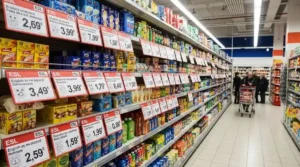
Electronic shelf labels moved rapidly across Baltic grocery retail during 2025 and 2026.
Retailers increasingly need faster price adjustment. Inflation volatility keeps affecting food pricing and promotions.
Latvia supermarket operators are also dealing with labor pressure. ESL systems reduce the manual shelf maintenance needed inside stores.
Why it matters to supermarket buyers
VusionGroup’s strength comes from scale. The company is already deeply integrated into European grocery infrastructure. This gives retailers confidence around deployment support and long-term operational continuity.
The technology is now becoming mainstream rather than premium.
That shift matters because Latvia retail technology spending is increasingly focused on operational savings rather than experimental innovation projects.
4. ELKO Group
Headquartered in Riga, ELKO Group plays a different role from the other companies in this ranking. It is arguably one of the most important.
ELKO is not mainly a supermarket software company. Instead, it is one of the largest technology distributors and infrastructure partners across the Baltics and the wider Eastern European region.
Why distribution matters
That distribution role is critical.
Global companies still need regional infrastructure partners to deploy technology efficiently across local retail markets. These include Zebra Technologies, payment-terminal manufacturers, hardware vendors and enterprise retail system providers.
ELKO’s regional scale gives it influence far beyond Latvia alone.
As Baltic retailers modernize store infrastructure, companies like ELKO increasingly become the operational bridge between international technology manufacturers and local supermarket chains.
That makes the company strategically important inside the wider Latvia FMCG and Latvia retail technology ecosystem.
5. Neto Baltic
Neto Baltic has built a strong position through practical retail systems integration across the Baltic region.
What it supplies
The company works heavily in areas such as:
- Checkout modernization
- Security systems
- Electronic shelf labels
- Retail hardware deployment
- Store infrastructure upgrades
Why it matters to supermarket buyers
This type of integration work rarely gets major attention outside the industry. But it is essential to supermarket modernization.
Retailers do not simply buy technology. They need systems installed, maintained, integrated and operationally managed.
Neto Baltic understands local Baltic retail environments better than many multinational firms.
That local knowledge keeps growing in value as Latvia supermarket operators accelerate store modernization projects.
6. Diebold Nixdorf
Diebold Nixdorf remains one of the largest retail automation infrastructure companies operating globally.
The company is particularly strong in automated checkout systems, cash management technology and enterprise retail hardware.
Why it matters to supermarket buyers
European retailers keep investing in checkout automation because labor efficiency remains a long-term operational concern.
Latvia follows the same trend seen across Central and Northern Europe. Grocery chains increasingly want stores that can handle higher transaction volume with fewer staffing bottlenecks.
Diebold Nixdorf’s scale gives retailers confidence around long-term service support and infrastructure continuity.
For supermarket operators, that matters more than trend-driven retail-tech headlines.
7. Zebra Technologies
Zebra Technologies has become increasingly important inside modern grocery operations because retail inventory systems are becoming more mobile.
Warehouse workers, store staff, fulfillment teams and even customers now interact directly with handheld retail technology systems.
The growth of “Scan & Go” retail models has strengthened Zebra’s position further across European grocery retail.
How Latvian supermarkets use it
Latvian supermarkets are increasingly deploying handheld systems for:
- inventory visibility,
- stock replenishment,
- warehouse efficiency,
- order picking,
- and customer self-scanning.
The company’s strength is operational practicality.
Retailers care about inventory accuracy and speed. Zebra’s systems directly affect both.
8. Ingenico
Ingenico remains one of the dominant payment infrastructure companies inside European retail.
Nearly every supermarket modernization strategy now includes payment-system upgrades.
What shoppers expect
Consumers expect the following across every retail format:
- Faster transactions
- Contactless systems
- Mobile wallet compatibility
- Reliable payment infrastructure
For Latvia supermarket operators, payment speed increasingly affects customer flow and checkout efficiency.
Ingenico’s systems are deeply embedded across European retail infrastructure. This makes the company one of the foundational players behind modern grocery commerce.
9. SAP
SAP keeps serving as the enterprise backbone for many major retailers operating across Europe.
What retailers use it for
Consumers rarely see SAP systems directly. Even so, retailers depend heavily on them for:
- supply-chain visibility,
- procurement,
- finance,
- merchandising,
- logistics,
- and inventory planning.
Large grocery chains operating across the Baltics need centralized systems that can manage increasingly complex retail networks.
SAP’s role inside Latvia retail technology is therefore more structural than visible. But structurally, it remains extremely important.
10. Oracle
Oracle keeps a major position in cloud-based retail infrastructure, commerce systems and inventory management technology.
Retailers increasingly want centralized platforms that connect physical stores with digital retail operations.
Why it matters to supermarket buyers
That shift has become more important as grocery chains expand loyalty systems, online ordering, pricing analytics and omnichannel retail operations.
Oracle’s strength comes from enterprise-scale integration.
For larger retailers operating across multiple Baltic markets, those systems help unify management across stores, warehouses and digital channels.
Industry Outlook
Several trends are now reshaping Latvia retail technology investment during 2026.
Electronic shelf labels are rapidly moving into mainstream grocery operations. Supermarkets want better pricing flexibility and less manual workload.
Self-checkout expansion is continuing. But the bigger operational shift is now happening around mobile Scan & Go systems and fulfillment automation.
Warehouse efficiency is becoming increasingly important. Grocery e-commerce is settling into a permanent operational layer rather than a temporary pandemic-era trend.
Retailers are also investing more heavily in infrastructure resilience. That includes payment systems, inventory visibility, fulfillment speed and real-time pricing management.
Importantly, Latvia sits inside the wider Baltic retail network. Local supermarket operators often follow modernization patterns already visible in Estonia and the Nordic region.
Frequently Asked Questions
Which company ranks first among retail technology companies in Latvia?
StrongPoint ranks first. Founded in Norway in 1985, it supplies grocery automation such as self-checkouts, click-and-collect systems and automated grocery lockers.
Which Latvian-headquartered company is in the ranking?
ELKO Group is headquartered in Riga. It is one of the largest technology distributors and infrastructure partners across the Baltics and the wider Eastern European region.
Why are electronic shelf labels spreading in Latvian supermarkets?
Retailers need faster price changes because inflation volatility keeps affecting food pricing and promotions. ESL systems also reduce manual shelf maintenance at a time of labor pressure.
What Happens Next
Several developments are expected to shape Latvia’s retail technology sector during the rest of 2026 and beyond:
- Electronic shelf labels will likely keep expanding across both discount and mid-tier grocery retail as pricing pressure remains volatile.
- Retail automation investment is expected to grow further, particularly around self-checkout systems, fulfillment infrastructure and inventory visibility.
- Regional integration across Baltic retail supply chains will keep deepening. Retailers want to standardize operational systems between Latvia, Lithuania and Estonia.
- The next competitive phase may centre less on customer-facing apps and more on operational efficiency inside stores and warehouses.
The direction is already becoming clearer.
Retail technology companies are no longer simply supplying hardware to supermarkets. Increasingly, they are shaping how the wider Latvia supermarket, Latvia FMCG and Baltic grocery infrastructure operates.
Editor’s Note: This analysis is based on company reports, regional retail infrastructure activity, Baltic supermarket modernization trends, enterprise retail deployments, and publicly available industry information from company and sector sources.