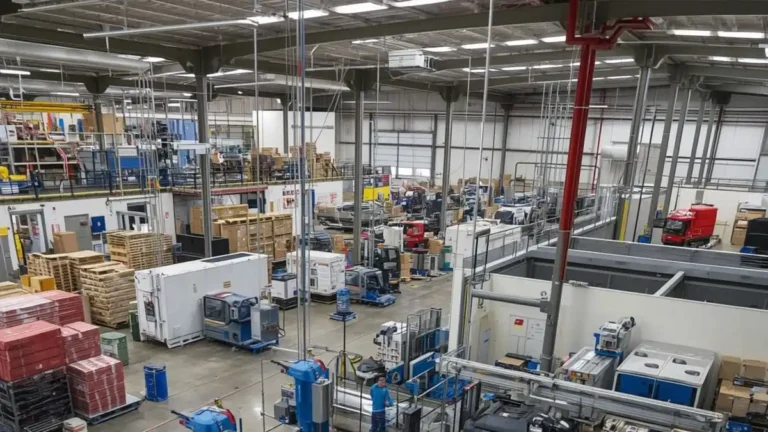

Slovakia’s packaging sector is becoming increasingly important to the wider Central European grocery and manufacturing economy.
Several forces are reshaping the market in 2026:
- Supermarket private label growth
- Rising corrugated-box demand
- FMCG exports
- Pressure to reduce plastic use
Large international packaging groups are expanding regional operations across Slovakia. Meanwhile, domestic manufacturers continue supplying flexible films, industrial materials and food packaging systems into neighbouring countries, including Poland, Hungary, Austria and Czechia.
The biggest competitive shift is happening around sustainable packaging. Paper-based transport packaging, recyclable flexible films and lightweight food containers are now directly tied to retailer cost control and supply-chain efficiency.
Companies like Chemosvit, Mondi, DS Smith and Smurfit Westrock are increasingly influencing how products move through the Slovakia supermarket and Slovakia FMCG sectors.
Top Slovakia Packaging Companies 2026
| Rank | Company | FY Revenue | Strategic Role |
|---|---|---|---|
| 1 | Chemosvit Folie | Private | Flexible packaging leader |
| 2 | Chemosvit Group | Private | Industrial packaging backbone |
| 3 | Terichem Tervakoski | Private | Technical films supplier |
| 4 | Mondi | €7.3B+ | Sustainable paper packaging |
| 5 | DS Smith | £8B+ | Retail corrugated packaging |
| 6 | Smurfit Westrock | $30B+ | Logistics packaging scale |
| 7 | Berry Global | $12B+ | Consumer plastic packaging |
| 8 | Constantia Flexibles | €2B+ | Flexible FMCG packaging |
| 9 | Greiner Packaging | €2B+ | Rigid food packaging |
| 10 | Tetra Pak | Private | Beverage carton systems |
1. Chemosvit Folie
Key facts
Chemosvit Folie was founded in 1934 and is headquartered in Svit. It remains the strongest domestic packaging manufacturer in Slovakia.
The company specialises in flexible packaging films. These are used across food, industrial, hygiene and consumer-goods applications.
Its export footprint extends across Europe. This makes it one of the country’s most internationally integrated industrial producers.
Why it matters to supermarket buyers
Many multinational competitors operate regional branches. Chemosvit, by contrast, is a genuine Slovak manufacturing base with local R&D, production infrastructure and long-established industrial capacity.
Its operational importance goes beyond packaging alone. Flexible films remain essential for supermarket private label expansion. Retailers keep pushing suppliers toward lighter, cheaper and more transport-efficient packaging.
Chemosvit also benefits from the wider shift toward recyclable mono-material packaging. This is especially true in food packaging and frozen products.
2. Chemosvit Group
What it does
Chemosvit Group is one of Slovakia’s largest integrated industrial systems. It combines several activities:
- Packaging
- Fibres
- Machinery
- Engineering
- Technical materials
The company’s packaging relevance comes from its deep manufacturing ecosystem rather than simple shelf visibility.
That matters in 2026. Supermarket packaging is increasingly tied to industrial supply-chain resilience and local production capability.
Why it matters to supermarket buyers
The group supports large-scale manufacturing operations across Central Europe. It remains heavily connected to Slovakia export production.
Its structure gives it unusual flexibility compared with smaller packaging firms. Many competitors focus on one niche category. Chemosvit can combine technical manufacturing, industrial conversion and packaging-material production under one wider network.
That scale keeps the company highly relevant across Slovakia FMCG and industrial distribution systems.
3. Terichem Tervakoski
What it supplies
Terichem Tervakoski is one of the more strategically important companies in the Slovak packaging industry. Even so, it gets less mainstream attention than larger corrugated-box groups.
The company focuses heavily on polyester films, capacitor films and technical packaging materials. These are used across industrial and consumer applications.
Its importance comes from specialisation. Technical film production is one of the hardest packaging categories to scale. It needs high manufacturing precision and advanced conversion capability.
Terichem supplies materials used in:
- Flexible packaging systems
- Labels
- Industrial laminates
- Electronics-related applications
Why it matters to supermarket buyers
That makes the company especially important inside the wider Central European manufacturing supply chain.
In many ways, Terichem represents the industrial side of Slovakia packaging rather than the supermarket-facing side. But those systems are increasingly linked. Retailers demand stronger packaging durability, transport efficiency and shelf-life protection.
4. Mondi
Key facts
Mondi was founded in 1967 and is headquartered in the UK and Austria. It operates one of the most important paper and packaging assets in Slovakia through Mondi SCP in Ružomberok.
The Ružomberok mill is one of the largest integrated pulp and paper operations in Central Europe. It remains critical to regional packaging production.
Why it matters to supermarket buyers
Mondi’s influence in Slovakia has grown significantly. Supermarkets and FMCG suppliers are moving away from heavier plastic use toward fibre-based transport packaging.
Corrugated demand continues rising across grocery logistics. Supermarkets need:
- Stronger e-commerce distribution systems
- More efficient pallet transport
- Lower packaging taxes linked to plastic waste
Mondi also benefits from the rapid growth of paper-based private label packaging.
Retailers across Central Europe are redesigning packaging formats to improve recyclability while reducing logistics costs. That trend directly supports Mondi’s long-term operational importance.
5. DS Smith
What it supplies
DS Smith has become one of the most influential corrugated-packaging companies connected to Slovakia supermarket distribution networks.
The company focuses heavily on packaging used by FMCG suppliers and supermarkets:
- Retail-ready packaging
- Transport systems
- E-commerce corrugated solutions
- Shelf-display packaging
Why it matters to supermarket buyers
Its strongest advantage is retail integration. DS Smith works closely with grocery and consumer-goods companies on packaging efficiency, shelf optimisation and transport performance. It does more than simply manufacture cardboard boxes.
That distinction matters because supermarkets now treat packaging as an operational cost-control tool.
Across Central Europe, retailers are reducing secondary packaging waste. At the same time, they are increasing pressure on logistics performance. DS Smith sits directly inside that transition.
The company is also benefiting from growing demand for paper alternatives replacing rigid plastics across supermarket supply chains.
6. Smurfit Westrock
What it supplies
The merger between Smurfit Kappa and WestRock created one of the world’s largest packaging groups. Its Central European operations now hold major strategic relevance for Slovakia.
Smurfit Westrock plays an especially important role in industrial corrugated systems tied to:
- Manufacturing exports
- Electronics
- Automotive logistics
- Large-scale distribution
That matters because Slovakia remains one of Europe’s most export-driven manufacturing economies.
Why it matters to supermarket buyers
Heavy-duty corrugated packaging demand continues growing. Industrial producers want stronger transport protection and more efficient palletisation systems.
The company’s scale also gives it unusual pricing power inside the packaging market. Large corrugated suppliers increasingly influence freight efficiency, warehouse operations and supermarket transport systems across the wider region.
At the same time, Smurfit Westrock is heavily involved in the ongoing paper-versus-plastic transition shaping European packaging investment in 2026.
7. Berry Global
What it supplies
Berry Global remains one of the largest plastic-packaging suppliers connected to consumer goods, food packaging, hygiene products and household categories.
The company’s relevance in Slovakia comes through regional manufacturing integration and FMCG exposure. It does not rely purely on domestic production scale.
Berry supplies packaging formats widely used across supermarket shelves:
- Food containers
- Closures
- Bottles
- Films
- Household-product packaging
Why it matters to supermarket buyers
Plastic packaging remains under heavy regulatory pressure across Europe, but demand has not disappeared.
Instead, manufacturers are focusing on lighter materials, recycled resin content, downgauging and operational efficiency.
Berry continues adapting to those realities while keeping large exposure to supermarket supply systems. That keeps the company highly relevant inside Slovakia private label and Slovakia FMCG packaging operations.
8. Constantia Flexibles
What it supplies
Constantia Flexibles has become one of Europe’s most important flexible-packaging suppliers for food, pharmaceuticals and consumer products.
Its operational importance comes from three strengths:
- Barrier packaging technology
- Lightweight flexible formats
- High-volume FMCG integration
The company also has strong exposure to coffee packaging, snack foods, dairy applications and pharmaceutical systems across Europe.
Why it matters to supermarket buyers
Flexible packaging remains strategically important. Supermarkets keep pushing suppliers toward lower transport costs and longer shelf life.
Rigid formats often increase freight costs and storage pressure. Flexible packaging reduces both. Constantia benefits directly from those economics.
Inflation pressure continues affecting supermarket margins in 2026. As a result, lightweight packaging efficiency remains commercially valuable across grocery distribution networks.
9. Greiner Packaging
What it supplies
Greiner Packaging plays a major role in rigid food packaging across Central Europe.
The company is heavily exposed to formats widely used across supermarket retail:
- Yogurt containers
- Dairy packaging
- Chilled-food packaging
- Convenience-food systems
That gives Greiner unusually high visibility inside everyday grocery operations.
Why it matters to supermarket buyers
Unlike heavy industrial packaging groups, Greiner operates much closer to direct supermarket shelf activity. Its packaging formats are tied closely to dairy processors, food manufacturers and private label chilled-food suppliers.
The company is also deeply involved in reusable-material development and recyclable rigid-plastic systems.
That positioning matters. Supermarkets are under growing pressure to reduce packaging waste without harming food safety or shelf life.
Rigid food packaging remains one of the hardest categories to replace fully with paper alternatives. This keeps companies like Greiner commercially important despite wider anti-plastic policy pressure.
10. Tetra Pak
What it supplies
Tetra Pak remains one of the most structurally important beverage-packaging companies connected to the Slovak grocery sector.
Its systems dominate large sections of dairy, juice and shelf-stable liquid packaging across Europe.
Companies supplying milk, flavoured drinks, cream products and long-life beverages continue depending heavily on carton infrastructure.
That makes Tetra Pak critical to supermarket operations, even without massive visible factory infrastructure inside Slovakia itself.
Why it matters to supermarket buyers
The company’s influence comes through systems integration. Packaging machinery, filling systems, carton materials and beverage logistics are all linked within the Tetra Pak ecosystem.
That level of integration makes the company extremely difficult to replace within large-scale beverage supply chains.
For supermarket retailers, beverage packaging efficiency remains directly tied to:
- Transport costs
- Refrigeration efficiency
- Shelf life
- Inventory management
Industry Outlook
Packaging pressure across Central Europe is no longer focused only on sustainability headlines. The real commercial battle is now about operational efficiency.
Supermarkets want all of the following at the same time:
- Cheaper transport costs
- Faster warehouse handling
- Lower packaging taxes
- Stronger recyclability performance
- Better shelf efficiency
That combination is forcing packaging suppliers to redesign materials, logistics systems and manufacturing processes at once.
Corrugated demand is expected to remain strong as supermarket distribution networks expand across the region. Flexible packaging will likely keep growing because of cost advantages and lower freight weight.
At the same time, rigid plastic suppliers face increasing pressure to improve recyclability and recycled-content integration.
The companies adapting fastest to those realities are increasingly shaping the wider Slovakia supermarket and Slovakia FMCG supply chain structure.
Frequently Asked Questions
Which is the leading domestic packaging company in Slovakia?
Chemosvit Folie, founded in 1934 and based in Svit, is the strongest domestic packaging manufacturer in Slovakia. It specialises in flexible packaging films and exports across Europe.
Where is Mondi’s main Slovak operation?
Mondi operates through Mondi SCP in Ružomberok. The mill is one of the largest integrated pulp and paper operations in Central Europe.
What do Slovak supermarkets want from packaging suppliers?
They want cheaper transport, faster warehouse handling, lower packaging taxes, stronger recyclability and better shelf efficiency at the same time. This is pushing suppliers to redesign materials, logistics and manufacturing.
What Happens Next
Several trends are expected to shape Slovakia’s packaging sector during the rest of 2026 and beyond.
Paper-based transport packaging will likely keep expanding. Retailers are trying to reduce plastic exposure and improve recycling performance across the wider Slovakia supermarket sector.
Flexible packaging demand is expected to remain strong across Slovakia FMCG manufacturing. Lightweight formats continue lowering logistics and storage costs for food producers and private label suppliers.
Regional supply-chain integration between Slovakia, Poland, Hungary, Austria and Czechia will likely deepen further. Multinational packaging firms are consolidating Central European operations and strengthening cross-border distribution systems.
Private label growth will also keep affecting packaging design. This applies especially to food, dairy, frozen products and household goods tied to the expanding Slovakia private label market.
Industrial automation is expected to become increasingly important across packaging conversion, warehouse systems and retail logistics. Manufacturers are pushing for faster operational efficiency.
The structure is already becoming clearer. Packaging companies are no longer operating only as suppliers to manufacturers. Increasingly, they are shaping how products move across the wider Slovakia supermarket, Slovakia retail packaging and Central European grocery economy.
Editor’s Note: This report was prepared using company reports, industrial manufacturing data, packaging-sector analysis, corporate materials, and publicly available industry information connected to the Slovakia packaging market and wider Central European packaging supply chain.