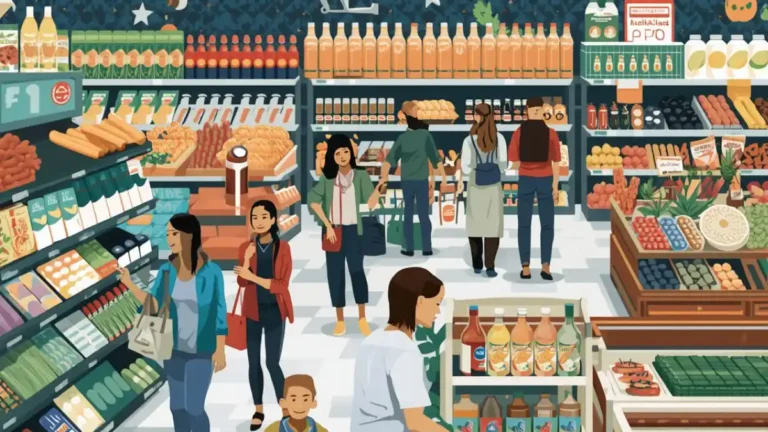

The Top 10 Supermarkets in Australia 2026 reflects a highly concentrated retail market. It is built around three groups:
- two dominant national chains
- a large independent supermarket network supplied through wholesalers
- a growing mix of discount, warehouse and convenience grocery operators
This ranking uses a hybrid methodology. It considers:
- revenue
- store network
- market share
- supply chain control
- influence over suppliers and private label manufacturing
Together, these companies define how food, fresh produce and FMCG products move through the Australian retail system. That journey runs from manufacturers and importers to distribution centres and supermarket shelves across the country.
At a Glance
| Rank | Company | Store Count (approx. 2026) | Primary Role |
|---|---|---|---|
| 1 | Woolworths | 1,130+ | Market leader (revenue & share) |
| 2 | Coles | 860+ | National supermarket chain |
| 3 | ALDI Australia | 600+ | Discount supermarket |
| 4 | Metcash (IGA) | 1,280+ | Wholesale & independent network |
| 5 | FoodWorks | 320+ | Independent retail group |
| 6 | Costco Australia | 15+ | Warehouse bulk retail |
| 7 | 7-Eleven Australia | 750+ | Convenience leader |
| 8 | Friendly Grocer | 210+ | Community supermarket network |
| 9 | SPAR Australia | 115+ | Independent / convenience network |
| 10 | Drakes / Harris Farm | 70+ / 38+ | Independent / premium fresh |
By store footprint, independent supermarkets supplied through wholesale networks make up the largest number of physical grocery stores in Australia. This is true even though Woolworths and Coles dominate total revenue and market share.
1. Woolworths Group
- Founded: 1924
- Headquarters: Sydney, Australia
- Store Network: 1,130+ supermarkets and metro stores
- FY Revenue: FY2025 Group Revenue about AUD 69.1 billion (Australian Food about AUD 51.4 billion)
Core Segments
- Woolworths Supermarkets
- Woolworths Metro
- Big W
- Online grocery and e-commerce
- Distribution and supply chain operations
Market role
Woolworths is the largest supermarket operator in Australia and the most influential food retailer in the country.
It operates national distribution centres, advanced logistics infrastructure and a large private label programme.
Its scale and national supply chain give it significant influence over supplier pricing, packaging formats and product distribution across the Australian grocery market.
Strategy
Woolworths holds the leading market position by revenue and market share in Australian food retail. As part of its long-term strategy, it continues to invest in:
- automated distribution centres
- e-commerce fulfilment
- expansion of private label ranges
Woolworths is extending Everyday Rewards to U-GO fuel sites, connecting qualifying supermarket purchases with discounts at more self-service stations.
2. Coles Group
- Founded: 1914
- Headquarters: Melbourne, Australia
- Store Network: 860+ supermarkets
- FY Revenue: FY2025 Group Revenue about AUD 44.3 billion (Supermarket revenue about AUD 39 billion)
Core Segments
- Coles supermarkets
- Coles Online
- Coles Express convenience retail
- Private label products
- Distribution and logistics
Market role
Coles is the second largest supermarket chain in Australia and the main competitor to Woolworths.
It runs a national store network supported by major distribution infrastructure. It also has a large private label programme across packaged food, fresh food and household goods.
Its scale and integrated supply chain make it a key player in the Australian grocery market. It has strong influence over sourcing, pricing and product distribution.
Strategy
As the second largest supermarket operator in the country, Coles continues to focus on supply chain automation, digital retail expansion and private label growth.
3. ALDI Australia
- Founded (Australia): 2001
- Headquarters: Germany
- Store Network: 600+ stores
- FY Revenue: Estimated about AUD 15 billion (Australia)
Core Segments
- Discount supermarkets
- Private label grocery products
- Limited assortment retail model
- National store expansion
Market role
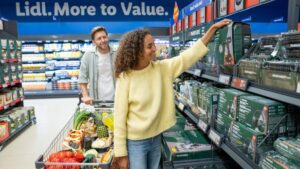
ALDI runs a discount supermarket model based almost entirely on private label products and a limited assortment. This lets the company keep lower operating costs and competitive pricing.
The company has played a major role in price competition across the Australian supermarket sector. It has significantly influenced private label development, packaging formats and pricing strategies across the industry.
Strategy
ALDI is the largest discount supermarket operator in Australia. It continues to focus on store network expansion and private label product development.
4. Metcash (IGA / Foodland / Independent Network)
- Founded: 1927
- Headquarters: Sydney, Australia
- Store Network: Supplies 1,280+ independent supermarkets
- FY Revenue: FY2025 about AUD 19.5 billion (wholesale revenue)
Core Segments
- Wholesale food distribution
- IGA supermarkets
- Foodland supermarkets
- Independent retailer supply
- Liquor distribution
Market role
Metcash operates as a wholesale distributor rather than a traditional supermarket chain.
It supplies independent supermarkets across Australia, including IGA and Foodland stores, through its national wholesale and distribution network.
The company plays a central role in supporting independent retailers with sourcing, logistics, private label products and distribution infrastructure.
What buyers should note
Metcash represents the largest independent supermarket supply network in Australia.
Its reported revenue reflects wholesale distribution, not total retail sales at IGA stores. Those retail sales are significantly higher at consumer level.
The company’s strategy focuses on strengthening independent retail supply chains. It is also expanding private label programmes to make independent supermarkets more competitive.
5. FoodWorks
- Headquarters: Australia
- Store Network: 320+ stores
- FY Revenue: Estimated (independent retail network)
Core Segments
- Independent supermarkets
- Local grocery retail
- Fresh food retail
- Community-based supermarket operations
Market role
FoodWorks is an independent supermarket group supported by wholesale supply networks. It focuses mainly on regional and community-based supermarkets across Australia.
The group plays an important role in rural and regional food distribution. This matters most in areas where large national chains have a smaller presence.
Strategy
FoodWorks is a major independent supermarket network in Australia. It continues to focus on strengthening regional store networks, supporting independent retailers and increasing local sourcing.
6. Costco Australia
- Founded (Australia): 2009
- Headquarters: United States
- Store Network: 15+ warehouse stores
- FY Revenue: Estimated AUD 4–5 billion (Australia)
Core Segments
- Warehouse bulk retail
- Private label (Kirkland Signature)
- Membership retail model
- Bulk grocery and FMCG sales
Market role
Costco runs a warehouse retail model focused on bulk purchasing, private label products and low-margin pricing. This lets it compete on value across grocery, packaged food and household goods.
Its membership-based format and bulk sales model influence pricing benchmarks in several FMCG categories. They also put competitive pressure on traditional supermarkets, especially in packaged goods and household essentials.
Strategy
Costco is the leading warehouse retail operator in Australia. It continues to focus on warehouse expansion and private label growth.
7. 7-Eleven Australia
- Founded: 1977 (Australia)
- Headquarters: Australia (Owned by Seven & i Holdings, Japan)
- Store Network: 750+ stores
- FY Revenue: Estimated
Its Anytime Media launch brings store advertising, loyalty and digital channels together, with further expansion of the in-store screen network planned for 2027.
Core Segments
- Convenience grocery
- Ready-to-eat meals
- Beverages and snacks
- Fuel retail partnerships
Market role
7-Eleven is the largest convenience store network in Australia. It plays a significant role in impulse grocery sales, beverages and ready-to-eat food across urban and fuel-linked locations.
The company runs a high-frequency convenience model. It focuses on ready meals, snacks and daily essentials rather than full-range supermarket retail.
This makes it an important part of the convenience segment of the Australian grocery market.
Strategy
7-Eleven is the largest convenience grocery retailer in Australia. It is continuing to expand fresh food, ready meals and convenience retail formats.
8. Friendly Grocer
- Headquarters: Australia
- Store Network: 210+ stores
- FY Revenue: Estimated
Core Segments
- Independent supermarkets
- Community grocery retail
- Regional and suburban stores
- Wholesale supplied retail
Market role
Friendly Grocer is a banner group for independent supermarkets and convenience stores supplied through wholesale distribution networks. It supports locally owned retailers in neighbourhood and community locations.
The group plays an important role in community-based grocery retail. This is especially true in suburban and regional areas, where independent stores remain an important part of the retail landscape.
Strategy
Friendly Grocer is a community supermarket network operator in Australia. It continues to focus on expansion in regional and neighbourhood retail locations.
9. SPAR Australia
- Headquarters: Netherlands (global network)
- Store Network: 115+ stores
- FY Revenue: Estimated
Core Segments
- Independent supermarkets
- Convenience stores
- Wholesale distribution
- Private label products
Market role
SPAR is an independent supermarket and convenience retail network. It supplies independently owned stores across Australia, supported by wholesale distribution, banner branding and private label programmes.
The network focuses on convenience retail, neighbourhood supermarkets and independently operated grocery stores. This places it in the independent retail segment of the Australian grocery market.
Strategy
SPAR is an independent and convenience retail network operator in Australia. It continues to focus on expanding convenience retail formats and independent store supply.
10. Drakes Supermarkets / Harris Farm Markets
- Headquarters: Australia
- Store Network: Drakes 70+ stores / Harris Farm 38+ stores
- FY Revenue: Estimated
Core Segments
- Supermarkets
- Fresh food retail
- Premium grocery retail
- Private label products
- Direct sourcing
Market role
Drakes is the largest independent supermarket chain in Australia. Harris Farm Markets focuses on fresh produce and premium grocery retail.
Both companies operate in the independent and specialised supermarket segment of the Australian grocery market.
These retailers focus on fresh food, local sourcing and differentiated product ranges. They do not compete directly with national chains on scale.
Strategy
Drakes and Harris Farm Markets are independent and premium supermarket operators in Australia. They continue to focus on store expansion, fresh food retail and local sourcing.
Structure of the Australian Supermarket Market
The Australian supermarket industry operates through three main retail structures:
- The national supermarket duopoly. Woolworths and Coles control the majority of grocery revenue and operate national distribution networks.
- The independent supermarket network. This is supplied by wholesalers such as Metcash. It includes IGA, FoodWorks and Friendly Grocer stores, and represents the largest number of physical supermarket locations in the country.
- Discount, warehouse and convenience operators. ALDI, Costco and 7-Eleven compete on price, bulk purchasing and convenience rather than full-line supermarket range.
Regulatory scrutiny
In 2025 and 2026, the Australian supermarket sector has faced increased regulatory scrutiny. This has focused on pricing practices, supplier relationships and market concentration.
Government and competition authorities have examined pricing behaviour and supplier margins across the sector. Much of this relates to the dominant market position of Woolworths and Coles.
This regulatory environment is expected to influence pricing strategies, supplier negotiations and private label expansion across the industry.
Supply Chain and Private Label Power
Private label products are a major part of the Australian supermarket industry.
Woolworths, Coles and ALDI run large private label programmes. These influence manufacturing, packaging and supplier relationships across many product categories:
- packaged food
- fresh food
- frozen products
- beverages
- household goods
ALDI operates mainly on a private label model. Woolworths and Coles continue to expand their own brand ranges across value, mid-tier and premium categories.
Independent supermarket networks supplied through Metcash also run private label programmes. These let smaller retailers compete on price and product range.
A centralised supply chain
From a supply chain perspective, the Australian supermarket industry is highly centralised.
Major retailers operate large distribution centres that control product flow across the country. This means access to national distribution networks is critical for suppliers entering the Australian retail market.
What Happens Next in the Australia Supermarket Industry
The Australian supermarket industry is expected to keep evolving through:
- automation
- e-commerce growth
- private label expansion
- supply chain modernisation
Major retailers are investing in automated distribution centres and online grocery fulfilment. Discount retail is expected to keep expanding through ALDI store growth.
Convenience grocery and ready-to-eat food retail are also expected to grow. This growth will come mainly through convenience chains and fuel-linked retail locations.
At the same time, regulatory oversight and competition policy are expected to remain a major factor. They will shape pricing strategies and supplier relationships across the sector.
Frequently Asked Questions
Which is the largest supermarket in Australia?
Woolworths is the largest supermarket operator in Australia by revenue and market share. It has 1,130+ supermarkets and metro stores and reported FY2025 Group Revenue of about AUD 69.1 billion.
Which supermarket network has the most stores in Australia?
Metcash supplies 1,280+ independent supermarkets, including IGA and Foodland stores. Independent supermarkets supplied through wholesale networks make up the largest number of physical grocery stores in Australia.
How big is ALDI in Australia?
ALDI Australia has 600+ stores and estimated revenue of about AUD 15 billion. It is the largest discount supermarket operator in the country.
Conclusion
The Top 10 Supermarkets in Australia 2026 represent a retail structure built around five types of operator. These are national supermarket chains, independent retail networks, discount supermarkets, warehouse retail and convenience grocery operators.
Together, these companies define the structure of the Australia supermarket sector. They play a central role in private label manufacturing, logistics and supplier access across the wider Australia FMCG supply chain.
Distribution networks, private label programmes and retail logistics continue to evolve. Through these changes, these retailers will remain key gatekeepers for companies operating in the Australia packaging and grocery distribution market.
Editor’s Note: This article is based on publicly available company reports, industry estimates and retail market analysis. Revenue figures are based on FY2024 or FY2025 where available. Estimated figures are used for private companies where audited revenue is not publicly disclosed.
Currency figures are in Australian dollars. Metcash revenue represents wholesale distribution revenue, not total retail sales at independent supermarkets.