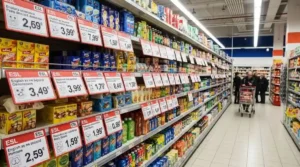

Andorra’s FMCG market works very differently from most European grocery economies. The country has supermarkets, distributors, duty-free retail activity, and strong consumer spending linked to tourism, but very little large-scale domestic manufacturing. Most food, beverages, household products, and personal care goods sold across Andorra arrive through Spanish and French supply chains rather than local factories.
That structure has become increasingly important as supermarkets across Europe face pricing pressure, private label expansion, and tighter logistics management. For FMCG suppliers, Andorra operates less like an independent manufacturing market and more like a compact cross-border retail hub connected to Iberian and Southern European distribution systems. The companies dominating shelves are therefore mostly international FMCG groups with strong regional logistics reach, retailer partnerships, and imported product portfolios.
Why Andorra Has Few Domestic FMCG Manufacturers
Andorra’s economy is heavily concentrated around tourism, retail, hospitality, banking, and duty-free commerce rather than industrial production.
The country’s small population, mountainous geography, and limited agricultural land restrict the scale needed for major FMCG manufacturing operations. Unlike larger European economies, Andorra does not have a broad industrial base capable of supporting large packaged-food factories, beverage plants, or multinational consumer goods production networks.
Instead, the grocery sector depends heavily on imported products from neighboring Spain and France.
That means supermarket shelves in Andorra are largely controlled by international FMCG brands distributed through regional logistics systems. Spanish wholesalers, French food suppliers, and multinational manufacturers therefore play a much larger role in the market than local production companies.
The result is a retail-driven FMCG economy rather than a manufacturing-driven one.
At a Glance: Top FMCG Companies Serving Andorra
| Rank | Company | FY Revenue | Strategic Role |
|---|---|---|---|
| 1 | Nestlé | CHF 91.4B | Packaged food and beverages |
| 2 | Danone | €27.4B | Dairy and nutrition products |
| 3 | Unilever | €59.6B | Food and personal care |
| 4 | Mondelez International | $36B+ | Snacks and confectionery |
| 5 | The Coca-Cola Company | $45B+ | Soft drinks and beverages |
1. Nestlé
Founded in 1866 and headquartered in Vevey, Switzerland, Nestlé remains one of the most visible FMCG suppliers across Andorra’s grocery sector.
The company’s strength in the market comes from distribution scale rather than local manufacturing. Nestlé products enter Andorra mainly through Spain and France, giving the company access to well-developed logistics infrastructure and long-established retailer relationships.
Coffee, bottled water, confectionery, breakfast products, culinary brands, and infant nutrition all maintain strong visibility across Andorran supermarkets and convenience retail.
Tourism also supports Nestlé’s position. The country’s high seasonal visitor traffic increases demand for globally recognized brands that retailers can replenish quickly through nearby Iberian supply systems.
That operational advantage matters in a small market where inventory efficiency and delivery flexibility are often more important than manufacturing presence.
2. Danone
France-based Danone plays a major role in Andorra’s chilled grocery and dairy segments.
The company benefits from geographical proximity and strong cross-border cold-chain logistics into the Andorran market. Yogurts, dairy beverages, plant-based alternatives, bottled water, and specialized nutrition products remain important categories for supermarkets serving both local residents and tourism-linked foodservice demand.
Danone’s relevance in Andorra is also connected to consumer purchasing patterns.
Many Andorran grocery retailers focus heavily on recognizable European brands because of high tourist turnover and multilingual customer traffic. French and Spanish consumers visiting the country already recognize Danone products, helping retailers reduce merchandising risk.
The company therefore competes through familiarity, distribution consistency, and category depth rather than local production assets.
3. Unilever
Unilever’s role in Andorra extends beyond food retail.
The company maintains visibility across grocery, frozen foods, condiments, personal care, household cleaning, and beauty categories. That broad portfolio gives it unusual importance in smaller retail markets where supermarket shelf space is limited and suppliers capable of covering multiple categories gain operational advantages.
Retailers in Andorra often rely on multinational suppliers that can consolidate logistics across different product segments.
Unilever fits that model well.
Products entering through Spanish and French supply networks allow retailers to source food and non-food consumer goods through interconnected regional distribution systems rather than fragmented local supply arrangements.
That efficiency becomes increasingly valuable as European retailers continue tightening inventory control and transportation costs.
4. Mondelez International
Mondelez International holds a strong position in Andorra’s confectionery and snacking market.
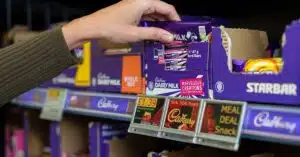
Brands such as Oreo, Milka, Cadbury, Toblerone, and LU biscuits maintain wide availability across supermarkets, convenience stores, petrol retail, and tourism-focused retail locations.
Snack consumption remains commercially important in Andorra because of visitor traffic tied to skiing, mountain tourism, and cross-border shopping activity.
Portable packaged foods perform particularly well in those environments.
Mondelez also benefits from duty-free retail dynamics. International travelers are often more likely to purchase globally recognized confectionery brands, especially in travel-oriented shopping environments.
That gives the company additional visibility beyond traditional supermarket sales.
5. The Coca-Cola Company
The Coca-Cola Company remains one of the most operationally important beverage suppliers in Andorra.
The company’s products move through extensive Iberian distribution infrastructure that supports supermarkets, hotels, restaurants, cafés, ski resorts, and convenience retail across the country.
Beverage demand in Andorra is closely tied to tourism cycles.
Winter sports activity, hospitality demand, and high seasonal visitor numbers create significant beverage consumption peaks throughout the year. Global beverage suppliers with strong replenishment capability therefore maintain a competitive advantage.
Coca-Cola’s scale also gives retailers predictable availability across multiple beverage categories, including carbonated drinks, water, juices, energy drinks, and ready-to-drink products.
That consistency matters in a market where supply interruptions can quickly affect tourist-facing retail operations.
The Real Structure of Andorra’s FMCG Market
Unlike larger European economies, Andorra’s grocery sector depends far more on retail efficiency and import logistics than domestic industrial production.
Most FMCG activity revolves around:
- supermarket operations
- wholesale distribution
- tourism-linked retail
- cross-border sourcing
- duty-free commerce
- imported private label supply
That makes the market commercially unusual.
Local retailers must balance the needs of residents with heavy seasonal tourist demand while managing relatively small national volumes. As a result, multinational suppliers with flexible regional logistics often outperform smaller manufacturers without established Iberian distribution systems.
Private label also remains structurally tied to Spain and France.
Many retailer-owned products sold in Andorra are sourced through Spanish and French manufacturing partners rather than local Andorran production facilities.
Industry Outlook
Andorra’s FMCG market is unlikely to evolve into a major manufacturing economy.
Instead, the next phase of growth will probably focus on logistics optimization, tourism-driven retail demand, imported private label expansion, and premium grocery positioning.
Cross-border infrastructure will remain central to the country’s supply chain model.
Spanish and French distribution operators are expected to maintain dominant influence because Andorra’s domestic scale does not support extensive industrial FMCG investment.
At the same time, supermarkets may increasingly prioritize flexible sourcing arrangements as European food inflation, transportation costs, and supply-chain volatility continue affecting regional grocery operations.
What Happens Next?
The companies serving Andorra’s FMCG sector are likely to compete less through local manufacturing and more through distribution reliability, category breadth, and retailer partnerships.
Tourism will continue shaping purchasing behavior across beverages, confectionery, chilled foods, convenience products, and premium grocery categories. That trend is also influencing how the wider Andorra supermarket sector manages imported inventory and seasonal product demand.
For international FMCG groups, Andorra remains a small market in volume terms, but strategically useful because of its tourism economy, duty-free retail structure, and strong connection to Iberian grocery logistics. The country also remains closely tied to the broader Andorra private label supply structure supported by Spanish and French manufacturing networks.
That means the country will probably remain heavily dependent on imported consumer goods for the foreseeable future, particularly as the wider Andorra packaging and grocery distribution system continues relying on cross-border supply chains rather than domestic industrial production.
Editor’s Note: This analysis focuses on the leading international FMCG companies supplying the Andorran grocery market rather than domestic manufacturers. Andorra has very limited large-scale FMCG production capacity, with most supermarket products entering through Spanish and French supply chains.