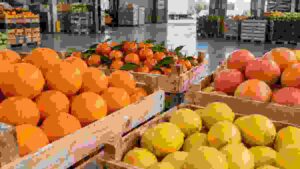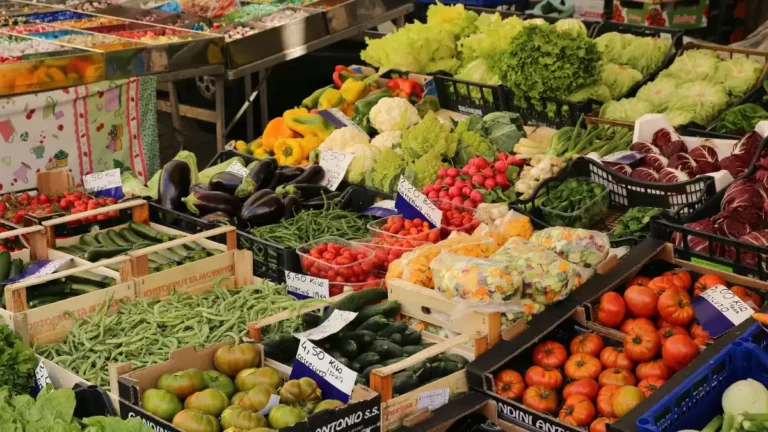

Malta’s fresh produce sector is shaped more and more by import logistics, wholesale coordination and supermarket supply infrastructure. Large-scale domestic farming plays a smaller part.
Three factors have created a highly concentrated produce ecosystem:
- the country’s limited agricultural land
- strong tourism demand
- heavy dependence on imported food
In this system, distributors, wholesale operators and cold-chain specialists play a major role in keeping retail shelves stocked year-round.
Local agriculture is still commercially important in categories such as potatoes, strawberries, herbs, citrus fruits and seasonal vegetables.
But Malta’s food economy depends heavily on efficient maritime logistics, refrigerated warehousing and importer relationships. These keep produce flowing steadily into supermarkets, hotels, restaurants and catering operators.
At a Glance
| Company / Hub | Primary Supply Chain Role | Focus Sector | Market Reach |
|---|---|---|---|
| Pitkalija Wholesale Market | Centralized national produce trading hub | Domestic harvest distribution | National |
| Fruitland Company (Famalco Group) | Fresh produce importer and wholesaler | Imported fruit and vegetables | Tier 1 wholesaler |
| Alf. Mizzi & Sons | FMCG logistics and retail supply | Supermarket and food distribution | Island-wide |
| M&Z Plc | Chilled and ambient food distribution | Retail and HORECA supply | National |
| Koperattiva Produtturi Agrikoli | Agricultural grower coordination | Domestic farming network | National |
Why Malta’s produce market works differently
Fresh produce distribution in Malta works under very different conditions from larger mainland European markets.
The islands rely heavily on imported fruits and vegetables arriving by sea. As a result, these factors directly influence supermarket pricing and availability:
- freight costs
- refrigeration performance
- warehouse efficiency
- supply-chain reliability
Tourism increases the pressure further.
Hotels, restaurants, catering operators and supermarkets need stable year-round supply volumes. Yet Malta’s domestic farming base is relatively small.
As a result, the country’s produce market has become a logistics-driven ecosystem. Wholesalers, importers, distributors and agricultural cooperatives play a bigger role than giant vertically integrated farming corporations.
1. Pitkalija Wholesale Market
- Founded: Modern centralized structure expanded during the 1970s
- Headquarters: Ta’ Qali, Malta
- Core Operations: Produce auctions, wholesale trading, agricultural market coordination
- Market Position: Malta’s central produce marketplace
Pitkalija remains the operational backbone of Malta’s domestic fruit and vegetable trade. The Malta Food Agency’s two-year Pitkalija sales agent contract adds a new commercial route for handling local produce, retailer sales and deliveries.
How it works
The wholesale market is not a traditional private company. It is the country’s regulated produce trading centre. Farmers, distributors, greengrocers, wholesalers and supermarket buyers carry out daily produce deals there.
Much of Malta’s locally grown produce still passes through the Pitkalija system before entering retail circulation.
Why it matters
Its role is especially important for smaller agricultural producers. Many lack direct supermarket logistics infrastructure or centralised distribution capability.
Even as Malta’s retail sector modernises, Pitkalija continues to act as one of the country’s most important agricultural trading mechanisms.
2. Fruitland Company (Famalco Group)
- Founded: Operates within the broader Famalco commercial structure
- Headquarters: Malta
- Core Operations: Fresh produce imports, refrigerated handling, wholesale fruit and vegetable distribution
- Market Position: Major imported produce supplier
Fruitland Company is one of Malta’s more commercially important fresh produce importers and wholesalers.
What it supplies
The company operates within the wider Famalco business structure. It focuses heavily on imported fruits and vegetables supplied to supermarkets, retail chains and HORECA operators.
Its competitive strength comes from international sourcing relationships and cold-chain logistics capability.
Why it matters to supermarket buyers
Malta imports a substantial share of the produce it consumes. Importer reliability therefore directly affects food availability and retail price stability across the islands.
Fruitland’s refrigerated logistics systems and sourcing infrastructure help support year-round supermarket supply. This holds despite shipping disruption and seasonal volatility.
The company also handles internationally recognised produce brands. This strengthens its position in premium imported fruit categories.
3. Alf. Mizzi & Sons
- Founded: 1915
- Headquarters: Marsa, Malta
- Core Operations: FMCG imports, warehousing, retail logistics, chilled distribution
- Market Position: One of Malta’s largest distribution groups
Founded more than a century ago, Alf. Mizzi & Sons has grown into one of Malta’s most influential food and FMCG distribution companies.
What it does
The group operates large-scale logistics infrastructure. It spans:
- imported foods
- warehousing
- chilled distribution
- beverages
- retail supply
- supermarket support operations
It is not a direct fresh produce grower or specialist fruit importer. Even so, it plays an important role in Malta’s wider fresh-food ecosystem through its logistics scale and retail distribution reach.
Why it matters to supermarket buyers
That infrastructure matters more and more in Malta’s import-dependent food economy.
Warehouse capacity, stock coordination and supermarket delivery efficiency now strongly influence how food moves across the islands.
Large operators with established logistics systems are generally more resilient during shipping disruption, freight inflation and stock volatility.
The company’s long-standing relationships across the Malta supermarket and Malta FMCG sectors continue to reinforce its strategic importance in the national food supply chain.
4. M&Z Plc
- Founded: 1995
- Headquarters: Marsa, Malta
- 2025 Revenue: €31.6 million reported
- Core Operations: Chilled logistics, food distribution, retail and HORECA supply
- Market Position: Publicly listed food distribution operator
M&Z Plc has become one of Malta’s most important food distribution and retail supply operators over the past three decades.
What it supplies
The company distributes chilled, frozen and ambient food products throughout Malta and Gozo. Its customers include:
- supermarkets
- convenience stores
- hospitality operators
- catering businesses
Why it matters to supermarket buyers
Its refrigeration and warehousing infrastructure has become more important as retailers keep expanding fresh grocery ranges and imported produce availability.
Transport distances inside the islands are relatively short. However, the market depends heavily on imported food. This creates unusually high dependence on stock coordination and refrigeration reliability.
M&Z’s logistics capability and national distribution footprint have made it a significant operator in Malta’s chilled and fresh-food supply environment.
5. Koperattiva Produtturi Agrikoli
- Founded: Cooperative agricultural structure developed over multiple decades
- Headquarters: Malta
- Core Operations: Farmer representation, produce coordination, agricultural support
- Market Position: Key domestic grower network
The Koperattiva Produtturi Agrikoli remains one of Malta’s most important agricultural cooperative structures.
What it does
The organisation supports local growers in Malta’s fragmented farming sector. It provides market coordination, agricultural representation and produce distribution support.
Many domestic farms operate at relatively small scale compared with larger European agricultural systems.
That weakens their bargaining power when dealing with large distributors and retail operators.
Why it matters
The cooperative therefore plays an important stabilising role. It helps producers keep access to wholesale markets and commercial retail channels.
Supermarkets are placing more emphasis on traceability and local sourcing. As a result, organisations representing domestic growers may keep gaining commercial importance in Malta’s produce ecosystem.
Industry Outlook
Several structural pressures are expected to shape Malta’s produce sector during the rest of 2026 and beyond.
Cold-chain investment is becoming more important as retailers and distributors try to reduce spoilage risk and improve stock reliability.
Supermarket consolidation is also strengthening the influence of larger logistics operators. These can manage higher food volumes through centralised distribution systems.
At the same time, tourism keeps increasing pressure on year-round produce availability across hotels, restaurants and foodservice operators.
Local agriculture is unlikely to replace imported produce at scale. But domestically grown products may keep expanding in premium retail categories. In these categories, freshness, provenance and regional identity carry stronger commercial value.
Frequently Asked Questions
Why does Malta depend on imported fresh produce?
Malta has limited agricultural land, strong tourism demand and a relatively small domestic farming base. Most fruit and vegetables arrive by sea, so importers and cold-chain operators are central to supply.
What is the Pitkalija Wholesale Market?
Pitkalija, at Ta’ Qali, is Malta’s regulated central produce marketplace. Much of the country’s locally grown produce passes through it before entering retail circulation.
What revenue did M&Z Plc report?
M&Z Plc reported 2025 revenue of €31.6 million. Founded in 1995 and based in Marsa, it is a publicly listed food distribution operator.
What Happens Next
Malta’s produce market is expected to become even more logistics-focused over the coming years.
Major priorities across the sector are likely to include:
- import diversification
- refrigeration modernisation
- warehouse efficiency
- supply-chain resilience
Supermarkets may also keep strengthening direct sourcing relationships. They may increase support for local produce programmes tied to freshness and local branding across the wider Malta supermarket sector.
The growing influence of retailer-controlled sourcing is also expected to create new opportunities for Malta private label food development. This applies especially to locally packed produce, chilled foods and regional grocery categories.
At the same time, established Malta A-brands and national food distributors are likely to strengthen their position. They will do so through stronger cold-chain infrastructure, import partnerships and wider supermarket distribution reach.
The balance between imported supply and domestic agricultural production will remain one of the defining features of Malta’s food retail economy.
Editor’s Note: This article was prepared using publicly available company information, Malta agricultural market references, wholesale market data, FMCG distribution analysis, and regional supply-chain research. Financial references are based on publicly disclosed records where available.