
Malta’s packaging sector is far smaller than those of larger European manufacturing economies.
But its strategic importance inside the island’s food, beverage, cosmetics, retail and export supply chains is growing quickly.
Several pressures are pushing local operators to modernise production, conversion, labeling and fulfilment systems:
- rising import dependence
- supermarket logistics pressure
- tourism-driven food demand
- tighter European packaging regulations
The companies leading Malta’s packaging economy are not giant paper mills or multinational resin producers.
Instead, the market is driven by companies with deep local supply-chain integration:
- highly specialised industrial converters
- export-oriented FMCG manufacturers
- beverage bottlers
- packaging infrastructure operators
That structure has created a distinctly Maltese packaging ecosystem. Here, operational efficiency matters more than pure manufacturing scale.
What is Malta’s packaging sector?
Malta’s packaging sector is built around:
- industrial conversion
- FMCG automation
- bottling infrastructure
- corrugated packaging production
- food-service packaging distribution
- export-focused manufacturing operations
Unlike larger European markets, Malta relies heavily on imported raw materials. Local companies focus on filling, conversion, printing, assembly, labeling and logistics-ready packaging systems tied to retail and export demand.
At a glance
| Rank | Company | FY Revenue | Strategic Role |
|---|---|---|---|
| 1 | Toly Products | €100M+ global footprint | Cosmetics packaging manufacturing |
| 2 | Multi Packaging Ltd | Private company | Corrugated cardboard conversion |
| 3 | Foster Clark Products Ltd | Major export manufacturer | FMCG packaging infrastructure |
| 4 | Simonds Farsons Cisk plc | Public company | Beverage bottling and canning |
| 5 | Inserv Limited | Private company | Food-service packaging conversion |
1. Toly Products
What it makes
Founded in 1971, Toly Products has become one of Malta’s most internationally recognised industrial manufacturing companies.
The company is headquartered in Zejtun. It runs advanced injection-moulding and decoration facilities producing luxury cosmetic packaging for global beauty brands. These cover skincare, fragrance and makeup categories.
Its Malta production hub remains central to the company’s international operations.
The facility handles processes tied directly to premium cosmetics packaging demand, including:
- high-precision moulding
- metallisation
- finishing
- assembly
- automated production
Why it stands out
What separates Toly from most Maltese industrial operators is its export scale.
The company competes in a highly specialised global packaging category. Multinational beauty groups increasingly choose suppliers based on product presentation, component precision, sustainability targets and refillable packaging systems.
That international exposure gives Malta a presence in the global luxury packaging industry that is unusually large for the island’s economy.
Toly also reflects a wider trend shaping European packaging manufacturing in 2026. Lightweighting, refill systems, recycled resin integration and premium-format customisation are becoming commercially necessary rather than optional.
The company’s long-term relevance extends beyond cosmetics alone.
Its manufacturing infrastructure shows how Malta can compete internationally through specialised high-value conversion rather than commodity-scale production.
2. Multi Packaging Ltd
What it makes
Multi Packaging Ltd plays one of the most structurally important roles inside Malta’s domestic industrial supply chain.
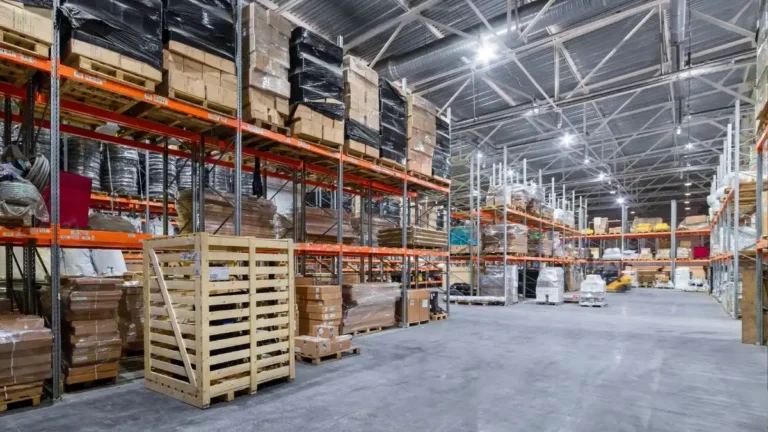
It operates within the wider M. Demajo Group structure. The company is a major producer of corrugated cardboard packaging, transport cartons and industrial shipping materials.
These are used across food manufacturing, retail distribution, pharmaceutical logistics and export handling.
In practical terms, the business supports how products physically move through Malta’s economy.
That matters in a market where import dependency is extremely high. Logistics efficiency directly affects retailer costs, warehousing pressure and product availability.
Why it matters to supermarket buyers
Corrugated packaging demand in Malta has become more operationally important. Supermarkets, wholesalers, food-service operators and importers are placing more emphasis on warehouse efficiency and shelf-ready transport systems.
Unlike luxury packaging specialists, Multi Packaging operates closer to the backbone of the island’s industrial movement infrastructure.
The company’s relevance is tied to:
- transport durability
- secondary packaging
- export preparation
- storage efficiency
- localised customisation for Maltese distribution requirements
Its role has also grown as businesses prepare for stricter European sustainability requirements. These affect recyclable transport packaging and material recovery systems.
Within Malta’s compact economy, domestic corrugated conversion capacity remains strategically valuable. It reduces dependence on slower overseas custom production cycles.
3. Foster Clark Products Ltd
Key facts
Foster Clark is widely recognised internationally as a food and beverage brand manufacturer. But from an industrial packaging perspective, the company is also one of Malta’s largest automated packaging operators.
Founded in Malta in 1889, the company has built extensive export-focused manufacturing infrastructure. It supplies products to markets across the Middle East, Africa, Europe and other international regions.
What it packages
Its operations involve substantial high-speed packaging activity tied to:
- powdered beverages
- dessert mixes
- flavourings
- food ingredients
- FMCG consumer products
That means the company manages large-scale filling, sealing, labeling, sachet conversion, canister handling and carton-packaging systems in-house.
Inside Malta’s industrial economy, those packaging volumes are significant.
Foster Clark is a core example of how FMCG production and packaging infrastructure increasingly overlap.
Rather than acting purely as a food brand owner, the company runs integrated manufacturing systems. Packaging speed, efficiency, storage durability and export readiness directly influence its competitiveness.
This is especially important in Malta because export manufacturing depends heavily on freight optimisation and long-distance shipping reliability.
Packaging performance is therefore tied directly to commercial viability.
The company’s infrastructure also reflects another growing trend across the wider Malta FMCG economy. Manufacturers are increasingly bringing packaging operations in-house instead of outsourcing critical conversion stages.
4. Simonds Farsons Cisk plc
Key facts
Simonds Farsons Cisk plc remains one of Malta’s largest industrial consumer goods operators. It is also one of the island’s most important rigid-packaging infrastructure companies.
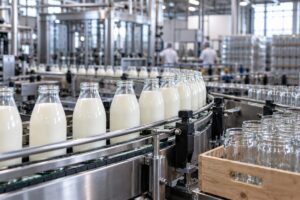
Founded in 1928, the group runs centralised operations in Mriehel. These include large-scale beverage production, bottling, canning, warehousing and logistics systems. They support both domestic distribution and hospitality supply chains.
Packaging capabilities
From a packaging perspective, Farsons operates some of the most sophisticated high-volume automated lines in Malta.
Its infrastructure spans:
- aluminium canning
- glass bottling
- PET blow-moulding
- labeling
- secondary packaging
- palletisation
- distribution logistics
The scale of those operations matters. Malta’s beverage market is heavily tied to tourism, food-service demand, supermarkets, convenience retail and hotel consumption patterns.
Packaging efficiency therefore has direct consequences for product cost, inventory movement and retail availability.
Farsons also reflects the growing industrial convergence between beverage production and packaging engineering.
Modern bottling operations are no longer simple filling plants.
They are highly automated industrial environments. Line speed, packaging durability, transport optimisation and material efficiency influence profitability across the supply chain.
The company’s logistics integration gives it an especially strong position within Malta’s domestic distribution network.
That infrastructure advantage is difficult for smaller beverage competitors to copy.
5. Inserv Limited
What it supplies
Inserv Limited holds a different but highly important position inside Malta’s packaging economy.
It does not compete through massive manufacturing scale. Instead, the company operates as a major supplier and converter serving:
- food-service operators
- supermarkets
- hospitality businesses
- retailers
- industrial buyers
Established in 1980, Inserv built its position around:
- packaging customisation
- printing
- food-contact disposables
- hygiene-linked materials
- branded paper products
- localised B2B distribution
Why it matters to supermarket buyers
That business model aligns closely with Malta’s service-heavy economy.
Tourism, takeaway food growth, supermarket prepared-meal expansion and HORECA demand have all grown. Together they have significantly increased the need for localised food-safe packaging and rapid customised supply.
Inserv benefits directly from those trends.
The company’s role has become increasingly operational rather than purely transactional.
Retailers and food operators now require:
- shorter lead times
- localised printing
- flexible order sizing
- compliance-ready materials
- fast replenishment cycles
Those pressures favour domestic conversion and distribution specialists. They can react quickly inside Malta’s geographically compact but operationally dense retail environment.
The company also reflects the wider shift toward practical packaging logistics rather than purely manufacturing-led scale.
Industry outlook
Malta’s packaging sector is expected to become more specialised over the rest of 2026.
The island is unlikely to develop large raw-material manufacturing capacity comparable to bigger European industrial economies.
Instead, growth is increasingly centred around:
- conversion efficiency
- automated filling systems
- export packaging
- food-service materials
- sustainable transport packaging
- high-value specialty production
Regulation and retail efficiency
European regulatory pressure is also becoming more influential.
Packaging waste reduction targets, recyclability requirements and extended producer responsibility systems are gradually reshaping procurement decisions. This affects supermarkets, beverage operators, FMCG manufacturers and hospitality businesses.
That is particularly important for Malta. Imported product dependency adds logistics complexity around packaging recovery and transport costs.
The market is also seeing stronger overlap between packaging operations and wider Malta retail infrastructure.
Packaging is no longer treated purely as a manufacturing output.
It increasingly works as a supply-chain efficiency tool. It affects warehousing, shelf replenishment, freight optimisation and retail labour costs.
This trend is becoming visible across the wider Malta supermarket, Malta FMCG and Malta private label sectors. Retailers are placing greater emphasis on operational efficiency and localised sourcing resilience.
Frequently Asked Questions
Which are the top packaging companies in Malta in 2026?
The five companies covered are Toly Products, Multi Packaging Ltd, Foster Clark Products Ltd, Simonds Farsons Cisk plc and Inserv Limited.
Does Malta manufacture its own packaging raw materials?
No. Malta relies heavily on imported raw materials. Local companies focus on filling, conversion, printing, assembly, labeling and logistics-ready packaging systems.
Which Maltese packaging company has the largest export scale?
Toly Products, founded in 1971 and based in Zejtun, stands out for its export scale. It produces luxury cosmetic packaging for global beauty brands and has a €100M+ global footprint.
What happens next
Several structural trends are expected to shape Malta’s packaging industry over the next few years.
Corrugated packaging demand is likely to remain strong. Logistics operators and retailers continue to prioritise transport durability and warehouse optimisation.
Food-service packaging needs may also keep growing as tourism activity strengthens and takeaway distribution expands across urban areas.
At the same time, sustainability pressure is expected to speed up investment in recyclable materials, lightweight packaging systems and lower-plastic retail formats.
The companies most likely to strengthen their market positions will be those able to combine:
- automation
- localised conversion capacity
- export readiness
- supply-chain responsiveness inside Malta’s tightly interconnected commercial economy
These shifts are also expected to influence the wider Malta FMCG sector. Manufacturers are looking for more efficient transport packaging and export-ready retail formats.
Packaging modernisation may increasingly affect the Malta supermarket industry. Retailers continue improving shelf-ready logistics, warehouse efficiency and private label sourcing systems.
Growth in Malta private label production could further increase demand for localised carton conversion, labeling, flexible packaging and customised secondary packaging tied to regional retail distribution.
The sector is also expected to become more connected with Malta retail technology investment. Businesses are adopting smarter inventory systems, automated warehousing and packaging-linked logistics tracking tools.
Editor’s Note: This report was prepared using company operational data, industrial activity analysis, manufacturing relevance, FMCG infrastructure exposure, and RevNow structural ranking methodology focused on Malta’s real on-island packaging economy rather than mailbox subsidiaries or non-operational international entities.