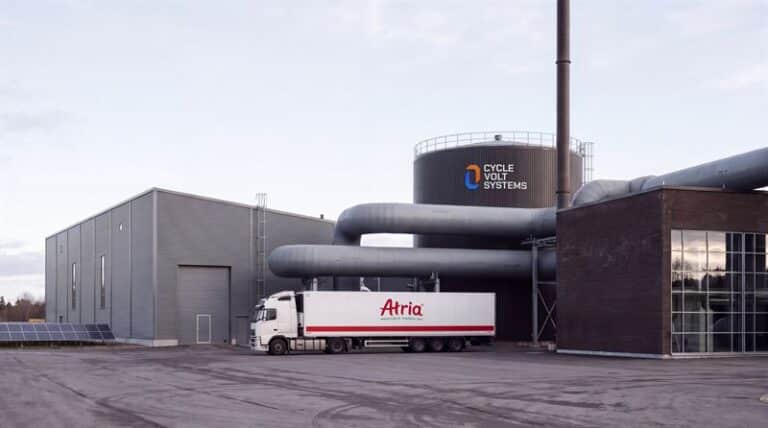

Finnish food producer Atria is backing a 200-megawatt-hour high-temperature energy storage project at its Nurmo production facility, designed to replace some fossil-fuelled steam production with steam generated from stored electricity.
The project was announced on 20 October 2026 by Atria and technology partners Cycle Volt Systems and JL Metals. Work began in summer 2026, with completion targeted for the end of 2027.
The system will store electricity as heat at approximately 700°C, then release energy to produce steam for food manufacturing at an output of around three megawatts. It will connect to the factory’s existing steam production infrastructure.
The distinction matters because heat is an important input for cooking, processing and cleaning food manufacturing equipment. Unlike a conventional electricity battery, a thermal store can deliver heat when the plant needs it, potentially reducing reliance on fossil fuels.
Atria said electricity could be used to charge the storage system during cheaper periods, with the resulting heat available when required. The company expects greater flexibility in energy purchasing and more options for decarbonising its production.
Cycle Volt Systems is responsible for the energy solution, while Kuortane-based JL Metals will manufacture the storage equipment and deliver the technical implementation.
The 200 MWh figure represents stored energy capacity, not electricity consumption per hour. The stated three-megawatt figure describes planned steam output. Actual operating duration will depend on efficiency, usable stored heat and factory demand.
The project forms part of Atria’s wider ready-meal modernisation programme. Business Finland has awarded €24.7 million in clean-transition investment support for the overall manufacturing upgrade and related energy projects. That grant should not be mistaken for the cost of this individual installation.
The development has significance for supermarket suppliers beyond Finland. Food manufacturers across Europe are under pressure to improve efficiency, contain exposure to volatile energy prices and reduce emissions while maintaining production reliability.
Energy-intensive processors could consider similar systems where continuous steam demand and suitable electricity infrastructure make thermal storage practical. But the eventual savings and carbon reductions will need to be measured when the technology is operating.
GTN’s guide to private label manufacturers in Finland examines the food-production sector serving supermarket buyers. Its comparison of leading Finnish FMCG brands provides further context on producers and consumer brands competing in the market.
For retailer buying teams, factory investment may eventually influence supplier resilience, energy costs and environmental performance. It does not itself guarantee lower product prices or compliance with food-safety requirements.
Atria and its partners plan to complete the Nurmo installation by the end of 2027. The performance of the project once operational will be a useful test of whether large-scale thermal storage can be adopted at other food production sites.