
Del Monte’s banana business recorded a $2.7m gross loss in the third quarter, as lower volumes and higher freight and production costs outweighed stronger selling prices in North America.
The fresh-produce group, now reporting as Del Monte Corporation, released the results on 28 October 2026 for the quarter ended 25 September. Group sales rose 7.2% to $1.095bn, supported by the acquired Del Monte Foods business, while parts of the established fresh operation faced weaker trading.
For supermarket buyers, the distinction matters. Growth across the enlarged group does not mean that every fresh category is generating stronger returns or that crop and distribution costs have eased.
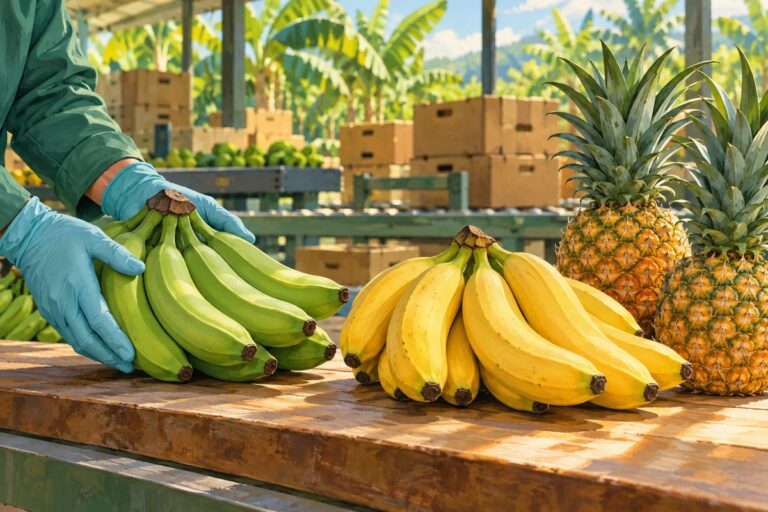
Banana sales were $313.3m, compared with $358.0m a year earlier. The division moved from a $4.6m gross profit to the $2.7m loss. Del Monte attributed the volume decline partly to competition and supply constraints in the Middle East, while higher North American prices provided some support.
Ocean freight costs and movements in the Costa Rican colón added pressure. The company also reported approximately $6.1m of extra production costs in Costa Rica for Black Sigatoka prevention following unusually heavy rainfall.
Those are different sources of cost. A freight surcharge, a currency movement and a crop-protection expense do not follow the same timetable. Buyers discussing supply agreements need to establish which costs are temporary, which affect particular growing regions and which suppliers expect to recover through future pricing.
Del Monte also continued work associated with the previously announced closure of four Costa Rican banana farms. The results do not provide a retailer-by-retailer allocation plan or quantify a resulting reduction in deliveries to Europe. Buyers should seek confirmation of their contracted origins and replacement supply rather than infer shortages from the farm closures alone.
The company’s role in the European banana importing and ripening network makes that distinction commercially relevant. Sourcing fruit, shipping it and managing ripening are linked activities, but a change in one production location does not by itself establish the effect on a supermarket’s receiving schedule.
Fresh and Value-Added Products generated $461.3m in sales and $50.5m in gross profit, compared with $549.0m and $64.3m respectively a year earlier. Its gross margin fell to 10.9% from 11.7%.
The reported sales decline includes the effect of selling Mann Packing in the fourth quarter of 2025, as well as lower avocado and fresh-cut fruit volumes. It should therefore not be treated as a like-for-like measure of demand for the continuing business.
Higher pineapple and fresh-cut production costs, distribution expenses and adverse currency movements also affected the division. For buyers assessing the US fresh-produce supplier market, the figures underline the need to examine category performance alongside the group headline.
Prepared Foods provided a stronger contribution, producing $261.2m in sales and a 17.5% gross margin following the March acquisition. That expanded earnings base helps explain why group profitability improved while the banana business lost money at gross-profit level.
The results add another consideration for suppliers and retailers following Europe’s major fresh-produce groups: portfolio diversification can support the wider company without resolving the operating pressures in individual crops.
The next test is whether Del Monte’s changes to its agricultural footprint, pricing and supply mix improve fresh-category returns. Buyers will need to follow those developments through confirmed origin plans, delivery performance and the terms offered for their next supply period.
Editor’s Note: Based on Del Monte Corporation’s results released on 28 October 2026. GTN has added analysis of fresh-produce sourcing and the reporting boundaries.