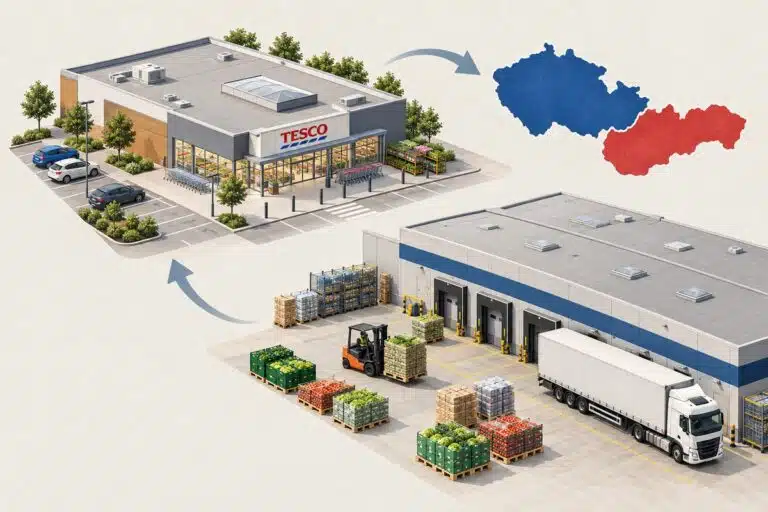

Tesco has agreed to sell its Czech Republic and Slovakia businesses to Ahold Delhaize in a proposed €1.7bn (£1.5bn) transaction, including all stores, offices and three distribution centres in the two countries.
The announcement, published by Tesco on 30 October 2026, sets out a significant change for grocery suppliers serving Central Europe. Completion is expected in the second half of 2027 and remains subject to antitrust and other regulatory approvals.
Until completion, the businesses remain part of Tesco. The announcement does not set out changes to supplier contracts, buying teams, product ranges or store branding. Manufacturers and distributors therefore have an agreed transaction to monitor, rather than a confirmed timetable for procurement integration.
The sale includes the distribution centres at Kralupy in the Czech Republic and Prešov and Beckov in Slovakia. That makes the supply infrastructure part of the proposed transfer alongside the retail estate, a material point for suppliers planning deliveries and stock availability across the two markets.
For businesses supplying the Czech supermarket market, the buyer also brings an existing local presence through Albert. The implications for overlapping ranges and sourcing arrangements will depend on regulatory review and the operating plans announced after that process.
The headline €1.7bn figure is enterprise value on a cash- and debt-free basis. Tesco expects net cash proceeds of €1.2bn (£1.0bn) before tax and transaction costs. Those measures are different: the larger headline value should not be treated as cash available for reinvestment or shareholder returns.
Tesco intends to return most of the net proceeds through an additional share buyback after completion. It says the transaction would be broadly neutral to earnings per share and its net debt-to-EBITDA ratio once that buyback is complete.
The Czech and Slovak businesses generated combined sales of £2.9bn in the previous 52-week period. They accounted for most of the £115m adjusted operating profit reported for Tesco’s Central European region; that profit figure covers the region, rather than only the two businesses being sold.
The proposed ownership change adds a new consideration to the competitive landscape examined in GTN’s Slovak supermarket market coverage. For suppliers, the practical questions are when buying responsibilities might change, how any future range review would work, and whether delivery arrangements would be altered. Tesco has not supplied answers to those questions in this release.
Hungary is excluded from the agreement and continues to be owned and operated by Tesco. The group says it will keep reviewing its options there, leaving its position in the Hungarian grocery market separate from the Czech and Slovak transaction.
The next milestones are regulatory decisions and a more detailed transition plan. Until those emerge, suppliers will need to distinguish the proposed change in ownership from any specific changes to their existing commercial relationship.
Source: Tesco PLC announcement, 30 October 2026. Supplier implications are GTN analysis; no procurement changes have been announced.