
Seven UK Banana Importers, Ripeners and Supply Specialists
Seven relevant British banana supply routes for grocery buyers are SHP Group, J N Fox & Sons, George Perry, Belva Produce, Allfresch, Primafruit and Tropifruit. They serve different functions. SHP and J N Fox explicitly document banana import and ripening facilities; George Perry confirms its own banana rooms. The remaining suppliers offer import, certified sourcing or tropical-fruit distribution, but public evidence does not confirm that every one owns banana ripening chambers. Choosing a supplier therefore starts by deciding whether the purchase includes green fruit, ripening, packing or delivered yellow bananas.
This UK guide is deliberately different from Grocery Trade News’ existing European banana ranking of Fyffes, Chiquita, Dole, Fresh Del Monte, Compagnie Fruitière and Port International and its broader UK fresh-produce revenue ranking. Here the focus is supplier capability within Britain, ownership of local ripening facilities, the 2026 import rules and practical contract selection. Companies are not placed in a turnover or market-share ranking because comparable banana-only revenue, staffing and throughput data are not verified for all seven.
1. Britain’s banana import and ripening market
The UK imports almost all its commercial bananas. UN Comtrade data presented by World Integrated Trade Solution put 2025 imports in the broader commodity category for bananas, including plantains, fresh or dried, at approximately 1.006 billion kilograms and $872.7 million. Colombia and Costa Rica were major recorded source markets. That figure is import trade value, not supermarket turnover, and the customs category includes more products than fresh dessert bananas. It must not be used to invent the percentage supplied by any particular UK company.
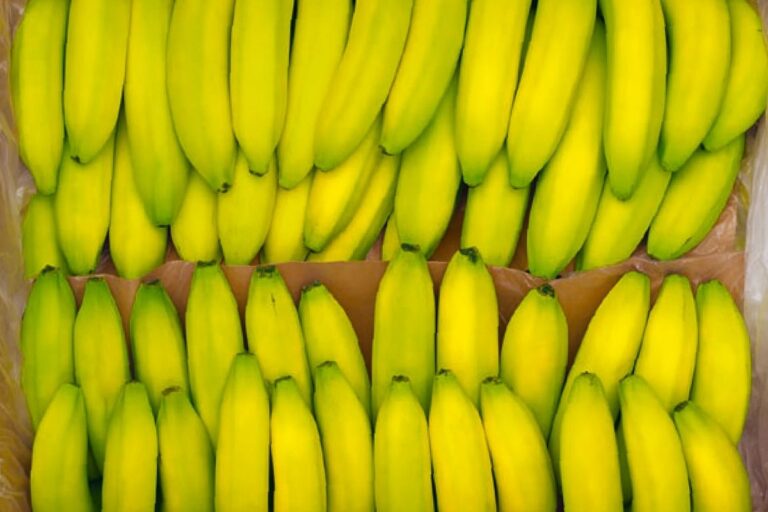
Green bananas typically arrive by ocean freight before being brought to a saleable colour in controlled rooms. An importer arranges the fruit and the trade; a ripener manages the development of colour and eating quality; a distributor delivers the quantity and stage required by a shop. One business may do all three. Others buy or subcontract one function. A buyer comparing a container quotation with a delivered yellow-fruit pallet must account for the extra handling, inspection, ripening, inland haulage and waste exposure.
For a supermarket, colour specification is operational rather than decorative. A slightly greener shipment may make sense for a store with slower turnover, while the same bananas could be too firm for a busy convenience format. Poor temperature handling, bruising or missed delivery windows can lead to empty shelves and waste. Buyer criteria should therefore include room capacity, exact delivery point, quality-defect allowance, claims procedure, certification, country of origin and backup arrangements after a vessel delay.
2. Seven banana sourcing and ripening operators compared
| Supplier | UK location or service | Verified banana activity | Own ripening rooms? |
|---|---|---|---|
| SHP Group | Luton | Import, ripen, pack, distribute | Confirmed |
| J N Fox & Sons | Datchet, near Slough | Import, ripen, pre-pack, deliver | Confirmed |
| George Perry | Birmingham | Wholesale and colour-managed bananas | Confirmed |
| Belva Produce | Telford area | Green importing and yellow fruit supply | Not confirmed |
| Allfresch | Albrighton, Shropshire | Organic and Fairtrade imports | Not confirmed |
| Primafruit | Evesham, Worcestershire | Retailer banana supply and sourcing | Group capability; site unclear |
| Tropifruit | UK wholesale markets | Bananas, plantains and ripening management | Own rooms not confirmed |
2.1 SHP Group — specialist importer and ripener
SHP operates from Luton, Bedfordshire. The group’s current site explicitly describes importing, ripening, packing and distributing bananas and other tropical fruits. Its history places the start of banana importing and ripening under Bob Wells in the late 1940s, following an earlier market-garden business. The company later moved through Kings Langley and Hemel Hempstead to a purpose-built Luton site. The group describes ripening rooms, packing lines and multi-temperature warehouse facilities.
The integrated service may appeal to chains wanting one contractor responsible for several links in their banana programme. Nevertheless, a large facility or a historic trading claim is not proof of the current capacity available to a new customer. Require pallet volumes by week, lead times, evidence of temperature control and a contingency agreement when ports or road freight are delayed. Confirm whether subcontractors handle any steps, what quality is inspected on arrival and when risk transfers to the supermarket.
Company history is supported for the late-1940s banana business. Its verified UK banana-specific turnover for 2025–2026, staff assigned to bananas, current weekly ripening capacity and market share are not published in comparable form. Those figures are undisclosed rather than estimated. A short technical trial of colour-stage deliveries is more useful for supplier selection than a promotional claim about being among the largest.
2.2 J N Fox & Sons — banana pre-packing and ripening
J N Fox & Sons is a British family-owned banana specialist established in 1982 by James Neville Fox, according to its company history. It opened a purpose-built ripening facility in 2004 and now lists an operating address in Datchet near Slough. Its website describes imports, ripening, pre-packing and nationwide deliveries to customer distribution depots. The supplier also presents a six-stage ripening chart and says its pre-pack operation can tailor fruit by origin, size, colour, weight or count.
This is a relevant proposition for buyers who need a defined stage of ripeness and carton configuration rather than only a container of green bananas. Test whether the supplier can achieve the same tolerance over several deliveries and during seasonal changes of origin. Check how the site records ripening room conditions and manages damaged or unexpectedly ripe fruit. Ask for an example of a rejected load and its resolution rather than relying solely on promises about quality.
The J N Fox accreditation page mentions a BRC certification grade and grower-level controls, but its reference to an older issue of the scheme is not proof of current audit status. Ask for a valid certificate naming the actual ripening and packing location. Founding date and a 2004 facility investment are documented; comparable 2025 or 2026 banana revenue, current employee number and UK market share are not. Its ability to supply yellow fruit is independently described on its own first-party pages.
2.3 George Perry — dedicated ripening for Midlands buyers
George Perry operates from Birmingham Wholesale Market and presents a wider fruit and vegetable trading history beginning in 1870. The company explicitly says it has dedicated banana ripening rooms for precise colour management. The business serves wholesale, catering and other customers, and positions its Birmingham location as useful for deliveries across the Midlands and beyond. Its business model differs from a specialist national banana-import programme: it also carries a broad range of fresh produce.
A wholesaler with its own rooms may support smaller orders and short-notice replenishment, although service levels must be confirmed for the exact customer address. A catering group might ask for ready-to-eat bananas; a neighbourhood store may prefer a greener delivery for an extra day of display. Check the box count, maturity target, cut-off time, transport packaging, minimum order value and recovery process for a poor-quality load. The supplier’s broad product range does not guarantee every available banana originates from a directly managed farm.
George Perry describes its current wider operation as a £20 million independent Midlands business, without a clearly dated, separately verified financial year in that particular claim. That should not be reported as 2026 banana turnover. Banana room capacity, employee numbers and UK banana market share remain unverified. The heritage year relates to the long-established produce business and is not proof that its current banana room dates from 1870.
2.4 Belva Produce — green and yellow fruit trade
Belva Produce describes itself as a UK specialist in banana importing and distribution and gives a contact address near Telford, Shropshire. Its first-party website distinguishes green bananas supplied to retailers and ripeners from yellow bananas delivered to wholesale customers. It reports weekly container arrivals into northern Europe and offers annual, seasonal and short-duration supply agreements. This establishes a role in physical sourcing, though not ownership of a UK ripening chamber.
Belva may be a suitable bidder when a chain operates its own rooms or contracts ripening separately. A wholesale customer seeking yellow fruit needs a different quotation covering maturity at the delivery point. Ask where fruit is ripened, which supplier owns or books the capacity, who insures stock in treatment and how a ripening failure is handled. The presence of both green and yellow products on the website does not prove these functions occur at one company-owned location.
Define carton weights, origin documents, shipping reference, delivery frequency, product claims and currency exposure in the agreement. An apparently competitive price per box can be misleading if it excludes final delivery. Belva’s exact founding date, fiscal-year turnover, total UK staff, owned ripening-room capacity and national market share were not verified from primary sources. The accurate description is banana importer and distributor with evidence of both green and yellow supply.
2.5 Allfresch — certified organic and Fairtrade imports
Allfresch identifies a UK office in Albrighton, Shropshire. It describes managing year-round organic and Fairtrade banana imports with producer relationships across export markets. Its Amorita retail banana brand is offered in conventional, organic and Fairtrade-certified variants; the company describes branded packing options and grower traceability. It dates the Amorita brand launch to 2015, which is not necessarily the founding date of the registered company.
This option deserves attention when a buyer’s main need is a differentiated certified banana programme, not simply the cheapest green fruit. Procurement should request live certificates from the relevant farms, packhouses and chain-of-custody organisations, verify whether branding can be used on own-label packs and obtain documentation for country-of-origin and packaging claims. Certification of one source or option does not automatically extend to every banana product handled by the supplier.
The available first-party documents do not identify a specific company-owned UK ripening facility, so Allfresch is classified here as an importer and marketing partner, not a confirmed chamber owner. Reliable comparable revenue, headcount, room capacity and market share are undisclosed. Confirm who supplies the final maturity stage and the contracted delivery terms before treating it as a fully integrated ripening supplier.
2.6 Primafruit — UK supermarket banana programmes
Primafruit, within Fresca Group, operates from Evesham, Worcestershire. Fresca says Primafruit has a long-term exclusive fruit-supply arrangement with Waitrose and sources a wide product mix that includes bananas. In an update dated 12 June 2026, Fresca reported a sustainability award connected to Primafruit’s Waitrose Foundation banana programme. The announcement described a plan for Waitrose bananas to carry both Waitrose Foundation and Fairtrade labelling by the end of summer 2026.
A supermarket buyer can learn from the structure of that project: it combines sourcing, category management, customer specification and certification-related packaging changes. An award announcement is not an independent audit of every origin, nor proof that the proposed pack changes had already reached every store in June. Ask for current certification, traceability requirements and how supply continuity is maintained if an export country encounters a disruption.
Fresca Group says the wider group offers ripening, packing and logistics capabilities, but that statement does not establish a specific banana ripening room owned by the Primafruit subsidiary. Request the operating site’s details and audits. Primafruit’s banana-only 2025–2026 revenue, employees assigned to banana operations, own chamber capacity and market share were not verified. Its inclusion reflects documented UK retail sourcing, with the relationship correctly differentiated from a standalone banana ripener.
2.7 Tropifruit — specialist bananas and plantains
Tropifruit describes importing and distributing tropical and ethnic produce including bananas, plantains, matooke and other vegetables. Its grower-facing material mentions ripening management, customs-approved bonded warehousing and end-to-end logistics. This makes it relevant to independent grocers and wholesalers needing banana types outside the standard dessert-banana supermarket range. Its product mix cannot fairly be assessed using only the criteria used to buy a large retailer’s standard Cavendish bananas.
For cooking bananas and plantains, ripeness requirements are very different from ripe dessert bananas. Buyers should specify cultivar, green or yellow stage, intended use, origin, packaging and temperature handling. Where the supplier offers ripening management, confirm the physical premises, operator, responsibility for treatment and quality evidence. The company’s website alone did not verify ownership of a named UK banana ripening chamber.
The most important measures are whether the required tropical line is available consistently and whether batches arrive with the correct characteristics. An importer serving ethnic wholesale markets may provide better relevant range expertise than a larger general produce business. Historical founding details, banana-only revenue by fiscal year, verified employees and UK market share were not available from comparable primary sources, and are not estimated.
3. Green banana import rules for Great Britain in 2026
Defra’s importing and exporting guidance, updated 17 September 2026, distinguishes green bananas from many other types of fruit. Green bananas entering Great Britain are exempt from plant health controls. A non-EU green banana import into Great Britain must be notified to HMI in England and Wales or SASA in Scotland through IPAFFS and generally requires a banana inspection certificate. A qualifying Exempted Banana Trader can avoid that inspection certificate while its exemption is valid. Do not confuse an inspection certificate under marketing standards with a universal requirement for a phytosanitary certificate.
The same guidance states that green bananas arriving from EU countries do not currently require the marketing standards controls applied to non-EU imports, with the deferred measures not expected before 1 February 2027. Traders should check live official guidance when moving fruit. Northern Ireland has separate DAERA arrangements, and shipments moving through European ports need to be assessed according to whether they entered free circulation or remained under transit. A port of departure alone is insufficient to determine the correct import procedure.
Before awarding a contract, identify the importer of record, the entity submitting IPAFFS notifications, the party responsible for inspection certification, customs classification and how a rejected consignment is treated. Where quality or marketing standards are relevant, request proof of traceability and a route for contacting the packing station and grower. The receiving buyer still needs its own commercial standards: permissible bruising, maturity, carton weight, defects, labelling and a time-limited claims process.
4. How to compare delivered banana programmes
Create a purchasing brief that separates the supply models. A supermarket distribution centre may buy green imported bananas and book controlled ripening independently. A smaller chain may want fully ripened, labelled boxes at its depot. A wholesaler may choose spot supplies of yellow fruit for quick turnover. Ask each bidder to quote the same stage, volume, delivery term, minimum order, grade and cancellation policy. Do not mix an FOB or landed price with a colour-controlled final delivery quote.
- Request the location, ownership and weekly availability of ripening rooms used for the contract.
- Define maturity with an agreed colour chart and quality tolerances on receipt.
- Ask for current food safety audits covering the actual treatment and packing site.
- Inspect chain-of-custody records for organic, Fairtrade and other labelled fruit.
- Agree rejection, credit and emergency substitution procedures before the first delivery.
- Test dispatch and replenishment during promotions, port delays and Bank Holidays.
- Evaluate wastage, on-shelf availability and actual delivered cost rather than carton price alone.
A controlled trial can compare defect rates, store acceptance, actual shelf life and replacement speed. Track quality from arrival through chamber treatment and final delivery, including temperature records, lot numbers and ripening date. If a retailer changes origins during a promotion, it should be told which product specifications change. A claimed national distribution network is only useful when backed by delivery frequency, coverage and escalation arrangements for each contracted depot.
5. Why these suppliers cannot be ranked by revenue
Different companies account for different activities. SHP specialises in integrated banana logistics, George Perry sells many categories of fruit and vegetables, Primafruit belongs to a diversified group, and Allfresch markets certified import programmes. Group turnover cannot be labelled banana turnover; a retailer’s store count is not the supplier’s store count; and banana throughput cannot be inferred from warehouse size. Without audited, comparable fiscal-year data, a ranked revenue table would mislead buyers.
The clearly documented historical dates include SHP’s late-1940s banana business, J N Fox’s 1982 founding and 2004 ripening-facility investment, George Perry’s wider 1870 produce heritage, and Allfresch’s 2015 Amorita brand launch. Those dates describe different milestones. For financial due diligence, request the latest filings for the actual contracting entity, staffing at the operational site, insurance, credit terms and a contingency plan. UK banana market shares and most stand-alone banana division figures remain undisclosed.
6. Comparison with three organic competitor resources
Organic results for the UK-specific banana importer and ripener search include SHP Group’s service and history pages, J N Fox & Sons’ specialist banana and ripening pages, and Belva Produce’s green and yellow supply information. These provide primary evidence of each company’s own strengths. They do not compare all seven firms against a common contractual checklist or explain the different import rules and facility-verification risks. This guide adds those distinctions without claiming that vendor marketing pages are independent proof of capacity.
7. Related sector guides and next steps
Our European banana importer and ripener ranking examines international companies, brands and continental sourcing. Our UK fresh produce company ranking examines diversified produce businesses by revenue. This guide covers different search intent: selecting the actual UK banana importer, ripening or distribution service and comparing contracts, local facilities and legal requirements.
A buyer should select a few appropriate candidates from the table, request site-specific proof of facilities and audits, obtain quotations against a common colour and logistics specification, and trial the fruit under genuine store conditions. The correct supplier is the one that meets the operating requirement with transparent risk and cost, not necessarily the best-known international banana brand.
Editor’s Note: Company claims were checked against SHP, J N Fox, George Perry, Belva, Allfresch, Fresca/Primafruit and Tropifruit primary material. UK trade figures were checked against UN Comtrade via WITS and controls against Defra guidance updated September 2026. Revenue, employee totals and banana market shares are not invented where public records were insufficient.