
Loblaw Companies reported a 3.6% increase in third-quarter retail sales to C$19.86 billion on 19 November 2026, but comparable food-store sales grew just 0.6% as customer traffic declined and basket sizes increased.
The Canadian supermarket and pharmacy group said food retail sales rose 2.8% to C$14.05 billion during the quarter ended 10 October, helped by new store openings. That contrasts with the much slower growth recorded at established grocery locations and highlights the importance of expansion to the company’s overall sales performance.
Food same-store sales growth also slowed from 2.0% in the corresponding quarter last year. Loblaw said its internal food inflation was broadly in line with Canada’s 2.5% food-at-home consumer price index. It reported fewer visits but larger average baskets at existing food stores, a distinction that matters when assessing whether underlying grocery demand is actually strengthening.
Meanwhile, e-commerce sales increased 16.9% across the retail business. The company did not provide a standalone online grocery revenue figure in its headline results, so the growth rate should not be treated as a measure of grocery e-commerce alone.
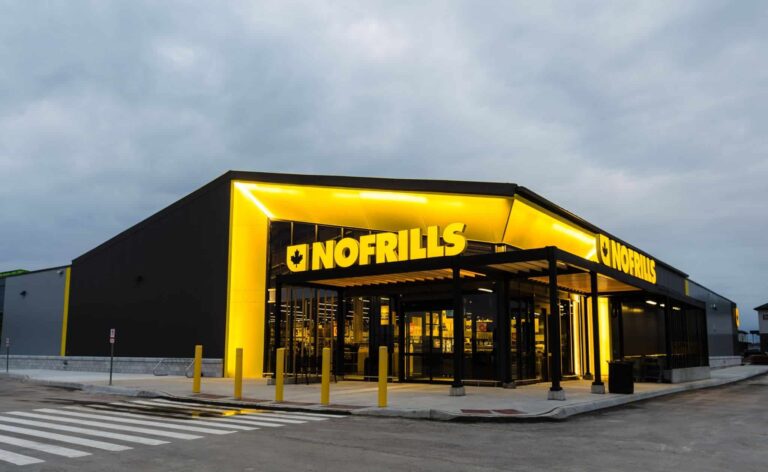
Loblaw continued to invest in discount and convenience formats. It opened 18 stores during the quarter, including nine hard-discount locations and seven drugstores, while one drugstore closed. The expansion is significant in Canada, where households remain highly focused on price and retailers are competing for value-conscious shoppers.
Shoppers Drug Mart was another source of growth. Drug retail sales rose 5.7% to C$5.81 billion, with comparable sales up 4.8%. Within that segment, pharmacy and healthcare services same-store sales increased 7.6%, outperforming the 1.6% rise in front-of-store sales. This faster pharmacy growth helps explain why the group’s overall retail figures look stronger than the grocery-only comparable-store result.
Retail operating income climbed 9.7% to C$1.41 billion, while gross margin rose 20 basis points to 31.3%. Adjusted diluted earnings per share increased 8.8% to C$0.74. Reported net earnings were C$1.19 billion, up 50.3%, but included a C$401 million gain on the sale of PC Financial. That one-off effect makes the reported profit increase a poor measure of everyday supermarket trading.
The group completed the PC Financial sale on 1 July and now recognises an investment in EQB. Its third-quarter figures included only one month of EQB earnings because of differences in the reporting calendars. Comparing this year’s profit with the prior period therefore requires care.
For food manufacturers and produce suppliers, the main signals are the continued addition of discount-store capacity, a more competitive grocery basket and weaker growth at established food locations. Greater discount penetration can affect assortment decisions, pack sizes, promotional funding and the balance between manufacturer brands and value-oriented store products. These are commercial implications of the reported strategy, not supplier-contract changes announced by Loblaw.
The company’s position in the Canadian grocery sector is explored in GTN’s comparison of major Canadian grocery retailers. Changing customer buying habits also feature in its analysis of online grocery shopping in Canada and the country’s supermarket profit models.
The next trading test will be whether Loblaw’s additional discount outlets and digital investment deliver stronger underlying food sales without putting pressure on prices or operating margins.