
Chinese dairy groups Yili and Mengniu received separate technology awards at the International Dairy Federation’s 2026 Dairy Innovation Awards in Auckland, New Zealand, on 17 November, recognising developments in raw-milk safety and multipack packaging.
Yili won the food-safety equipment category for its Pasture Environmental Risk Screening and Intelligent Early Warning System. Mengniu Fresh Dairy Products (Tianjin) won the packaging and transparency category for four-bottle handles developed for its Modern Meadow range in membership-store retail formats.
The two projects address different problems across the dairy supply chain. Yili’s work focuses on identifying environmental risks before they affect raw-milk quality. Mengniu’s tackles the handling, identification and material use of multipacks after dairy products are prepared for retail.
Yili’s system is described by the IDF as an intelligent approach to assessing environmental risks at dairy farms and providing earlier warnings relevant to raw-milk control. For processors and supermarket buyers, the commercial interest lies in whether earlier screening can support more consistent incoming milk quality and improve the information available for risk-based supplier checks.
However, the award announcement does not provide independent figures for contamination reduction, test sensitivity, false alarms or implementation costs. It would be premature to describe the system as proven to cut recalls or as a substitute for established food-safety controls.
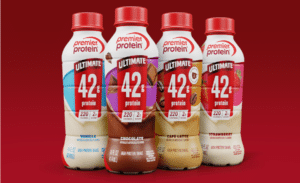
Mengniu’s winning packaging project uses recyclable polyethylene handles for four-bottle packs and laser coding instead of separate labels. The IDF says the design is intended to improve automated production and reduce label waste.
Membership stores often sell products in larger or bundled quantities, so a multipack handle must work not only at the filling line but also during transport, shelf replenishment and consumer handling. Packaging buyers would still need to assess strength, material compatibility, recycling arrangements and the total cost of packing before adopting a similar design.
The reported use of recyclable PE does not by itself establish that the whole pack will be recycled in every market. Actual recovery depends on how components are separated and on locally available collection and recycling systems. Similarly, a laser code may remove label material without establishing a measurable reduction in the pack’s total environmental footprint.
Both Yili and Mengniu feature in GTN’s ranking of major FMCG brands in Asia, which examines the scale of the region’s dairy producers and their relationships with retail and food supply chains. These latest awards offer specific examples of innovation beyond the launch of new consumer products.
The packaging development also connects to broader industry choices discussed in GTN’s guide to Europe’s dairy packaging suppliers, where buyers weigh filling performance, barrier needs, pack formats, handling and end-of-life considerations.
The awards were announced at the IDF World Dairy Summit in Auckland. The 2026 programme attracted 182 submissions from 23 countries and recognised 11 winners across 10 categories plus a Judges’ Choice award.
Other winners included Danone for farm sustainability and climate initiatives, an agricultural research project in Greece using microalgae-based feed to improve the nutritional profile of dairy products, and projects from India and the United Arab Emirates. The broader list shows that dairy innovation now extends from farm operations and inclusion to packaging and product nutrition.
Industry coverage has tended to summarise the award winners as one list. For supermarket procurement teams, the more useful distinction is between technologies with potential to improve upstream assurance and those designed to change how dairy reaches the shelf. The benefits of each still need to be assessed against measurable operating results.
The International Dairy Federation and event sponsor Tetra Pak confirmed the winners on 17 November. Further disclosures about Yili’s risk-screening performance and Mengniu’s packaging adoption would help buyers judge how widely the technologies could be applied.