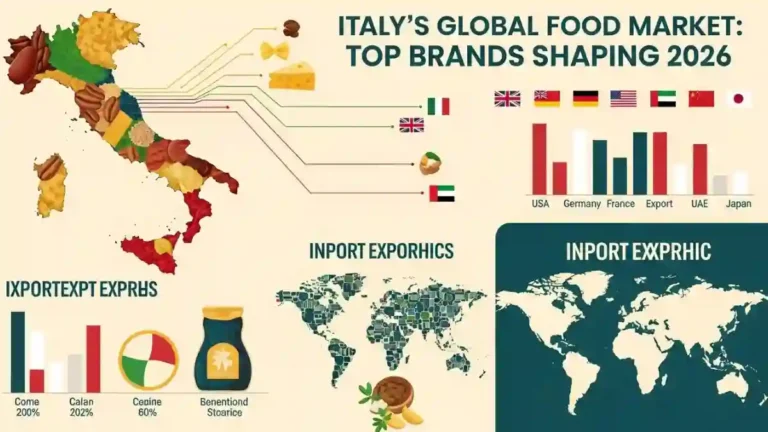

Popular Italian food brands include Barilla, De Cecco, Rummo, La Molisana and Giovanni Rana for pasta, Mutti for tomatoes, Lavazza and illy for coffee, Ferrero for confectionery, and Galbani for cheese. Choose by product. A good brand for dried spaghetti serves a different purpose from a chilled ravioli maker or a tomato specialist.
Italian food brands by category
| Brand | Best known for | Company or origin context |
|---|---|---|
| Barilla | Dried pasta and sauces | Part of Barilla Group, which also owns Mulino Bianco and Voiello |
| De Cecco | Dried pasta | Italian pasta business with roots in Abruzzo |
| Rummo | Dried pasta and gluten-free pasta lines | Pasta maker from Benevento |
| La Molisana | Dried pasta | Pasta brand from Campobasso |
| Giovanni Rana | Fresh filled pasta and sauces | Italian brand associated with chilled tortellini and ravioli |
| Mutti | Passata, chopped tomatoes and tomato paste | Tomato specialist from the Parma area |
| Ferrero | Nutella, Kinder and Ferrero Rocher | Group originating in Alba, with a global brand portfolio |
| Lavazza | Coffee for espresso, moka and other formats | Coffee group founded in Turin |
| illy | Espresso and other coffee formats | Coffee brand from Trieste |
| Galbani | Mozzarella, ricotta and other cheeses | Italian-origin dairy brand in the Lactalis portfolio |
| Parmalat | Milk and dairy products | Italian-origin dairy business in the Lactalis portfolio |
| Sanpellegrino | Sparkling mineral water and drinks | Italian-origin brand in the Nestlé portfolio |
| Mulino Bianco | Biscuits, bakery and breakfast foods | Barilla Group brand |
| Bauli | Pandoro, panettone and other baked goods | Italian bakery brand associated with festive products |
The list is organised by what each brand sells rather than a market-share ranking. Some names belong to groups that own several brands. A group revenue figure can cover different products and countries, and a brand with Italian roots can manufacture certain products outside Italy. Check the label on the item you are buying.
Ten Italian pasta brands to compare
Barilla is one of Italy’s most globally recognised food brands. For dried supermarket pasta, start with Barilla, De Cecco, Rummo and La Molisana. Garofalo, Voiello and Divella give buyers more choices by shape and price. Mancini and Benedetto Cavalieri are useful specialist comparisons. Choose Giovanni Rana when the brief is fresh filled pasta.
| Pasta brand | Useful starting point | What to check on the pack |
|---|---|---|
| Barilla | Common dried shapes for everyday meals | Product line and cooking time |
| De Cecco | Dried pasta for sauces and baked dishes | Shape, suggested cooking time and pack weight |
| Rummo | Dried pasta, including selected gluten-free lines | Exact flour or grain and allergen declaration |
| La Molisana | Everyday dried shapes | Shape, pack size and cooked texture |
| Garofalo | Dried pasta, including lines sold under Pasta di Gragnano PGI | Whether the exact product carries the designation |
| Voiello | Italian dried pasta in the Barilla portfolio | Shape, product line and availability in your market |
| Divella | Everyday dried pasta | Price per kilo, shape and cooking time |
| Pasta Mancini | Specialist dried pasta | Pack size and distribution in your market |
| Benedetto Cavalieri | Specialist dried pasta | Shape, texture and cooking method |
| Giovanni Rana | Chilled filled pasta | Filling, allergens, refrigeration and shelf life |
The ten names are a shortlist by use. To choose pasta for a recipe, start with shape. A short ridged shape can hold a thick sauce. A long strand works well when the sauce coats it evenly. Stuffed pasta is usually sold chilled and has a different shelf life and preparation method. A retailer should allow for more frequent deliveries and tighter stock rotation when comparing a fresh listing with a dry one.
For a blind test, cook the same shape from each brand with the same quantity of water and salt. Follow the cooking instructions and judge texture at serving time. If your recipe finishes the pasta in sauce, test that step too. A higher price, rougher surface or a longer cooking time may influence the experience, but the best match depends on the finished dish.
Italian coffee, tomatoes, cheese and confectionery
Lavazza and illy for coffee
Lavazza and illy both have Italian roots. Compare ground coffee for your brewing method before comparing price. Espresso, moka and filter preparations work with different grind sizes and equipment. A brand’s capsules also need to fit your machine. If you are buying for retail, compare whole beans, ground coffee and capsules as separate propositions. They reach different shoppers and may need different shelf space and promotion plans.
Mutti for tomatoes
Mutti is known for passata, chopped tomatoes and tomato paste. Passata gives a smooth base. Chopped tomatoes add texture, while paste adds concentrated tomato flavour in smaller quantities. A ready-made sauce can include herbs, oil or other ingredients. Choose the format you want for the recipe, then compare pack size and price.
For retailers, the same shopper may buy all three products for different meals. A clear shelf ticket can explain which pack is meant for a quick sauce and which is an ingredient. Check container size, shelf life and the reportable country of origin for the actual item. For a foodservice order, check usable weight and storage after opening.
Carapelli and Monini for olive oil
Both brands sell extra virgin olive oils. Monini also lists regional PDO and PGI products. Read the origin statement and any designation on the bottle, since a portfolio can contain oils with different origins. For cooking, compare the style and price per litre. For finishing a dish, consider the flavour and how quickly you will use the bottle after opening.
Galbani, Parmalat and Italian cheese
Galbani is associated with mozzarella, ricotta and other cheeses. Parmalat is known for milk and dairy. Both have Italian roots and sit within Lactalis. For a Caprese salad, look for a cheese with the flavour, texture and moisture you want for serving fresh. For pizza, a lower-moisture format can behave differently in the oven. Compare labels and intended uses for the exact products.
Regional names and protected designations also matter. A brand name and a certification answer different questions. If you need a cheese with a protected name, check for the designation on the pack and confirm supplier documentation. An Italian-looking label alone does not establish the origin or rules followed for that product.
Ferrero, Mulino Bianco and Bauli for sweet products
Ferrero’s portfolio includes Nutella, Kinder and Ferrero Rocher. Mulino Bianco covers products such as biscuits and bakery, and Bauli is well known for festive baked goods. For shoppers, choose between regular breakfast and snack items and seasonal products such as pandoro and panettone. Holiday ranges may use different packs and arrive on shorter listing windows.
For grocery buyers, keep the seasonal and year-round ranges separate in your forecast. A Christmas bakery order needs a delivery calendar, enough stock for the main selling weeks and a plan for any remaining cases after the holidays. Ask whether your supplier has local inventory and how quickly it can replenish a line if it sells better than expected.
How big are the companies behind Italian food brands?
| Group | Reported turnover | Workforce and footprint | Recent verified development |
|---|---|---|---|
| Ferrero Group | €19.3bn, FY ended 31 August 2025 | 48,697 employees and 36 manufacturing plants at FY-end | Closed the WK Kellogg Co acquisition in September 2025, after the reported year. |
| Barilla Group | €4.837bn, calendar 2025 | 8,823 employees at year-end and 30 production sites, 15 in Italy and 15 abroad | Published its 2025 annual and sustainability results in 2026, covering sales in about 100 countries. |
| Lavazza Group | €3.9bn, calendar 2025 | 5,864 employees in its 2025 sustainability report. The company serves more than 140 countries. | Its 2025 report highlighted the launch of Tablì and 26.9% turnover growth in North America. |
| Mutti Group | €777m, calendar 2025 | Current comparable group headcount and site count not verified for this table. | In May 2026 Mutti reported 10.6% turnover growth and 403,000 tonnes of products sold in 2025. |
The figures above are group disclosures. Ferrero’s figure includes its wider confectionery business. Lavazza’s covers several brands and countries. Barilla’s includes bakery as well as pasta. Mutti’s is a reported group turnover figure for a tomato specialist. The country count for Lavazza measures markets served, while the Barilla and Ferrero counts measure production sites.
When evaluating a listing, ask for the team and the distribution route that serve your country. For a domestic launch, compare the major Italian supermarket chains to see which retail formats fit the product. A large group can still use a local importer for a certain product. Check the minimum order, assortment, promotional terms and returns process. If the product needs refrigeration, confirm the expected shelf life on delivery and the delivery schedule before setting store volumes.
What should buyers check before stocking an Italian food brand?
- Identify the exact product and owner. Record the brand, product name, pack and supplier entity. A distributor may sell several brands from different groups.
- Check where that pack is made. Record country of manufacture and any ingredient-origin or protected-origin claim relevant to your market.
- Compare like with like. Keep the product type, serving size and total pack weight constant. Compare chilled pasta with chilled pasta and ground coffee with the equivalent grind.
- Confirm the delivered price. Include minimum runs, case size, freight, storage and available shelf life. Ask whether the quote includes local labels and product records.
- Trial the product in the stores it will serve. Track how many packs sell per week, whether customers buy again and what is lost to markdowns.
For trade buyers planning meetings, the Italian food and drink trade events calendar helps match the show to the category. Use the exhibitor directory to check the company and product lines before arranging a meeting. A factory, brand owner and local distributor can play different roles in the same deal.
How to build an Italian grocery range by shopping occasion
For a quick pasta dinner: pair a familiar dry pasta shape with a product that matches the shopper’s cooking time. Passata suits a sauce made from scratch. A prepared sauce suits a faster meal. Fresh filled pasta needs refrigerated display and shorter stock cycles. Put the products together in meal suggestions only if the stores can replenish all components reliably.
For a pantry or gifting range: separate items people buy regularly from packs they buy for a special occasion. A cupboard tomato product may need a sharp price and wide availability. A holiday panettone needs clear serving information and a plan for how long stock will remain on sale. Use different forecasts for those two jobs.
For a specialist Italian range: confirm what makes each product distinct. It could be the region, a protected designation, a recipe, a particular shape or how the product is prepared. Give customers enough information to understand the difference without burying the name, weight and serving instructions. Confirm the documents for every designation or origin claim.
Compare the proposed price with the items people already buy. If the new product costs more, ask what the customer receives for the difference. A retailer may be able to explain the distinction through a tasting, the shelf label or instructions on the pack. Use the results of a small store trial before expecting a wider audience to make the same choice. Track whether sales continue once the launch promotion ends.
Cold-chain details matter for cheese and fresh pasta. Confirm how much saleable life remains when deliveries reach the store, how often stock can be replenished and whether the distributor can handle short or mixed runs. Keeping the product in stock on the right days can matter more than listing a wider set of flavours at launch.
Frequently asked questions
What are the best-known Italian food brands?
Barilla and De Cecco are well-known pasta names. Mutti is associated with tomato products, Lavazza and illy with coffee, Ferrero with confectionery, Galbani with cheese and Giovanni Rana with fresh pasta.
What are ten Italian pasta brands worth comparing?
Barilla, De Cecco, Rummo, La Molisana, Garofalo, Voiello, Divella, Mancini, Benedetto Cavalieri and Giovanni Rana. The first nine are dry-pasta starting points. Rana is a useful fresh-pasta comparison.
Is every product from an Italian brand made in Italy?
Manufacturing can vary by brand, product and country. Check the origin statement on the individual package and any protected designation that applies to the exact item.
Which Italian tomato product should I use for pasta sauce?
Choose passata for a smooth sauce and chopped or whole tomatoes for more texture. Tomato paste adds concentration. A ready-made sauce is a different product and may already contain seasoning.
Editor’s note, 16 November 2026. Updated with brand and pasta comparisons, official company results and buying guidance.