
Private label has changed a lot around the world in the last decade, but Japan’s shift is happening in its own way — slower, calmer, and very quality-driven. That’s the interesting part. While other markets push value or cut-price alternatives, Japan is moving into 2026 with a different mindset: private label that looks premium, tastes premium, and still feels trustworthy enough for everyday use.
In 2025, you could already see it across Aeon’s aisles, Seiyu’s shelves, Life’s fresh counters, and inside the chilled sections of Lawson, 7-Eleven, and FamilyMart. Quietly, Japanese private label is becoming something shoppers specifically ask for, not just accept because it’s cheaper.
Now, with 2026 getting closer, the signals are even stronger. Retailers are expanding ranges, redesigning packaging, adding new premium tiers, and even thinking about how some Japanese private label items could gain export potential.
This is why 2026 is shaping up to be the breakout year.
Why Private Label Took Longer In Japan — And Why It’s Now Accelerating
Japan’s private label adoption didn’t explode as quickly as Europe or the US.
There are a few reasons people in the industry always mention:
Japanese shoppers have extremely high quality expectations.
Many still trust national brands for consistency and safety.
Retailers were cautious about over-extending into too many categories.
Convenience stores traditionally relied on branded partnerships.
But between 2023 and 2025 a shift took place. Shoppers became more open to trying store brands, especially when packaging and taste matched or exceeded big-name brands.
By late 2025, private label wasn’t a “budget choice” — it became a smart, good-quality choice.
And this opened the door for massive expansion.
The Big Retailers Leading Japan’s Private Label Boom
1. Aeon
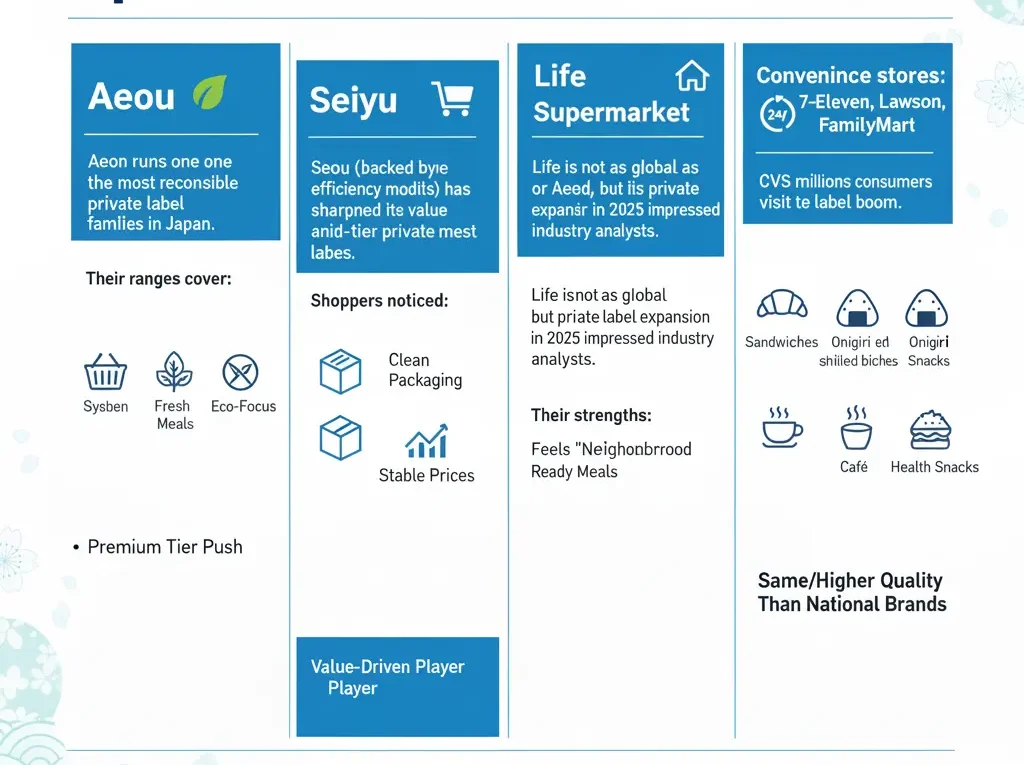
Aeon runs one of the most recognisable private label families in Japan.
Their ranges cover:
daily essentials
fresh items
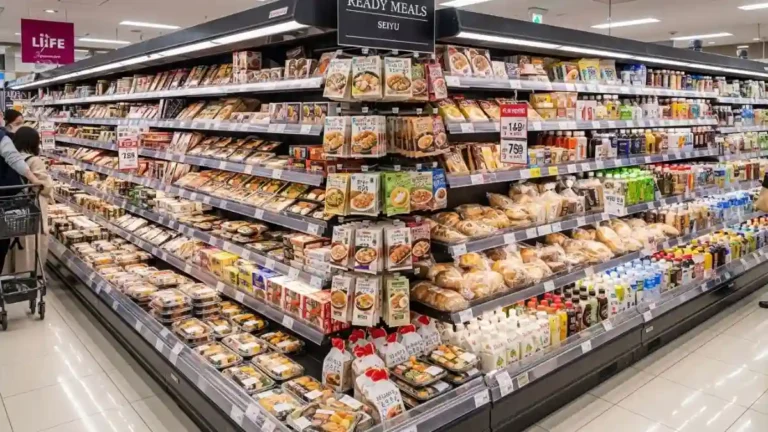
ready meals
bakery
frozen foods
sustainability-focused lines
Aeon is pushing hard into premium private label tiers, especially in fresh meals, Japanese comfort food, plant-based dishes, and frozen bakery. Their quiet upgrades in packaging design also helped credibility.
2. Seiyu
Seiyu (backed by global efficiency models) has sharpened its value and mid-tier private label lines.
Shoppers noticed:
cleaner packaging
better price stability
more Western and Japanese ready-to-eat dishes
clear nutritional labeling
Seiyu is one of the strongest players in value-driven Japanese private label.
3. Life Supermarket
Life is not as global as Aeon or Seiyu, but its private label expansion in 2025 impressed industry analysts.
Their strengths:
bakery
salads and chilled deli
bento-style meals
supermarket-fresh ready meals
Life’s private label feels “neighbourhood local,” which Japanese shoppers like.
4. Convenience stores: 7-Eleven, Lawson, FamilyMart
Convenience stores might be the most important force in the Japanese private label boom.
Why?
Because millions of consumers visit them daily.
CVS chains expanded:
high-quality sandwiches
onigiri (rice balls)
chilled pasta
bakery items
frozen ready meals
desserts
café drinks
health-focused snacks
These items carry the same quality standards Japanese customers expect — sometimes even higher.
This is what makes Japan unique: private label tastes as good as national brands, so consumers don’t see it as the “cheap option.”
For a September 2026 update on this convenience-store strategy, read GTN’s coverage of FamilyMart’s ¥250 breakfast deal, including its connection to the retailer’s own-label breakfast range.
What Makes Japanese Private Label Different From Other Markets
When you compare Japan with Europe or America, you notice something immediately.
Japanese private label doesn’t scream “value” or “cheap.”
It looks premium.
You see it in:
Packaging
Soft colours, clean design, neat typography, good-quality materials.
Shoppers trust it — because packaging signals care.
Taste
Japanese private label avoids shortcuts.
Flavours are gentle, balanced, and well-tested.
No supermarket in Japan risks releasing a bad tasting product — shoppers will remember.
Portion size
Retailers focus on precise portions and freshness-first thinking.
This makes private label feel “made for Japan,” not generic.
Food safety
Strict standards automatically raise trust levels.
Shoppers see store brands as safe and dependable.
Premium tiers
Instead of low-cost-only strategies, Japan is growing its “premium private label” — something many markets still struggle with.
This entire mix makes Japanese private label look and feel different from global norms.
Categories Growing The Fastest for 2026
1. Frozen Ready Meals
Frozen meal quality has jumped.
Popular items include:
Japanese curry
fried chicken
pasta
rice meals
dumplings
café-style meals
Retailers love frozen categories because waste is minimal.
2. Bakery and Desserts
Private label growth in bakery is strong, especially with Japanese-style textures:
soft bakery (shokupan)
custard buns
mini pastries
mochi-based desserts
pudding cups
cheesecake slices
frozen bakery lines
Convenience stores dominate this category.
3. Japanese Traditional Foods
Retailers are turning classic items into private label products:
miso
soy sauce
tofu
pickles
noodles
soup bases
side dishes
These categories build trust quickly because they’re familiar.
4. Western-Inspired Ready Meals
Lasagna, gratin, croquettes, cream pasta, and western-style stews are growing because they appeal to busy households.
5. Healthy & Functional Foods
Another fast-expanding area:
low-sugar snacks
fibre-rich items
high-protein drinks
plant-based ranges
balanced mini meals
Japan’s ageing population is also driving demand for health-focused private label strategies.
New Consumer Behaviour Driving The Boom
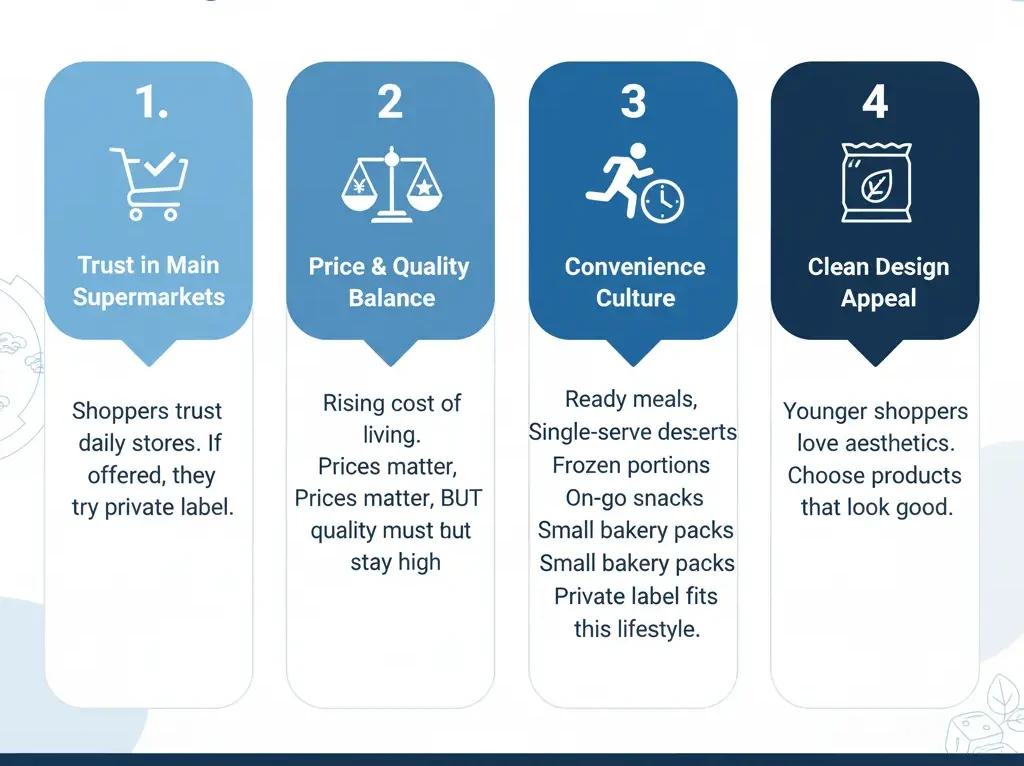
Shoppers in Japan used to be cautious, but behaviour changed between 2023 and 2025.
1. People trust their main supermarket more
If a store they shop at daily offers private label, they try it without hesitation.
2. Prices matter more, but quality must stay high
Japan’s cost of living is rising.
But Japanese customers don’t want low quality, even when choosing cheaper items.
3. Convenience culture is stronger than ever
People buy:
ready meals
single-serve desserts
frozen portions
on-the-go snacks
small bakery packs
Private label fits this lifestyle.
4. Younger shoppers love clean design
Packaging design plays a huge role.
Younger customers choose products that look good.
Why 2026 Will Be A Breakout Year
Everything that happened in 2025 — new packaging, better recipes, more categories — has set up 2026 for a massive leap.
1. Retailers are increasing shelf space
Aeon, Seiyu, Life, and CVS chains are expanding sections dedicated to private label.
2. New premium tiers are coming
Especially in bakery, ready meals, snacks, and frozen foods.
3. More collaboration with regional producers
Local Japanese food makers are joining private label programmes for the first time.
4. Private label moving into export discussions
Some Japanese private label items are attracting overseas interest, mainly in:
frozen bakery
healthy snacks
instant meals
Japanese sauces
This creates a new layer of opportunity.
5. Shopper acceptance is at an all-time high
Consumers now see private label as “reliable and tasty,” not discount-only.
6. Convenience stores are becoming global influencers
If 7-Eleven Japan launches a successful private label item, other regions watch and learn.
All these factors combine to make 2026 the year Japanese private label becomes a major force, not just a quiet trend.
Conclusion
Japan’s private label boom didn’t happen overnight.
It grew slowly, carefully, and with a very Japanese approach to quality and detail.
Now, in late 2025 and heading into 2026, the momentum is visible everywhere — in supermarket aisles, convenience store shelves, and even export conversations.
Retailers are expanding their ranges.
Shoppers are trusting private label more than ever.
And the quality side of Japan — presentation, safety, balanced flavours — is creating a private label model that feels premium, not budget.
Japanese private label is stepping into 2026 with confidence.
And it may redefine how global grocery teams think about store brands in the future.