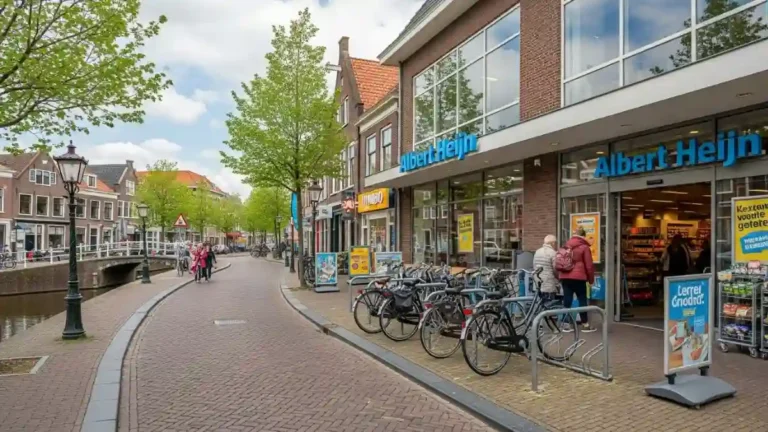

In practical terms, Albert Heijn is the largest supermarket operator in the Netherlands. It holds the biggest market share and runs the widest national store network. However, the Netherlands supermarket market is not defined by one chain alone. It is shaped by a small group of dominant national players, with Albert Heijn and Jumbo together controlling a majority share of grocery sales, according to USDA retail market analysis.
This concentration — rather than any single retailer — is what defines how the market works.
Top Main Supermarket In The Netherlands?
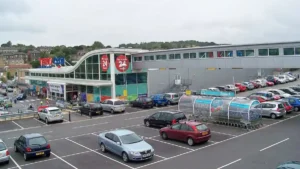
Albert Heijn
The largest supermarket operator in the Netherlands and the primary market reference point. Leads on market share, store network, private label depth, and operational standards.Jumbo
The second-largest national player and the main challenger to Albert Heijn. Shapes price perception, promotions, and competitive intensity across the market.PLUS
A major national supermarket group with strong neighbourhood presence. Important in regional competition and cooperative retail structures.Lidl
The leading discounter in the Netherlands. Plays a critical role in anchoring everyday price expectations and influencing range discipline.Aldi
A key discount operator with wide store coverage. Reinforces price pressure on core grocery categories and private label entry tiers.Dirk
A value-driven national and regional supermarket chain, particularly strong in urban areas. Known for aggressive everyday pricing.Dekamarkt
A regional full-service supermarket group with strong local loyalty, competing mainly on price and proximity.Hoogvliet
A smaller national chain with regional strength, especially in western parts of the Netherlands.SPAR
A convenience-focused retailer serving city centres, travel locations, and mission-based shopping rather than full weekly grocery trips.Makro
A cash-and-carry wholesaler serving business and foodservice customers. Relevant to the wider grocery ecosystem, but not a traditional consumer supermarket.
A Highly Concentrated Grocery Market
The Dutch supermarket market is one of the most concentrated in Europe.
Alongside Albert Heijn, Jumbo stands as the second-largest national player. According to USDA retail market analysis, the top two supermarkets together control a majority share of grocery sales in the Netherlands. This level of concentration is higher than in many neighbouring European countries and has far-reaching effects.
When two retailers dominate sales volume, they also dominate negotiations. Suppliers must align with their pricing logic, promotional calendars, packaging formats, and delivery requirements. Smaller chains still matter, but they operate within rules set by the leaders.
This concentration also allows faster execution. When Albert Heijn or Jumbo decide to change a pricing tier, remove underperforming SKUs, or push a new private label range, those changes scale nationally in weeks, not years.
How Albert Heijn And Jumbo shape The Market Differently
Albert Heijn and Jumbo play different roles, even though they share dominance.
Albert Heijn acts as the system architect. It runs a wide portfolio of formats, from large supermarkets to neighbourhood stores and travel-focused convenience outlets. It invests heavily in data, automation, and private label development. Its strategy is built around consistency, trust, and operational precision.
Jumbo positions itself as the challenger brand. It competes hard on value perception, store experience, and family shopping missions. Jumbo’s pricing and promotional moves are closely watched because they often test how far the market can be pushed without triggering margin erosion.
Together, these two chains create a competitive ceiling and floor for the market. Prices cannot rise too far without losing shoppers. Margins cannot collapse without damaging the system.
Shopper behaviour: rational, price-aware, and frequent
Dutch shoppers are not impulse-driven grocery buyers.
They shop frequently, often several times a week. Baskets are smaller. Prices are noticed immediately. Promotions are compared across retailers. This behaviour creates a market where value perception matters more than spectacle.
Brand loyalty exists, but it is conditional. If a branded product becomes too expensive relative to alternatives, shoppers switch quickly. This is one of the key drivers behind the steady rise in private label share across Dutch supermarkets.
Private label is not treated as a compromise. It is treated as a rational choice. Retailers invest in quality tiers, clear pricing ladders, and packaging that signals reliability rather than bargain-only positioning.
This shopper logic forces supermarkets to maintain credibility at all times. One bad pricing cycle can shift footfall faster than in markets with less frequent shopping patterns.
Why The Dutch Supermarket Market Is So Efficient
Efficiency is one of the defining characteristics of Dutch grocery retail.
The Netherlands is geographically small, densely populated, and well connected. Distribution centres can reach large store networks within short driving distances. This allows supermarkets to replenish stores frequently, keep lower safety stock, and manage inventory with precision.
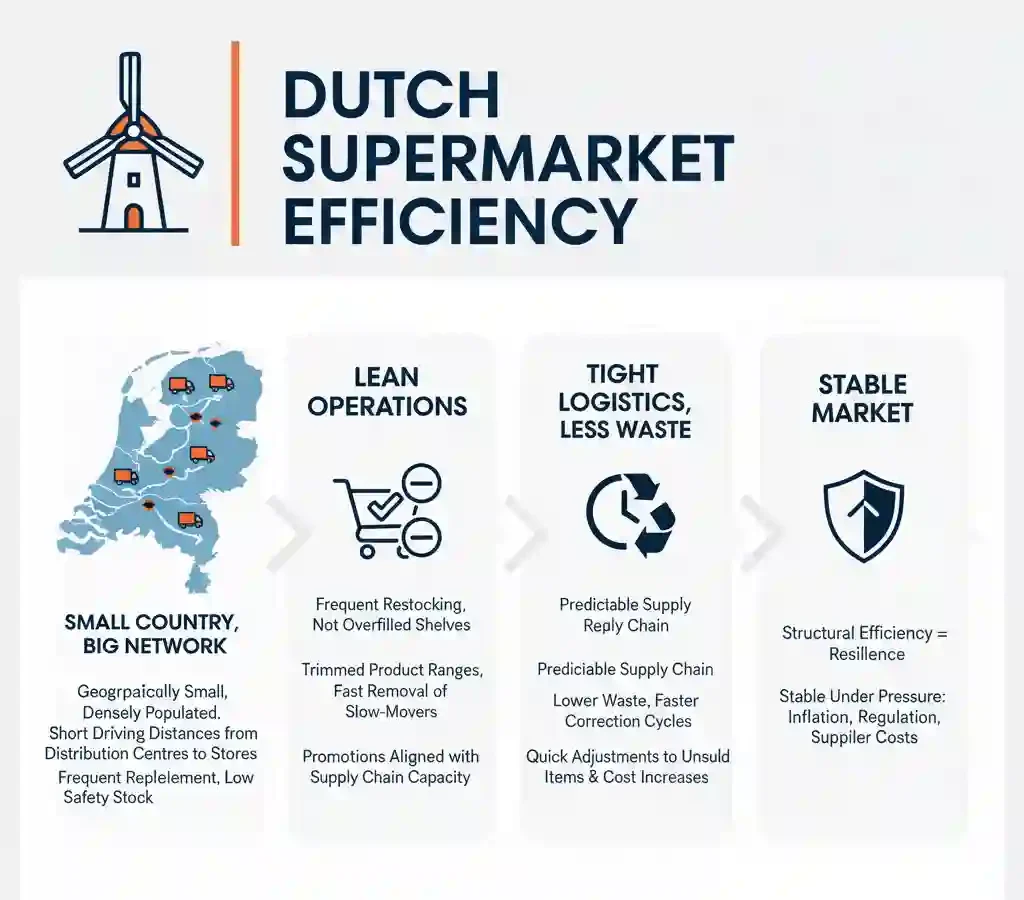
In daily operations, this efficiency shows up clearly. Stores are restocked often rather than overfilled. Ranges are reviewed and trimmed regularly. Slow-moving products are removed quickly instead of lingering on shelf. Promotions are planned around what the supply chain can realistically support, not just marketing ambition.
Because logistics are tight and predictable, supermarkets operate with lower waste and faster correction cycles. When something does not sell, it is fixed quickly. When costs rise, adjustments happen without destabilising the system.
This structural efficiency is a key reason the Dutch supermarket market remains stable under pressure. Inflation, regulation, or supplier cost increases create strain, but they do not break how the market works.
Discounters And Their Outsized Influence
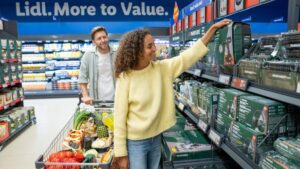
Lidl and Aldi play a role far larger than their store numbers alone suggest.
Discounters act as a permanent price reference. Their everyday value positioning limits how far mainstream supermarkets can stretch pricing on core items. If prices drift, shoppers defect quickly.
This pressure reshapes how Dutch supermarkets design shelves.
Over-assortment becomes risky.
Duplicated branded SKUs are reduced.
Entry-price private label tiers are protected.
Promotions still exist, but they are controlled. The aim is not extreme discounting, but consistent value perception. This is why Dutch supermarkets often appear calmer and simpler on shelf than those in larger markets.
Discounters do not just compete for shoppers. They discipline the entire market.
Range Architecture And Private label ladders
Because of discounter pressure and shopper behaviour, Dutch supermarkets invest heavily in structured range architecture.
Instead of endless brand duplication, retailers build ladders:
An entry-price private label tier for value protection.
A core private label tier for everyday quality.
A premium private label tier for margin and differentiation.
This approach allows supermarkets to defend share across income groups without relying solely on brands. It also gives retailers more control over packaging, sourcing, and pricing logic.
Private label is therefore not a side category. It is central to how Dutch supermarkets manage risk and profitability.
Online Grocery As Part Of The Operating Model
Online grocery in the Netherlands is not experimental.
Short delivery routes, dense urban areas, and frequent shopping habits make online fulfilment viable at scale. Retailers can integrate picking, delivery, and store operations without creating parallel systems.
Online orders often complement physical shopping rather than replace it. Shoppers mix channels depending on mission: bulk items online, fresh top-ups in store, convenience purchases on the move.
This blended behaviour reinforces the importance of operational integration rather than channel separation.
Convenience Formats And Everyday Missions
Convenience stores are not a trend add-on in the Netherlands. They are a response to how people live and move.
High-traffic locations such as city centres, transport hubs, and office districts support small-format stores focused on speed and availability. These stores serve lunch, dinner top-ups, and immediate consumption rather than weekly stock-ups.
The success of convenience formats depends on efficiency, not range size. Limited assortments, fast checkout, and high-rotation products define the model.
This is where self-checkout adoption and automation play a crucial role.
Retail Technology As Infrastructure, Not theatre
Dutch supermarkets adopt technology for control, not show.
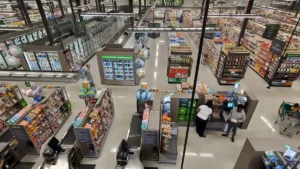
Self-checkout is widespread. Electronic shelf labels support rapid price updates. Inventory systems link stores, warehouses, and online platforms into one operational layer.
Technology supports:
Faster checkout
Lower labour pressure
Better price accuracy
Real-time stock visibility
This infrastructure enables supermarkets to run frequent promotions, manage small baskets, and handle high transaction volumes without operational strain.
Retail tech in the Netherlands is invisible by design. When it works, shoppers barely notice it.
Fresh Produce And Sourcing Discipline
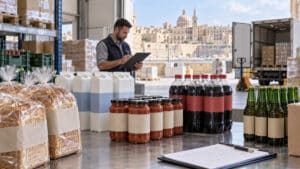
Fresh produce plays a central role in Dutch supermarkets, both as a traffic driver and a margin challenge. How retailers manage Netherlands fresh produce sourcing often determines whether shoppers trust the store overall.
Frequent shopping trips mean freshness is judged constantly. Poor quality is noticed quickly and remembered. This pushes supermarkets to maintain tight sourcing standards, efficient cold chains, and fast turnover, especially in fruit and vegetables.
The Netherlands’ strong logistics network supports both imported and domestic produce flows, helping retailers keep shelves stocked with consistent quality and predictable availability.
As a result, fresh produce performance is closely linked to the same efficiency principles that define the wider Dutch supermarket market.
Packaging Choices Shaped By Efficiency And Regulation
Packaging decisions in Dutch supermarkets are not driven only by sustainability messaging. They are shaped by efficiency, regulation, and cost control — all within the specific realities of Netherlands packaging rules and retail operations.
Retailers favour packaging formats that support shelf efficiency, transport optimisation, and waste reduction. Regulatory pressure in the Netherlands reinforces these choices, but the core logic remains operational rather than promotional.
Private label plays a central role here. By controlling their own brands, supermarkets gain direct influence over Netherlands packaging formats, materials, and compliance decisions. This allows closer alignment between regulation, logistics efficiency, and shelf presentation, without relying on branded suppliers to adapt first.
Why This Market Matters Beyond The Netherlands
The Netherlands supermarket market acts as a proving ground.
If a pricing model survives Dutch shoppers, it is resilient.
If a private label strategy works here, it scales.
If a retail technology system functions in this environment, it is operationally sound.
The combination of concentration, efficiency, discounter pressure, and rational shoppers makes the Netherlands one of Europe’s most demanding grocery markets.
It is small in size.
But its influence is outsized.