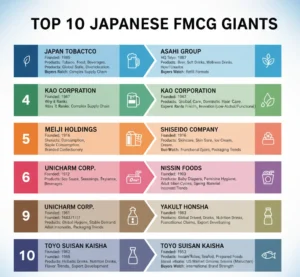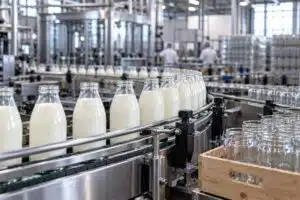
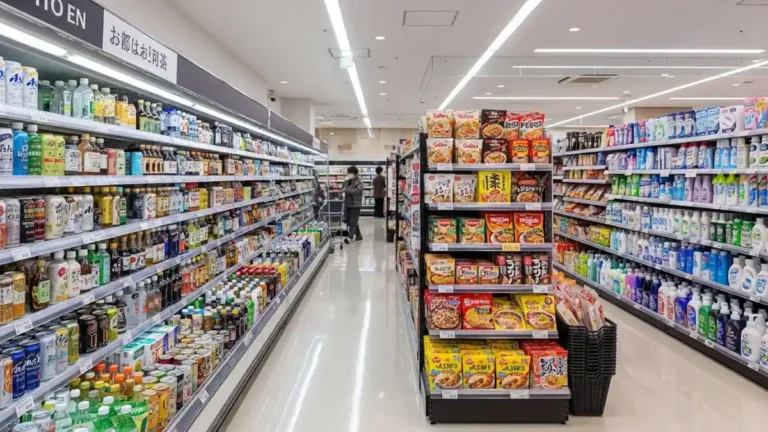

Japan’s FMCG Brands market is one of the most competitive consumer goods environments in the world. Growth is not driven by population expansion or rapid urbanisation.
It is driven by brand trust, product innovation, premium positioning, operational efficiency, and increasingly by overseas expansion.
For supermarket buyers, distributors, and suppliers, understanding who controls the largest revenue pools matters.
These companies influence many parts of the market:
- Shelf standards
- Packaging formats
- Private label benchmarks
- Ingredient sourcing trends
- Price architecture
This ranking focuses on Japan-headquartered FMCG companies operating in food, beverage, personal care, home care, hygiene, and beauty categories. Retailers, trading houses, and industrial manufacturers are excluded.
Revenue figures are based on the latest available consolidated financial reports from FY2024 and FY2025.
Japan’s largest FMCG groups share several traits:
- Strong domestic brand loyalty
- High repeat-purchase categories
- Global expansion strategies
- Heavy investment in R&D and packaging innovation
- Tight control over supply chains and cost structures
Together, these companies shape not only Japan’s grocery shelves but also international FMCG competition.
10 FMCG Brands in Japan by Revenue
| Rank | Company | Revenue (Approx. USD) | Latest Fiscal Year | Core Strength |
|---|---|---|---|---|
| 1 | Japan Tobacco | $21.0 Billion | Dec 2024 | Global Tobacco & Foods |
| 2 | Asahi Group Holdings | $19.6 Billion | Dec 2024 | Premium Beer & Soft Drinks |
| 3 | Kao Corporation | $10.8 Billion | Dec 2024 | Personal & Home Care |
| 4 | Meiji Holdings | $7.7 Billion | Mar 2025 | Dairy & Confectionery |
| 5 | Shiseido Company | $6.6 Billion | Dec 2024 | Cosmetics & Skincare |
| 6 | Unicharm Corporation | $6.6 Billion | Dec 2024 | Hygiene & Baby Care |
| 7 | Nissin Foods Holdings | $5.1 Billion | Mar 2025 | Instant Noodles |
| 8 | Kikkoman Corporation | $4.7 Billion | Mar 2025 | Soy Sauce & Seasonings |
| 9 | Yakult Honsha | $3.3 Billion | Mar 2025 | Probiotic Beverages |
| 10 | Toyo Suisan Kaisha | $3.3 Billion | Mar 2025 | Seafood & Instant Noodles |
Revenue note: Figures are converted from Japanese Yen using an average exchange rate of about 150 JPY = 1 USD. Rankings are based on consolidated group revenue.
Company Profiles
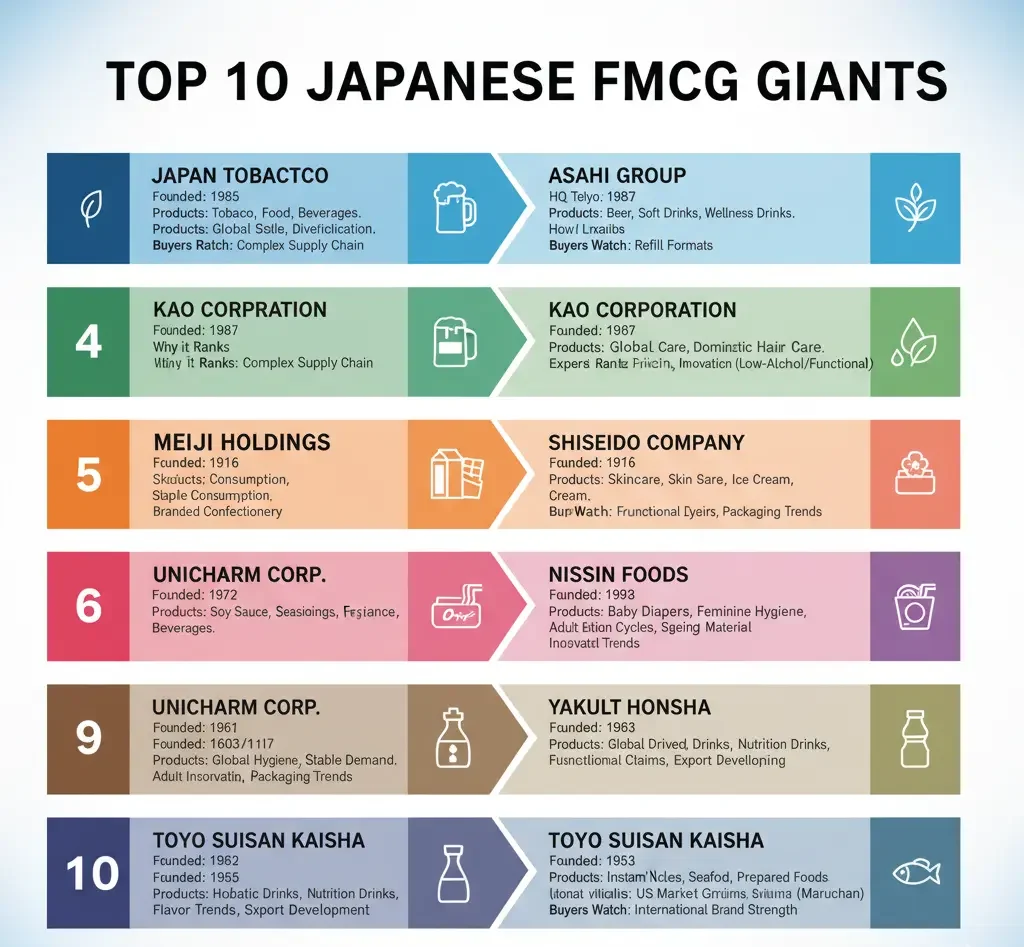
1. Japan Tobacco, Inc.
Founded: 1985
Headquarters: Tokyo
Japan Tobacco is the largest FMCG-scale consumer group in Japan by revenue. While tobacco remains its core business, the company also operates packaged food and beverage brands that serve everyday consumer demand.
Core product areas:
- Cigarettes and reduced-risk tobacco products
- Packaged foods and frozen meals
- Beverage and processed food brands
Why it ranks #1: Japan Tobacco’s global footprint delivers scale unmatched by other Japanese FMCG groups. Strong overseas performance offsets slower domestic consumption. Its food division provides diversification beyond tobacco.
Why buyers watch JT: The company operates one of the most complex consumer supply chains in Japan. It faces strict regulatory oversight and delivers logistics efficiency and high-volume production capacity.
2. Asahi Group Holdings
Founded: 1889
Headquarters: Tokyo
Asahi is Japan’s most internationally visible beverage group. It controls major beer brands while expanding aggressively in premium soft drinks and health-focused beverages.
Core product areas:
- Beer and alcoholic beverages
- Soft drinks and bottled water
- Functional and wellness drinks
Why it ranks #2: Asahi’s international beer acquisitions and strong domestic beer leadership have driven sustained revenue growth.
Why buyers watch Asahi: The company sets pricing and promotional standards in beverage aisles. It also plays a key role in category innovation such as low-alcohol and functional drinks.
3. Kao Corporation
Founded: 1887
Headquarters: Tokyo
Kao is Japan’s largest home and personal care group. Its portfolio covers daily household essentials alongside premium skincare and beauty brands.
Core product areas:
- Laundry and home cleaning products
- Skincare and cosmetics
- Hair care and hygiene items
Why it ranks #3: Kao dominates recurring purchase categories such as detergents and personal care. It is also expanding internationally across Asia and Europe.
Why buyers watch Kao: Packaging sustainability, refill formats, and premiumisation strategies from Kao often influence category standards across Japanese retailers.
4. Meiji Holdings
Founded: 1916
Headquarters: Tokyo
Meiji is one of Japan’s largest food and dairy companies, with a strong domestic retail presence and expanding export business.
Core product areas:
- Milk and dairy products
- Chocolate and confectionery
- Ice cream and nutrition products
Why it ranks #4: Meiji’s combination of staple dairy consumption and branded confectionery creates consistent high-volume sales.
Why buyers watch Meiji: Innovation in functional dairy, protein products, and premium chocolate segments keeps Meiji at the centre of grocery category development.
5. Shiseido Company
Founded: 1872
Headquarters: Tokyo
Shiseido is Japan’s most globally recognised beauty brand. It operates across mass and premium cosmetic segments.
Core product areas:
- Skincare and anti-ageing products
- Makeup and fragrances
- Professional beauty brands
Why it ranks #5: Despite slower recovery in China and travel retail, Shiseido remains one of the world’s largest beauty groups by revenue.
Why buyers watch Shiseido: Product innovation cycles, premium packaging trends, and retail merchandising strategies often originate from Shiseido’s portfolio.
6. Unicharm Corporation
Founded: 1961
Headquarters: Ehime
Unicharm specialises in hygiene products with extremely high purchase frequency.
Core product areas:
- Baby diapers
- Feminine hygiene
- Adult incontinence products
Why it ranks #6: Essential hygiene categories provide stable recurring demand, even during economic slowdowns.
Why buyers watch Unicharm: Ageing population trends and material innovation make Unicharm a long-term category leader.
7. Nissin Foods Holdings
Founded: 1948
Headquarters: Osaka
Nissin invented instant noodles and remains the category’s global leader.
Core product areas:
- Instant noodles
- Frozen meals
- Ready-to-eat foods
Why it ranks #7: Strong overseas performance, especially in North America and Asia, has pushed revenue beyond $5 billion.
Why buyers watch Nissin: Nissin controls price architecture and SKU innovation in the instant food aisle.
8. Kikkoman Corporation
Founded: 1603 (modern corporation 1917)
Headquarters: Chiba
Kikkoman is synonymous with soy sauce and Japanese seasoning exports.
Core product areas:
- Soy sauce
- Seasonings and cooking sauces
- Beverage products
Why it ranks #8: Kikkoman’s global household penetration gives it strong international FMCG scale.
Why buyers watch Kikkoman: Flavor trends and export-driven product development often originate from Kikkoman’s portfolio.
9. Yakult Honsha
Founded: 1935
Headquarters: Tokyo
Yakult operates in the fast-growing functional beverage space.
Core product areas:
- Probiotic dairy drinks
- Functional nutrition beverages
Why it ranks #9: Health-driven consumption patterns continue to support Yakult’s global expansion.
Why buyers watch Yakult: Functional claims and scientific positioning influence the wider wellness beverage segment.
10. Toyo Suisan Kaisha
Founded: 1953
Headquarters: Tokyo
Toyo Suisan is best known internationally through the Maruchan brand.
Core product areas:
- Instant noodles
- Seafood products
- Prepared foods
Why it ranks #10: Strong growth in the US market has significantly increased group revenue.
Why buyers watch Toyo Suisan: Its international brand strength gives Japanese retailers insight into overseas consumer demand trends.
Why This Ranking Matters
This ranking highlights how Japan’s FMCG leadership is concentrated in companies that control daily consumption categories. Beer, hygiene products, dairy, instant food, and personal care remain the backbone of grocery sales.
For retailers and suppliers, these companies shape:
- Shelf space allocation
- Promotional pricing structures
- Packaging standards
- Sustainability targets
- Innovation timelines
Understanding who dominates revenue helps buyers anticipate category shifts and supplier negotiations.
What Comes Next for Japan’s FMCG Leaders
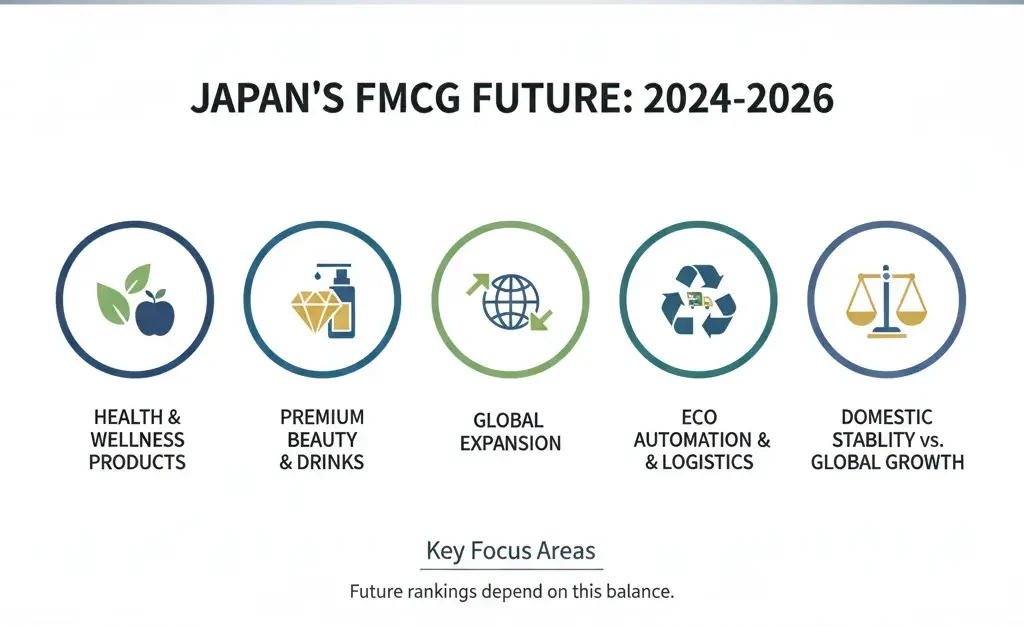
Over the next two years, Japan’s largest FMCG companies are expected to focus on:
- Functional and health-focused products
- Premiumisation in beauty and beverages
- Overseas market expansion
- Sustainable packaging formats
- Cost control through automation and logistics optimisation
The balance between domestic stability and global growth will determine future ranking changes.
Frequently Asked Questions
Which is the largest FMCG company in Japan by revenue?
Japan Tobacco ranks first, with about $21.0 billion in revenue for the year to December 2024. Asahi Group Holdings follows with $19.6 billion.
How were the revenue figures calculated?
They are based on consolidated group revenue from FY2024 and FY2025 reports. Japanese Yen figures were converted at an average rate of about 150 JPY = 1 USD.
Which companies are excluded from the ranking?
Retailers, trading houses and industrial manufacturers are excluded. The ranking covers Japan-headquartered FMCG companies only.
Conclusion
Japan’s FMCG leaders are no longer competing only on brand recognition. They are competing on supply chain speed, product innovation, and packaging performance.
From refill formats in home care to lightweight bottles in beverages, Japan packaging standards are now shaping how products move through retail faster and at lower cost.
At the same time, the role of the Japan supermarket sector continues to evolve. Large chains are tightening shelf space, demanding better margins, and prioritising private label alongside premium branded goods.
That pressure is forcing FMCG suppliers to deliver stronger value propositions, clearer sustainability claims, and more efficient logistics.
For buyers, suppliers, and category managers, this ranking is not just about revenue size.
It is about understanding which companies set the pace of change in Japan’s consumer goods market. And which ones are best positioned to lead the next phase of growth.
Editor’s Note: Revenue figures are based on the latest publicly available full-year financial reports from FY2024 and FY2025. Currency conversions are applied for comparison consistency. Rankings reflect consolidated group revenue.
Recent Japan FMCG activity includes Nissin’s 33 limited-edition anime noodle packs, Maruchan’s Pan Dorobou ramen promotion and Meiji’s Shinkansen-themed travel retail drinks.