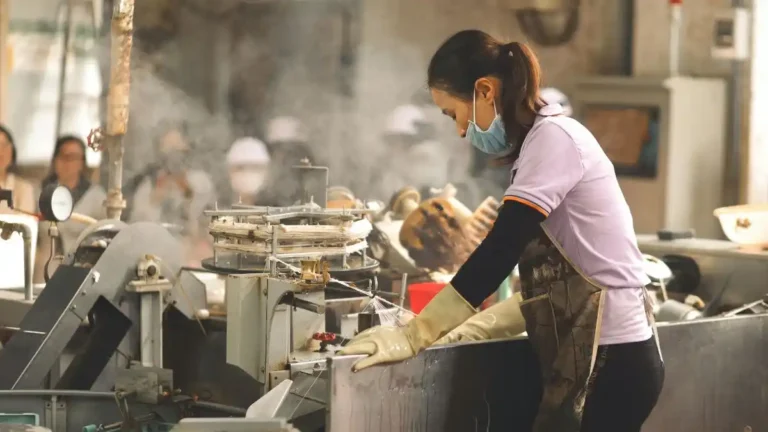

Japan’s private label manufacturing system is built on a decentralised network of specialised OEM producers. They supply supermarkets, convenience retailers and export partners across food and health categories.
This analysis of 10 private label manufacturers Japan uses a hybrid structural model. It is based on manufacturing capability, category depth and retail supply relevance rather than disclosed revenue.
The key players are:
- United Foods International
- SSK Foods
- Miyajima Shoyu
- FGROW Japan
- ASC Co.
- Ms. Variety
- Panel Japan
- FI Corporation
- Mutsumi Seika
- Iwase Cosfa
Together, they show how Japan’s supermarket supply chains rely on contract manufacturing expertise rather than vertically integrated retail production.
Key Private Label Manufacturers in Japan
| Rank | Company | Headquarters | Core Category | Structural Role | Supermarket Relevance |
|---|---|---|---|---|---|
| 1 | United Foods International | Tokyo | Multi-category food | Large-scale OEM production | High |
| 2 | SSK Foods | Shizuoka | Dressings & sauces | High-volume liquid processing | High |
| 3 | Miyajima Shoyu | Saga | Fermented & prepared foods | Traditional + industrial OEM | High |
| 4 | FGROW Japan | Tokyo | Seafood products | Category-specialist OEM | High |
| 5 | ASC Co. | Tokyo | Frozen fruits & vegetables | Global sourcing + processing | High |
| 6 | Ms. Variety | Tokyo | Health & beauty / supplements | Retail-focused OEM | Medium |
| 7 | Panel Japan | Tokyo | Supplements / export | Cross-border OEM coordination | Medium |
| 8 | FI Corporation | Toyama | Functional foods | GMP-certified supplement OEM | Medium |
| 9 | Mutsumi Seika | Kyoto | Confectionery | Traditional sweets OEM | Medium |
| 10 | Iwase Cosfa | Osaka | Functional ingredients | Ingredient-to-OEM bridge | Medium |
1. United Foods International
Founded: 1976
Headquarters: Tokyo, Japan
Estimated revenue: Not publicly disclosed (latest available)
United Foods International is one of Japan’s most established food OEM producers. It supplies sauces, ready meals and processed food products to domestic retailers and international partners.
What it supplies
The company supports private label development across formulation, production and packaging. This lets retailers scale product lines without internal manufacturing.
Why it matters to supermarket buyers
Its multi-factory structure and technical capability enable consistent high-volume output. This makes it a core supplier within the Japan supermarket ecosystem.
The company’s role reflects the broader Japanese model. Here, specialist manufacturers anchor private label supply rather than retailers themselves.
2. SSK Foods
Founded: 1908
Headquarters: Shizuoka, Japan
Estimated revenue: Not publicly disclosed (latest available)
SSK Foods is a long-standing manufacturer of dressings, mayonnaise and sauces. It has strong OEM capabilities alongside its branded business.
What it supplies
The company specialises in liquid food processing at scale. It supports private label ranges that need consistency and shelf stability.
Why it matters to supermarket buyers
Its integration within industrial food production systems lets it keep reliable supply for retailers across Japan.
Within the Japan FMCG structure, SSK Foods plays a key role in everyday grocery categories where private label penetration keeps growing.
3. Miyajima Shoyu
Founded: 1882
Headquarters: Saga, Japan
Estimated revenue: Not publicly disclosed (latest available)
Miyajima Shoyu combines traditional fermentation expertise with modern food manufacturing. It produces soy-based products, sauces and prepared meals.
What it supplies
The company has expanded its OEM operations over time. It supplies retailers and foodservice partners with customised private label products.
Why it matters to supermarket buyers
Its strength lies in recipe flexibility and quality control. Both are critical in Japan’s regulated food environment.
As part of the Japan private label ecosystem, Miyajima Shoyu supports both domestic retail demand and export-oriented product lines.
4. FGROW Japan
Founded: 2001 (as Yabu Suisan)
Headquarters: Tokyo, Japan
Estimated revenue: Not publicly disclosed (latest available)
FGROW Japan is a seafood-focused manufacturer specialising in processed fish and marine-based food products.
What it supplies
The company’s OEM operations centre on seafood categories. It supplies private label lines for retailers and distributors.
Why it matters to supermarket buyers
Its sourcing and processing capabilities align with sustainability and traceability requirements. These are increasingly relevant in Japanese retail.
FGROW’s category specialisation reflects the broader structure of Japan’s private label system. Deep expertise in specific product areas supports supply chain stability.
5. ASC Co.
Founded: Not publicly disclosed
Headquarters: Tokyo, Japan
Estimated revenue: Not publicly disclosed (latest available)
ASC operates within the frozen food segment. It focuses on fruits and vegetables sourced globally and processed for retail distribution.
What it supplies
The company supports private label programmes by combining sourcing, processing and logistics into a coordinated supply chain.
Why it matters to supermarket buyers
Its role is particularly relevant for retailers seeking stable year-round supply of frozen produce.
Within supermarket operations, ASC contributes to categories where consistency and cost control are essential.
6. Ms. Variety
Founded: 1976
Headquarters: Tokyo, Japan
Estimated revenue: Not publicly disclosed (latest available)
Ms. Variety mainly operates in health, beauty and supplement-related categories. It supports private label production for retail brands.
What it supplies
It also works on food-related products. However, its core strength lies in cosmetics, quasi-drugs and wellness goods.
Why it matters to supermarket buyers
This places the company slightly outside traditional grocery manufacturing. It is still relevant as supermarkets expand into health-oriented product lines.
Its role highlights the growing overlap between wellness and retail private label strategies.
7. Panel Japan
Founded: 1974
Headquarters: Tokyo, Japan
Estimated revenue: Not publicly disclosed (latest available)
Panel Japan provides OEM services across food and supplement categories, with a strong emphasis on export markets.
The company supports international retailers seeking Japanese-manufactured products. It handles product development, compliance and sourcing.
Its position reflects the outward-facing side of Japan’s private label sector. Domestic manufacturers serve both local and global retail networks.
8. FI Corporation
Founded: Not publicly disclosed
Headquarters: Toyama, Japan
Estimated revenue: Not publicly disclosed (latest available)
FI Corporation is a supplement manufacturer. It produces capsules, tablets and functional foods under certified production standards.
Its facilities support private label clients that must comply with strict safety and quality regulations.
The company’s inclusion reflects the importance of health-focused categories within Japanese retail. This is especially true as supermarkets expand functional product offerings.
9. Mutsumi Seika
Founded: Not publicly disclosed
Headquarters: Kyoto, Japan
Estimated revenue: Not publicly disclosed (latest available)
Mutsumi Seika specialises in confectionery production. It combines traditional Japanese sweets with modern snack manufacturing.
The company supplies private label products to retailers seeking differentiated offerings within the confectionery segment.
Its expertise in both heritage and contemporary product formats supports category diversity within supermarket assortments.
10. Iwase Cosfa
Founded: 1931
Headquarters: Osaka, Japan
Estimated revenue: Not publicly disclosed (latest available)
Iwase Cosfa operates where ingredient supply meets finished product development, particularly in health and functional categories.
The company supports private label production through formulation expertise and material sourcing.
Its role shows how ingredient specialists contribute to the broader OEM ecosystem in Japan. This is most visible in technically complex product segments.
Japan’s Private Label Manufacturing Model
Japan’s private label system is defined by a separation between retail branding and manufacturing.
Supermarkets and convenience retailers typically outsource production to specialised OEM companies. They do not usually invest in their own facilities.
This creates a network-based structure. Multiple manufacturers contribute to a single retailer’s private label portfolio.
Flexibility and coordination
The system allows for high levels of flexibility. Retailers can adjust product lines based on demand without committing to fixed manufacturing assets. Producers can serve multiple clients across categories.
However, it also makes coordination more important. This applies particularly to logistics and packaging, where consistency must be kept across different suppliers.
This model contrasts with vertically integrated systems seen in other regions. It highlights Japan’s reliance on technical expertise and specialised production.
Supermarket Supply Chains and OEM Integration
Private label products are becoming increasingly important within the Japan supermarket landscape. This is largely a response to pricing pressure and competition.
Contract manufacturers let retailers expand own-brand offerings while keeping cost control and quality standards.
Categories such as sauces, ready meals and frozen foods remain central to this growth.
At the same time, health-related products are gaining importance. They are supported by specialist manufacturers that can meet regulatory requirements.
The companies listed in this ranking provide the manufacturing backbone for these developments.
In parallel, large prepared food suppliers such as Musashino and Warabeya Nichiyo operate in adjacent segments. These are particularly convenience retail and ready meals.
They are not pure private label manufacturers. Even so, their scale shows the broader importance of contract production within Japan’s retail supply system.
Supplements, Regulation and Product Development
The supplement and functional food segment adds another layer of complexity to Japan’s private label market.
Products must comply with strict regulatory frameworks. These include classifications such as Foods with Functional Claims.
Manufacturers in this space need advanced formulation capabilities and certified production environments.
Companies such as FI Corporation and Panel Japan provide these capabilities. This lets retailers enter health-focused categories with compliant products.
Consumer demand for functional foods keeps increasing. As a result, this segment is expected to play a larger role in supermarket private label strategies.
The integration of supplement manufacturing into retail supply chains reflects broader changes in consumer behaviour and product positioning.
Frequently Asked Questions
How is this ranking of Japanese private label manufacturers built?
It uses a hybrid structural model based on manufacturing capability, category depth and retail supply relevance. It does not use disclosed revenue, because most of these companies do not publish it.
Do Japanese supermarkets make their own private label products?
Typically not. Supermarkets and convenience retailers outsource production to specialised OEM companies rather than investing in their own facilities.
Which Japanese manufacturers focus on supplements and functional foods?
FI Corporation and Panel Japan provide the formulation capabilities and certified production needed for compliant health products. Ms. Variety and Iwase Cosfa also work in health and functional categories.
Conclusion
The private label manufacturers Japan ecosystem is built on a network of specialised OEM producers rather than vertically integrated retail manufacturing.
Food producers, seafood specialists, frozen supply chains and supplement manufacturers each help keep products available on supermarket shelves within the Japan supermarket system.
As the Japan private label segment keeps expanding, driven by pricing pressure and product diversification, private label manufacturing will remain critical to supply chain stability.
Growth in health-focused categories and ongoing demand for cost-efficient retail solutions are likely to strengthen the role of contract manufacturers across the Japan FMCG market.
Editor’s Note: This article is based on publicly available company information, industry data and official disclosures where accessible. Revenue figures are not disclosed for most private label manufacturers in Japan and have therefore not been included. All references reflect the latest available information at the time of writing.