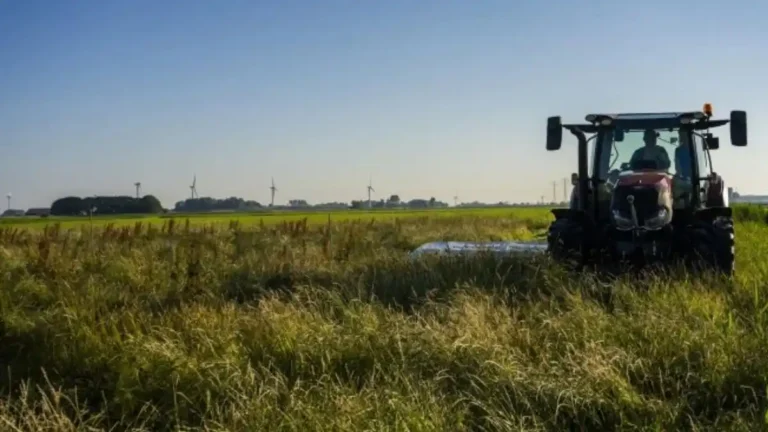

FrieslandCampina is enabling its member dairy farmers in the Netherlands and other key markets to reduce greenhouse gas emissions by switching to renewable diesel (HVO100). The programme, launched in March 2026 in collaboration with Future Fuels, offers farmers a practical and cost-effective way to lower CO₂ while using existing farm machinery.
What is renewable diesel in dairy farming?
Renewable diesel (HVO100) is a bio-based fuel that emits up to 90% less CO₂ than conventional diesel. It can be used in standard agricultural machinery without modifications. FrieslandCampina is integrating this fuel into its dairy supply chain to support sustainability goals and reduce the climate impact of milk production.
At a glance
- FrieslandCampina launched the renewable diesel programme in March 2026.
- Partnering with Future Fuels, farmers can purchase HVO100 at a fixed price for one year.
- Renewable diesel reduces CO₂ emissions by up to 90% compared with standard diesel.
- The programme is integrated with Foqus planet, FrieslandCampina’s sustainability tracking platform.
- Energy use made up about 4% of total farm emissions in 2025.
- Estimated CO₂ reduction: 200 kton if 1,000 farms switch to HVO100.
- The initiative is part of FrieslandCampina’s broader climate strategy, including green electricity and sustainable farm practices.
How does the programme work?
Farmers can register to participate and receive HVO100 through FrieslandCampina’s partnership with Future Fuels. The fuel is compatible with existing machinery, meaning no technical adjustments are required. Emission reductions are automatically tracked via Foqus planet, which rewards farmers for achieving measurable sustainability outcomes.
Why is this important for dairy supply chains?
The dairy industry faces increasing pressure to reduce greenhouse gas emissions. Fuel use on farms, though a smaller portion of total emissions, can have a large cumulative impact across a cooperative of thousands of farms. Implementing renewable diesel offers an immediate, scalable solution to improve environmental performance without disrupting production.
What is the wider industry context?
Sustainability in dairy production is a growing priority for retailers and consumers. European dairy cooperatives are increasingly adopting low-carbon fuels, precision feeding, and renewable energy to meet climate targets. FrieslandCampina’s move aligns with industry trends toward carbon-neutral milk and responsible sourcing, reinforcing its position in sustainable FMCG markets.
What happens next?
FrieslandCampina will expand renewable diesel use across its Dutch dairy farms, helping the Netherlands’ dairy sector reduce CO₂ in milk production. Broader adoption supports sustainability in the Dutch FMCG market, strengthens supply chain climate performance, and provides a model for other dairy producers. Foqus planet monitoring will guide future emission-reduction efforts.
Editor’s Note: This article covers FrieslandCampina’s renewable diesel initiative for member dairy farms. The story focuses on supply chain sustainability, CO₂ reduction, and practical implementation for farmers. All figures and programme details are based on the company’s March 2026 announcement. The piece is intended for FMCG, dairy, and supermarket industry readers seeking insights into environmental and operational impacts on milk production.