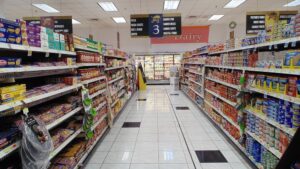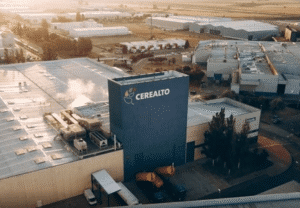

Andorra’s grocery market depends far more on imported retail infrastructure than on domestic manufacturing.
Most supermarket private label products sold in the country come through Spanish and French retail and manufacturing networks. They do not come from Andorran-owned FMCG producers.
Shelves are shaped by:
- cross-border sourcing agreements
- tourism demand
- regional distributors
- Iberian logistics systems
That structure has become even more visible as private label products keep gaining shelf space across Southern Europe.
Retailers in Andorra increasingly rely on outside suppliers to keep prices competitive while serving both residents and high seasonal tourist traffic. These include:
- foreign co-packers
- frozen food specialists
- canned goods manufacturers
- integrated Catalan food cooperatives
For suppliers, Andorra works less like a standalone grocery economy. It is more like a compact extension of the wider Spanish and Catalan retail supply chain.
What makes Andorra’s private label market different?
Unlike larger European grocery markets, Andorra does not have a deep domestic manufacturing base producing supermarket own-brand products at scale.
Most retailer-label packaged food, frozen products, canned goods, snacks, dairy items and household grocery lines are sourced from:
- Spain
- Catalonia
- France
- wider Southern European co-packing networks
In this market, retailer relationships, logistics access, border proximity and tourism-driven stock planning matter more than local industrial scale.
At a glance: Major private label supply networks linked to Andorra
| Rank | Company | FY Revenue | Strategic Role |
|---|---|---|---|
| 1 | Eroski / Caprabo | €5B+ | Dominant supermarket own-brand retail presence |
| 2 | BonÀrea | €2B+ | Vertically integrated Catalan food supply network |
| 3 | La Doria | €1B+ | Major canned food and sauce private label supplier |
| 4 | Audens Food | Private | Frozen ready-meal and snack manufacturing |
| 5 | Europastry | €1.3B+ | Frozen bakery supplier across Iberian retail |
1. Eroski / Caprabo
Key facts
Eroski was founded in 1969 and is headquartered in Elorrio, Spain. It remains one of the most commercially relevant grocery groups connected to the Andorran supermarket sector, through the Caprabo retail network.
Caprabo supermarkets have a visible presence inside Andorra, particularly in larger urban and tourist-heavy areas.
Their stores act as direct channels for Eroski-branded private label products, including:
- packaged foods
- beverages
- chilled grocery
- household products
- value-tier essentials
Why it matters to suppliers
What matters operationally is the strength of the Iberian distribution network behind those shelves.
Eroski’s sourcing relationships across Spain let Andorran stores keep broad range depth despite the country’s small population.
The retailer also benefits from familiarity among Catalan and Spanish visitors entering Andorra for shopping tourism.
Private label plays an important role in this structure. Imported branded goods in Andorra can carry premium prices due to logistics and tourism-driven buying patterns. Retailer-controlled labels help offset that pressure.
2. BonÀrea
How it operates
BonÀrea operates differently from most supermarket-linked supply groups active around Andorra.
Founded in Guissona, Catalonia, the cooperative controls major parts of its production chain in-house. This covers livestock, processing, manufacturing, logistics and retail distribution.
That vertical integration gives it unusually tight control over pricing and supply consistency.
BonÀrea’s direct retail footprint inside Andorra is limited compared with larger supermarket chains. But its closeness to the border makes it commercially influential in the wider food ecosystem around the microstate.
Cross-border shoppers, regional wholesalers and nearby logistics flows all strengthen its relevance.
Why it matters to suppliers
The company’s operational model is especially important at a time when European retailers are looking for:
- stable sourcing
- shorter supply chains
- lower transport volatility
- stronger control over food costs
Its fresh meat, chilled products, packaged foods and prepared meal operations fit well with grocery demand from both Andorran residents and tourism traffic.
3. La Doria
What it supplies
La Doria is one of the most important private label manufacturers connected indirectly to Andorran supermarket shelves.
Headquartered in Italy, the company makes products for supermarket own-brand programmes across Europe, specialising in:
- canned tomatoes
- legumes
- pasta sauces
- shelf-stable packaged foods
Consumers shopping in Andorra may never see the La Doria name directly. But its manufacturing sits behind many retailer-controlled grocery lines entering the region through Spanish and French retail systems.
Why it matters to supermarket buyers
Canned and ambient grocery products remain critical categories in tourism-heavy retail environments. Stock flexibility and long shelf life are commercially valuable there.
La Doria’s scale also gives retailers access to:
- competitive sourcing
- standardised quality
- lower-cost private label expansion
Across Europe, supermarket groups keep increasing their reliance on large co-packers like La Doria. Inflation pressure is reshaping consumer buying behaviour.
4. Audens Food
What it supplies
Frozen convenience foods remain a major category in Iberian retail. Audens Food has become one of the strongest private label manufacturers in that segment.
The Spanish group produces:
- croquettes
- tapas-style products
- ready meals
- frozen snacks
- foodservice-oriented frozen categories
Its relevance to Andorra comes through broader Spanish retail distribution systems. These supply supermarkets, convenience channels and tourism-focused food retail.
Why it matters to supermarket buyers
Frozen private label products are particularly important in Andorra. Tourism creates highly variable demand through the ski season and holiday periods.
Retailers need categories that:
- store efficiently
- scale quickly during tourist surges
- maintain margin flexibility
Companies like Audens help provide that operational stability.
5. Europastry
What it supplies
Europastry has become one of the most influential bakery suppliers across Southern European retail and foodservice channels.
Founded near Barcelona, the company supplies frozen bakery products across the Iberian region to:
- supermarkets
- cafés
- hotels
- quick-service restaurants
- convenience retailers
Why it matters to supermarket buyers
Its connection to Andorra is partly tied to tourism economics.
Local industrial bakery production in Andorra remains limited. So hotels, cafés, ski resorts, petrol forecourts and supermarket bakery sections rely heavily on frozen bakery logistics.
That creates strong opportunities for large-scale suppliers capable of delivering:
- stable frozen distribution
- fast replenishment
- broad SKU variety
Europastry’s scale and regional logistics network make it highly relevant in that environment.
French supply chains still shape parts of the market
Spanish retail infrastructure dominates much of Andorra’s grocery trade. But French influence remains important, especially in premium packaged foods and imported grocery categories.
Northern parishes and tourism-heavy retail zones often stock:
- French confectionery
- gourmet packaged foods
- premium dairy
- imported beverages
- hypermarket-linked private label ranges tied to French sourcing systems
This dual sourcing identity is one reason Andorra’s supermarket sector looks different from many other small European markets.
Retailers are not only serving local residents. They are also serving:
- tourists
- cross-border shoppers
- ski visitors
- seasonal consumers looking for imported range depth
Industry outlook
Private label growth across Europe is likely to strengthen the importance of regional co-packers and cross-border food manufacturing networks linked to Andorra.
Retailers continue facing:
- margin pressure
- transport costs
- labour inflation
- consumer demand for lower-priced grocery alternatives
That creates favourable conditions for:
- vertically integrated food groups
- frozen food specialists
- ambient grocery manufacturers
- large-scale private label suppliers
Andorra itself will probably remain a retail-driven market rather than a manufacturing-driven one.
The country’s commercial role is tied more closely to:
- tourism retail
- imported grocery distribution
- Iberian cross-border supply systems
Frequently Asked Questions
Where do Andorra’s supermarket private label products come from?
Most come from Spain, Catalonia, France and wider Southern European co-packing networks. Andorra does not have a deep domestic manufacturing base for own-brand products.
Which supply networks are most important for Andorra?
The five covered are Eroski / Caprabo, BonÀrea, La Doria, Audens Food and Europastry. Eroski / Caprabo has the most direct own-brand retail presence, with revenue of €5B+.
Why is frozen private label important in Andorra?
Tourism creates highly variable demand through the ski season and holiday periods. Frozen products store efficiently, scale quickly during tourist surges and help retailers keep margin flexibility.
What happens next?
The next phase of Andorra’s grocery market will likely depend on how retailers balance tourism-driven premium demand with rising consumer sensitivity around food prices.
Private label expansion is expected to continue, particularly in:
- frozen foods
- canned grocery
- bakery
- snacks
- value-focused packaged categories
Regional Spanish and French suppliers are positioned to benefit most. They already control the logistics infrastructure feeding the market.
For manufacturers, Andorra remains small in population terms. But it is commercially useful as a high-turnover border retail environment connected to wider Southern European grocery flows.
Editor’s Note: This report was prepared using publicly available company information, European grocery trade reporting, regional retail infrastructure analysis, and cross-border supermarket market data connected to the Andorran grocery sector. Revenue figures are approximate latest available estimates and may vary by reporting period.