
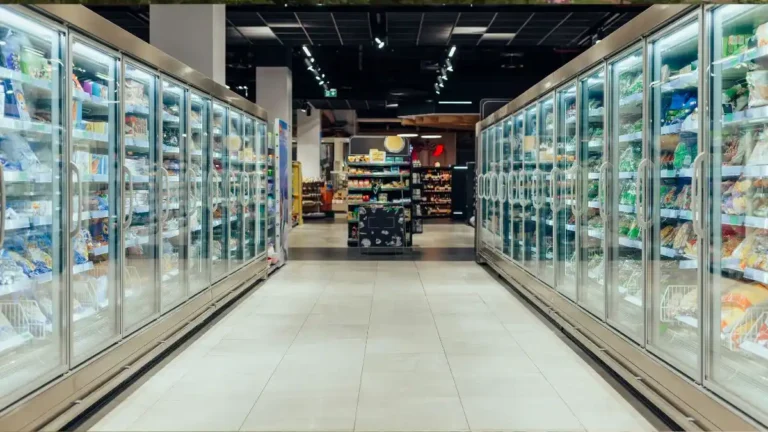

Supermarket refrigeration is entering one of its biggest transition periods in decades.
Three forces are pushing grocery retailers to modernise their cooling infrastructure:
- new US refrigerant regulations
- rising electricity costs
- growing demand for fresh and frozen foods
Major supermarket chains are replacing legacy systems with lower-emission technologies, particularly carbon dioxide (CO₂) and propane-based refrigeration. They are also investing in monitoring platforms that reduce maintenance costs and food waste.
For equipment suppliers, the shift is creating new opportunities and new competition.
Manufacturers that can deliver energy-efficient systems, natural refrigerants and nationwide service are increasingly becoming strategic partners to grocery retailers.
From refrigerated display cases to compressors and system controls, a relatively small group of companies now plays an outsized role. They keep America’s supermarket shelves cold.
At a Glance
| Rank | Company | FY Revenue | Strategic Role |
|---|---|---|---|
| 1 | Hussmann Corporation | Private | End-to-end supermarket refrigeration systems |
| 2 | Hillphoenix | Private | Natural refrigerant and integrated systems |
| 3 | Copeland | Private | Compressors and refrigeration controls |
| 4 | CoolSys | Private | Installation and maintenance services |
| 5 | Dover Corporation | $7.75 billion | Parent company of refrigeration businesses |
| 6 | Zero Zone | Private | CO₂ display cases and rack systems |
| 7 | Heatcraft Refrigeration Products | Private | Condensing units and evaporators |
| 8 | True Manufacturing | Private | Commercial refrigeration cabinets |
| 9 | Kysor Warren | Private | Display cases and rack systems |
| 10 | Anthony International | Private | Glass doors and merchandising systems |
1. Hussmann Corporation
- Founded: 1906
- Headquarters: Bridgeton, Missouri
- FY Revenue: Private company
Few names carry more weight in supermarket refrigeration than Hussmann.
The company has spent more than a century supplying food retailers across North America. It provides refrigerated display cases, walk-in coolers and integrated refrigeration systems.
What it supplies
Its product portfolio covers almost every department inside a supermarket. This runs from produce and dairy to frozen food and convenience sections.
In recent years, Hussmann has significantly expanded its natural refrigerant offering. This includes CO₂ transcritical systems that help retailers reduce emissions and comply with evolving regulations.
Why it matters to supermarket buyers
The company also benefits from a nationwide service network. This gives major grocery chains a single supplier for equipment, installation and maintenance.
2. Hillphoenix
- Founded: 1887
- Headquarters: Conyers, Georgia
- FY Revenue: Private company
Hillphoenix has become one of the industry’s leaders in natural refrigerant technology.
The company was among the early adopters of transcritical CO₂ systems. It has built a strong position with supermarkets looking to reduce reliance on traditional hydrofluorocarbon refrigerants.
Where its equipment is used
Its equipment is widely used in large-format grocery stores, regional chains and new store developments.
Beyond display cases and rack systems, Hillphoenix has invested heavily in controls and integrated energy management. These areas have become more important as supermarkets seek lower operating costs.
3. Copeland
- Founded: Independent company since 2023
- Headquarters: St. Louis, Missouri
- FY Revenue: Private company
Copeland is one of the most important companies in supermarket refrigeration, even though consumers rarely see its name.
What it supplies
The company makes compressors, electronic controls and monitoring systems. These sit behind many of the industry’s refrigeration installations.
Emerson completed its exit from the climate technologies business in 2024. Copeland then emerged as an independent company focused entirely on refrigeration and HVAC technologies.
Why it matters to supermarket buyers
Its products play a critical role in three areas:
- improving system efficiency
- reducing energy consumption
- supporting the transition to lower-emission refrigerants
4. CoolSys
- Founded: 2019
- Headquarters: Brea, California
- FY Revenue: Private company
CoolSys occupies a different position in the market. It does not make refrigeration equipment. Instead, it specialises in installing, servicing and maintaining supermarket refrigeration systems.
The company has expanded rapidly through acquisitions. It now operates one of the largest refrigeration service networks in the United States.
Why it matters to supermarket buyers
For supermarket operators, maintaining equipment efficiently is becoming as important as buying the equipment itself.
Downtime can result in product losses, food safety risks and higher energy costs.
5. Dover Corporation
- Founded: 1955
- Headquarters: Downers Grove, Illinois
- FY Revenue: about $7.75 billion
Dover’s importance in supermarket refrigeration comes through its ownership of several businesses serving food retailers. These include Hillphoenix and Anthony International.
The industrial conglomerate has steadily built a portfolio of refrigeration and food retail technologies. It extends from display cases to merchandising solutions.
Why it matters to supermarket buyers
Its scale gives it the financial resources to invest in product development and energy-efficient technologies.
This comes at a time when supermarkets are speeding up capital spending on refrigeration upgrades.
6. Zero Zone
- Founded: 1961
- Headquarters: North Prairie, Wisconsin
- FY Revenue: Private company
Zero Zone has developed a strong reputation for energy-efficient refrigeration systems. It is particularly well known for its work with CO₂ technology.
The company supplies refrigerated display cases and integrated systems to supermarkets across the country. It has been an active participant in the industry’s move toward natural refrigerants.
Retailers often select its systems to lower energy consumption and reduce their environmental footprint.
7. Heatcraft Refrigeration Products
- Founded: 1946
- Headquarters: Stone Mountain, Georgia
- FY Revenue: Private company
Heatcraft is one of the largest suppliers of condensing units, evaporators and refrigeration components in North America.
Consumers are unfamiliar with the brand. Even so, its products are widely used behind supermarket refrigeration systems and cold storage operations.
The company’s broad product range and established distribution network have made it a longstanding supplier to contractors and grocery retailers.
8. True Manufacturing
- Founded: 1945
- Headquarters: O’Fallon, Missouri
- FY Revenue: Private company
True Manufacturing is best known for its commercial refrigeration cabinets and display equipment.
The company has become more active in propane-based refrigeration technologies. These include self-contained R290 systems, which offer lower environmental impact than traditional refrigerants.
Its products are commonly found in supermarket deli departments, convenience sections and prepared food areas.
9. Kysor Warren
- Founded: 1882
- Headquarters: Columbus, Georgia
- FY Revenue: Private company
Kysor Warren remains one of the largest US manufacturers dedicated to supermarket display cases and refrigeration systems.
The company has invested heavily in CO₂ technologies and integrated system designs. These help retailers comply with changing environmental regulations while improving energy performance.
Its long history in food retail refrigeration gives it a strong position with regional and independent supermarket chains.
10. Anthony International
- Founded: 1958
- Headquarters: Sylmar, California
- FY Revenue: Private company
Anthony International occupies a specialised niche within supermarket refrigeration.
The company makes glass doors and merchandising systems used on refrigerated display cases across North America.
Supermarkets are focusing more on energy efficiency. As a result, high-performance glass doors and lighting systems have become more important for reducing electricity use and improving product visibility.
Industry Outlook
The refrigeration industry is now being shaped by three major trends:
- Natural refrigerants. The first is the transition to natural refrigerants, particularly carbon dioxide and propane systems.
- Energy management. Supermarkets are under pressure to lower operating costs. Refrigeration remains one of the largest sources of electricity use inside a store.
- System intelligence. Retailers are investing more in remote monitoring, predictive maintenance and digital controls. These reduce service costs and prevent equipment failures.
Manufacturers that combine equipment, software and service are likely to gain a larger share of future supermarket investment.
Frequently Asked Questions
Which are the leading supermarket refrigeration companies in the US?
The top 10 are Hussmann Corporation, Hillphoenix, Copeland, CoolSys, Dover Corporation, Zero Zone, Heatcraft Refrigeration Products, True Manufacturing, Kysor Warren and Anthony International.
Why are US supermarkets upgrading refrigeration?
New US refrigerant regulations, rising electricity costs and growing demand for fresh and frozen foods are driving upgrades. Chains are moving to lower-emission CO₂ and propane-based systems.
Which companies does Dover own in supermarket refrigeration?
Dover’s food retail businesses include Hillphoenix and Anthony International. Dover’s FY revenue is about $7.75 billion.
What Happens Next?
The next few years are expected to bring another wave of refrigeration upgrades across the US grocery industry. Retailers are preparing for new refrigerant rules and rising energy costs.
Large supermarket chains are likely to speed up adoption of CO₂ systems. Smaller operators may increasingly turn to self-contained propane-based technologies.
For suppliers, competition will depend more on service capabilities, energy performance and the ability to help retailers manage both costs and regulatory compliance.
The changes will have implications far beyond equipment manufacturers. For the US retail technology sector, refrigeration is becoming more connected through remote monitoring, predictive maintenance and energy management platforms.
For the US grocery store industry, modern cooling systems are essential for protecting fresh food quality and reducing operating costs.
Across the broader US FMCG sector, more efficient refrigeration and cold-chain infrastructure will play an important role. It will keep products available while supporting retailers’ sustainability and emissions targets.
Editor’s Note: Revenue figures are based on the latest publicly available company reports and industry disclosures. Several companies on this list are privately held and do not publish annual sales figures.
The ranking is based on market influence, supermarket customer relationships, product breadth, service capabilities and strategic importance to the US grocery refrigeration industry.








