
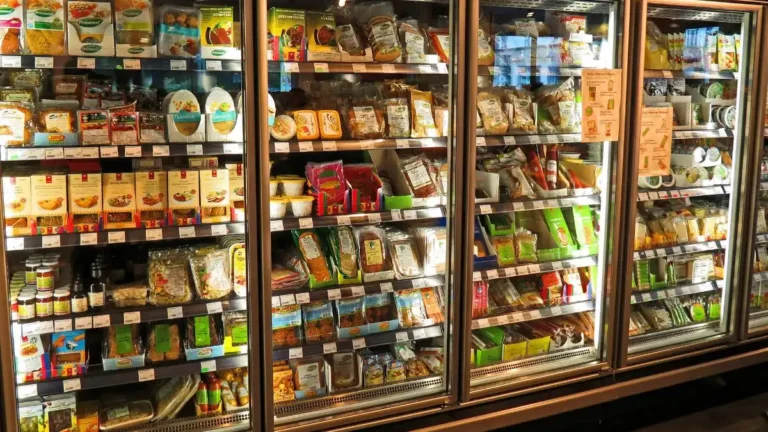

Australia’s supermarket refrigeration industry is facing a unique mix of pressures.
Retailers are investing in lower-emission cooling technologies. At the same time, they manage some of the world’s hottest operating conditions and one of the most geographically challenging food supply chains.
Two forces are speeding up the shift to natural refrigerants and energy-efficient refrigeration systems:
- the country’s federal HFC phase-down programme
- increasingly ambitious sustainability targets from major supermarket groups
For equipment manufacturers and engineering specialists, Australia has become an important proving ground for:
- high-temperature CO₂ refrigeration
- heat recovery technologies
- long-distance cold-chain solutions
These could influence supermarket projects far beyond the region.
At a Glance
| Rank | Company | FY Revenue | Strategic Role |
|---|---|---|---|
| 1 | Baker Refrigeration (AJ Baker & Sons) | Private | National refrigeration contractor and systems distributor |
| 2 | Hussmann Oceania (McAlpine Hussmann) | Private | Display cabinets and transcritical CO₂ systems |
| 3 | Gordon Brothers | Private | Industrial and cold-chain refrigeration engineering |
| 4 | Scantec Refrigeration Technologies | Private | Low-charge natural refrigerant systems |
| 5 | SCM Frigo ANZ (Beijer Ref) | Private | CO₂ refrigeration racks and packs |
| 6 | Epta Asia Pacific | Private | Integrated refrigeration solutions |
| 7 | BITZER Australia | Private | Compressors and refrigeration technologies |
| 8 | Danfoss Australia | Private | Controls and energy management systems |
| 9 | AHT Cooling Systems Oceania | Private | Plug-in R290 refrigeration systems |
| 10 | AIRR / Actrol (Beijer Ref Group) | Private | Refrigeration distribution and wholesale support |
Market Segmentation
| Category | Companies | Strategic Play in 2026 |
|---|---|---|
| Supermarket Refrigeration Giants | Baker Refrigeration, Hussmann Oceania | Large-scale supermarket projects and integrated systems |
| Natural Refrigerant Specialists | SCM Frigo ANZ, Scantec | CO₂ and low-charge refrigeration technologies |
| Industrial and Cold-Chain Leaders | Gordon Brothers | Distribution centres and industrial cooling |
| Component and Controls Specialists | BITZER, Danfoss | Compressors, controls and energy management |
| Plug-In Refrigeration Experts | AHT | Self-contained R290 refrigeration and freezers |
Why Australia Matters
Australia is becoming one of the world’s most important markets for natural refrigerants. It combines extreme temperatures with a vast food distribution network.
Supermarkets routinely operate in regions where summer temperatures exceed 40°C. This creates significant challenges for refrigeration systems.
At the same time, food products often travel thousands of kilometres between farms, processing facilities, distribution centres and stores.
The market has therefore become a testing ground for refrigeration technologies that can stay efficient under difficult conditions.
1. Baker Refrigeration (AJ Baker & Sons)
- Founded: 1920s origins, more than a century of operating history
- Headquarters: Western Australia
- FY Revenue: Private
Baker Refrigeration is one of Australia’s most influential commercial refrigeration businesses.
What it supplies
The company is a major supplier and contractor for supermarket refrigeration projects. It also distributes several internationally recognised refrigeration brands, including equipment from Epta and AHT.
Why it matters to supermarket buyers
Its extensive national footprint and long-standing links with grocery retailers make it a key player in the Australian market.
2. Hussmann Oceania (McAlpine Hussmann)
- Headquarters: New South Wales
- FY Revenue: Private
Hussmann Oceania remains one of the leading suppliers of refrigerated display cabinets and integrated supermarket refrigeration systems in Australia.
The company has been heavily involved in the rollout of transcritical CO₂ systems for major retailers. It continues to benefit from the industry’s move toward lower-emission technologies.
3. Gordon Brothers
- Founded: 1917
- Headquarters: Victoria
- FY Revenue: Private
Gordon Brothers is one of Australia’s most respected industrial refrigeration engineering companies.
What it does
The business specialises in large-scale cooling projects. It has extensive expertise in ammonia and CO₂ systems used in:
- food processing
- cold storage
- logistics operations
Its work is particularly important as retailers keep investing in distribution capacity and supply-chain resilience.
4. Scantec Refrigeration Technologies
- Headquarters: Queensland
- FY Revenue: Private
Scantec has built a strong reputation for engineering low-charge natural refrigerant systems.
The company is particularly well known for its work in industrial refrigeration and food logistics. In these areas, reducing refrigerant charges and improving efficiency have become increasingly important.
5. SCM Frigo ANZ (Beijer Ref)
- Headquarters: New South Wales
- FY Revenue: Private
SCM Frigo is one of Europe’s pioneering suppliers of transcritical CO₂ systems. It has built a growing presence in Australia through the Beijer Ref network.
Its refrigeration packs and booster systems are increasingly used in supermarket projects that need high efficiency during hot weather.
6. Epta Asia Pacific
- Headquarters: New South Wales presence
- FY Revenue: Private
Epta’s Asia-Pacific operations support supermarket projects across Australia. They supply refrigerated display cabinets and integrated cooling technologies.
The company’s expertise in natural refrigerants and energy-efficient systems has helped strengthen its position in the region.
7. BITZER Australia
- Headquarters: New South Wales
- FY Revenue: Private
BITZER is one of the world’s leading compressor manufacturers and has a significant presence in Australia.
Its technologies support commercial refrigeration systems throughout the country’s grocery and cold-chain sectors. They are widely used in natural refrigerant applications.
8. Danfoss Australia
- Headquarters: Victoria
- FY Revenue: Private
Danfoss plays a crucial role in refrigeration controls and energy management.
Its electronic valves, controllers and monitoring technologies help retailers improve system efficiency and cut energy use.
9. AHT Cooling Systems Oceania
- Headquarters: New South Wales
- FY Revenue: Private
AHT has become one of the leading suppliers of plug-in refrigeration and freezer systems in Australia.
Its self-contained propane-based systems are particularly popular with convenience retailers and smaller store formats. This is because of their simplicity and lower maintenance needs.
10. AIRR / Actrol (Beijer Ref Group)
- Headquarters: Victoria
- FY Revenue: Private
AIRR and Actrol provide the distribution network that supports a significant portion of Australia’s refrigeration industry.
The businesses supply components, equipment and technical support to contractors and service providers across the country.
Industry Outlook
Australia’s refrigeration market is being shaped by three major trends:
- The federal HFC phase-down programme. This is speeding up investment in natural refrigerants.
- Extreme heat. Modern CO₂ systems increasingly use parallel compression, ejectors and adiabatic gas coolers to stay efficient during high summer temperatures.
- Supply-chain resilience. Australia’s long-distance food logistics network needs refrigeration systems that run reliably across vast geographic areas.
The environmental differences remain significant:
- Traditional refrigerant R404A has a Global Warming Potential (GWP) of about 3,900.
- CO₂ (R744) has a GWP of 1.
- Propane (R290) has a GWP of 3.
These figures are increasingly influencing investment decisions throughout the grocery industry.
Frequently Asked Questions
Why is Australia important for natural refrigerants?
Australia combines extreme temperatures with a vast food distribution network. Supermarkets routinely operate where summer temperatures exceed 40°C, so it has become a testing ground for efficient refrigeration.
Which companies lead supermarket refrigeration in Australia?
The ranking is led by Baker Refrigeration (AJ Baker & Sons), Hussmann Oceania (McAlpine Hussmann) and Gordon Brothers. Baker Refrigeration and Hussmann Oceania handle large-scale supermarket projects and integrated systems.
How do CO₂ and propane compare with R404A?
R404A has a Global Warming Potential (GWP) of about 3,900. CO₂ (R744) has a GWP of 1 and propane (R290) has a GWP of 3.
What Happens Next?
Australia is expected to remain one of the world’s most important proving grounds for natural refrigerant technologies.
The transition is creating opportunities across the Australian retail technology sector. For the Australian grocery store industry, refrigeration has become a strategic investment. It is linked to energy efficiency, carbon reduction and supply-chain reliability.
Across the wider Australian FMCG sector, investment in modern cold-chain infrastructure is helping to improve food quality, reduce waste and strengthen food security.
Retailers continue upgrading stores and distribution centres. As this happens, the technologies developed and refined in Australia are likely to influence supermarket refrigeration projects in other warm-climate markets around the world.
Editor’s Note: The ranking is based on market influence, engineering capabilities, supermarket relationships, technology leadership and strategic importance to Australia’s grocery refrigeration sector.
Revenue figures are based on the latest publicly available information. Several companies included in this ranking are privately held and do not disclose annual sales data.