
The top confectionery packaging suppliers in Italy are SACMI, IMA Group, ACMA, PFM Group, Cavanna Packaging Group, Cama Group, CT Pack, M.C. Automations, Tecno Pack and Comek. Their capabilities cover:
- Chocolate and candy wrapping
- Flow packing
- Weighing and bagging
- Robotic cartoning
- Complete automated confectionery packaging lines
Italy’s strength goes beyond individual machines. Its packaging machinery industry generated almost €10.5 billion in turnover in 2025.
Meanwhile, confectionery manufacturers are dealing with shorter production runs, retailer-specific formats, labour pressure and changing packaging materials.
For supermarket and private-label suppliers, the result is greater demand for flexible lines. These lines must switch products and formats efficiently without losing output or product quality.
Top confectionery packaging suppliers in Italy
| Rank | Company | Italy base | Best for |
|---|---|---|---|
| 1 | SACMI | Imola | Complete chocolate and packaging lines |
| 2 | IMA Group | Ozzano dell’Emilia | Integrated packaging automation |
| 3 | ACMA | Bologna | High-speed chocolate and candy wrapping |
| 4 | PFM Group | Torrebelvicino | Bars, wafers and flexible packaging |
| 5 | Cavanna Packaging Group | Prato Sesia | Flow wrapping and product handling |
| 6 | Cama Group | Molteno | Robotic secondary packaging |
| 7 | CT Pack | Fossalta | Feeding-to-case packing lines |
| 8 | M.C. Automations | Casalecchio di Reno | Pralines and speciality chocolates |
| 9 | Tecno Pack | Schio | Chocolate bars and coated wafers |
| 10 | Comek | Castiglione delle Stiviere | Weighed and bagged confectionery |
The ranking considers direct confectionery expertise, technology breadth, application evidence, operating scale and international support. It is not based on revenue alone. A company ranked lower can be the better supplier for a particular product or packaging format.
What does confectionery packaging include?
Confectionery packaging covers the machinery used to wrap, weigh, bag, carton or case-pack products. These include chocolate, pralines, candy, gummies, bars and wafers.
There are three main stages:
- Primary packaging is the pack closest to the product, such as flow packs, twist wraps, foil wraps and retail bags.
- Secondary packaging groups those products into cartons, trays, displays or multipacks.
- Tertiary packaging prepares them for distribution through cases and other end-of-line formats.
The distinction matters because Italy’s leading suppliers do not all compete at the same stage of the packaging line.
1. SACMI
- Founded: 1919
- Headquarters: Imola, Bologna
- 2025 revenue: €1.526 billion
- Best suited to: Large chocolate manufacturers needing broad processing and packaging capability
SACMI ranks first because its confectionery offer reaches further upstream and downstream than a conventional wrapping-machine business.
What it supplies
The Imola-based group supplies equipment for:
- Pralines
- Tablets and bars
- Chocolate balls and eggs
- Hollow figures
- Hard candies, toffees and jelly candies
Its capabilities extend from chocolate preparation and moulding to primary wrapping, flow packing and secondary packaging. SACMI credits much of this specialist knowledge to the heritage of Carle & Montanari and OPM.
That breadth matters for large factories. A chocolate manufacturer planning moulding, wrapping and downstream automation can work across several stages. It need not treat each machine as an unrelated investment.
Latest technology
SACMI’s current HY7 platform shows its specialist wrapping capability. At Interpack 2026, the company showed the machine wrapping cremini pralines. It switched rapidly between wrapping styles and used automatic quality inspection.
SACMI also presented flow wrapping and vertical bagging technology for delicate products and different wrapping materials.
Key facts
Scale is another reason for its position. SACMI reported €1.526 billion in 2025 revenue and 4,912 employees. The group also reported €234 million invested in R&D over the previous three years.
For supermarket and private-label suppliers, the operational advantage is product breadth. A manufacturer may need standard tablets alongside pralines, seasonal figures or retailer-specific formats. SACMI can address more of those needs within one industrial group.
Claims about new packaging materials still need to be tested against the buyer’s exact substrate, product and required speed. Machine compatibility is more useful than a broad sustainability claim.
Why SACMI makes the Top 10: It combines specialist chocolate knowledge with the scale and technology range to cover processing, primary packaging and downstream automation.
2. IMA Group
- Founded: 1961
- Headquarters: Ozzano dell’Emilia, Bologna
- Employees: More than 7,400
- Best suited to: Multi-stage automation and international manufacturing networks
IMA’s value to confectionery manufacturers is integration.
The Italian group covers packaging and processing technologies across food and other industries. Within confectionery, its capabilities include handling candies, gums, coated sweets and bars. Its technologies extend across primary packaging, cartoning and end-of-line automation.
Key facts
The group currently reports:
- More than 7,400 employees
- 56 manufacturing sites
- 88% export exposure
- A network covering 80 countries
That international footprint matters after installation. Packaging machinery is a long-term capital investment. Access to engineering support, spare parts and upgrades can be as important as the initial machine specification.
Why it matters to private-label buyers
IMA is especially relevant when several packaging operations need to be connected. A confectionery manufacturer can look beyond the primary wrapper towards counting, cartoning, display preparation and downstream automation.
That also has private-label relevance. A co-manufacturer serving several supermarket customers may run similar products but different pack counts, cartons, displays or cases.
Managing those changes efficiently can reduce the cost and downtime of serving multiple contracts.
Why IMA makes the Top 10: Its strength is broad packaging automation backed by a large manufacturing and service network, making it particularly relevant to complex or multinational projects.
3. ACMA
- Experience: More than 100 years in packaging
- Headquarters: Bologna
- Parent company: Coesia
- ACMA revenue: Not separately disclosed
- Best suited to: High-volume individually wrapped chocolates and candies
ACMA earns its position through depth in individual confectionery wrapping rather than the breadth of a complete chocolate factory.
Its machinery handles products where feeding, orientation and wrapping need to happen at very high speed without damaging the confectionery.
Key machines
The CW 1400, launched in 2025, shows that position clearly. ACMA says the machine can wrap chocolates, pralines, candies, jellies and éclairs at up to 1,400 pieces per minute.
It supports double-twist formats for round and flat products. It also supports protected double twist for flat-base items.
This capability is commercially relevant to mainstream supermarket confectionery. At very high volumes, small losses from stoppages, damaged products or poor feeding can add up quickly.
ACMA also has documented confectionery customer work, including packaging equipment supplied to Italian chocolatier Laica. That gives its inclusion stronger evidence than a generic food-machinery catalogue.
Ownership and materials
ACMA is part of Coesia, another Bologna-headquartered Italian industrial group. Parent-company figures should not be treated as ACMA’s standalone revenue. ACMA’s financial performance is not separately disclosed in the information used for this ranking.
Material testing is becoming another part of ACMA’s role as confectionery brands consider alternative wrappers.
Buyers should still validate the exact substrate on the proposed equipment. They should not assume all paper or recyclable structures will run at the same speed as an existing material.
Why ACMA makes the Top 10: It brings specialist high-speed feeding and wrapping expertise for individual chocolates, pralines and candies.
4. PFM Group
- Founded: 1964
- Headquarters: Torrebelvicino, Vicenza
- Current consolidated turnover: €210 million
- Employees: 750 worldwide
- Best suited to: Bars, wafers and confectionery using flexible flow packs
PFM is one of the strongest Italian choices where flexible packaging sits at the centre of the confectionery line.
What it supplies
Its technology covers horizontal flow wrapping, vertical form-fill-seal packaging, weighing, feeding and robotics.
Chocolate bars, cereal bars, wafers and similar products are important applications. They need controlled movement from production into flexible packaging at high output.
PFM currently reports €210 million in consolidated turnover and 750 employees worldwide. That gives PFM meaningful international scale without changing its core identity as a flexible-packaging specialist.
Why it matters to supermarket buyers
For supermarket suppliers, the relevance is especially clear around bars and multipacks. Retail promotions, different price points and private-label contracts can change unit counts and pack configurations. This makes reliable feeding and format changes commercially important.
PFM also develops machinery designed to process newer recyclable flexible films. For procurement teams, the useful test is not the environmental claim itself. It is whether the intended film can keep seal integrity, speed and product protection on the proposed line.
Why PFM makes the Top 10: It combines international scale with focused flow-wrapping, feeding and flexible-packaging expertise for high-throughput confectionery.
5. Cavanna Packaging Group
- Founded: 1960
- Headquarters: Prato Sesia, Novara
- Employees: Around 340
- Installed base: More than 6,000 machines and complete lines
- Best suited to: Flow wrapping and controlled product handling
Cavanna makes the list because flow wrapping is central to its business rather than one application within a broad machinery catalogue.
The Italian company specialises in flow-pack systems for food products including chocolate, biscuits, breakfast products and sweet snacks. Its wider technology covers automatic loading, product transport, buffering and secondary packaging.
That surrounding equipment is important. A high-speed wrapper achieves little if bars, wafers or biscuits reach it unevenly or build up upstream.
Key facts
Cavanna currently reports:
- 66 years of experience
- Four plants
- 340 employees
- 42 agencies covering 58 countries
- More than 6,000 machines and completed lines installed
- More than 900 customers
Its four production sites make flow wrappers, autoloaders, transport and buffering systems and multipack solutions.
For private-label manufacturers, that integrated handling is useful when one line has to move between single units, multipacks and different retailer formats.
Why Cavanna makes the Top 10: Its long specialisation in flow wrapping extends into the feeding, buffering and product-handling systems that determine real line performance.
6. Cama Group
- Founded: 1981
- Headquarters: Molteno, Lecco
- 2025 turnover: €102.5 million
- 2025 employees: 201
- Best suited to: Robotic secondary packaging, cartoning and display loading
Cama addresses a different bottleneck from most companies higher in the ranking.
Once chocolates, bars or pouches have been wrapped, they still need to be grouped, loaded into retail cartons or trays and packed for distribution. These downstream operations can stay labour-intensive even in factories with fast primary packaging.
What it supplies
Cama specialises in this secondary stage through robotic loading, top-loading systems, cartoning and case-packing technology.
That gives it strong supermarket relevance. Shelf-ready cases, display cartons, different unit counts and promotional packs can all create extra work downstream of the primary wrapper.
Private-label manufacturers face the same problem more often. Similar products may need different retailer-facing cartons or cases.
Key facts
Cama reported €102.5 million in turnover and 201 employees in 2025. It also has six subsidiaries and operations across more than 60 countries.
The company also publishes sustainability information covering its operations and machinery development. Those corporate commitments should stay separate from claims about the environmental performance of an individual packaging line.
Why Cama makes the Top 10: It brings specialist secondary-packaging and robotic loading capability to a market otherwise dominated by primary wrapping suppliers.
7. CT Pack
- Headquarters: Fossalta, Ferrara
- Additional Italian operation: Valsamoggia, Bologna
- Parent group: Cocchi Technologies
- CT Pack revenue: Not separately disclosed
- Best suited to: Integrated lines from product feeding through case packing
CT Pack’s strength is connecting packaging stages rather than treating each machine as an isolated unit.
What it supplies
Its confectionery systems cover feeding, primary flow wrapping, multipacking, box loading and case packing. The company also offers high-speed horizontal wrappers with integrated feeding and phasing, automatic format changes and reel switching.
That gives CT Pack a clear role when the factory’s problem is line integration.
The company has built its technology base partly through expertise from Italian packaging businesses including MOPA, OTEM and Vortex Systems. These form part of CT Pack’s industrial development and should not be counted as separate suppliers.
Ownership
There is also a current corporate distinction to make. CT Pack is now part of Cocchi Technologies. Group-level employee or financial figures should not be presented as CT Pack’s standalone data.
For supermarket and private-label manufacturing, integrated packaging can simplify a difficult production problem. Changing a retail format may affect not only the wrapper but also feeding, multipacking, carton loading and the shipping case.
Why CT Pack makes the Top 10: It covers the interfaces between primary and secondary packaging, making it particularly useful where total line performance matters more than one standalone machine.
8. M.C. Automations
- Founded: 1992
- Headquarters: Casalecchio di Reno, Bologna
- Machines delivered: More than 1,300
- International reach: Italy plus 66 foreign countries
- Best suited to: Pralines and speciality chocolate wrapping
M.C. Automations earns its place through specialisation.
The family-held Italian company focuses on wrapping machines and feeding systems for chocolate products. Founder Mario Caselli has led the business since 1992. The company describes chocolate wrapping and handling as its core activity.
Key facts
M.C. Automations reports more than 1,300 machines delivered in Italy and 66 foreign countries. Its manufacturing facility near Bologna grew from 2,000 square metres to 6,000 square metres in 2018.
Why it matters to supermarket buyers
The company is especially relevant to pralines and other chocolates where presentation is part of the product offer. These applications can need specialist feeding and wrapping rather than a standard horizontal flow pack.
That also gives the company a role in premium private label. Supermarkets increasingly use packaging and presentation to set premium own-label confectionery apart from mainstream or value tiers.
M.C. Automations says it can advise customers on feeding systems, production efficiency and suitable wrapping materials. Those services should be treated as supplier capabilities rather than independent environmental claims.
Why M.C. Automations makes the Top 10: Its narrow focus on chocolate handling and wrapping gives it specialist depth that larger general packaging groups may not offer in the same way.
9. Tecno Pack
- Headquarters: Schio, Vicenza
- Experience: More than 30 years
- Revenue: Not publicly disclosed
- Best suited to: Chocolate bars, cereal bars and coated wafers
Tecno Pack was kept after the final supplier audit because there is direct evidence linking its equipment to confectionery applications.
The Schio manufacturer develops horizontal flow-wrapping systems alongside feeding, handling and downstream automation.
Key machines
One of its integrated packaging and filling units combines three parts:
- A six-belt inline feeder
- An FP 110 electronic high-speed wrapper
- Robotic tray filling
Tecno Pack lists chocolate bars, cereal bars and chocolate-coated wafers among the intended products.
The line has an input speed of 600 products per minute. Output reaches up to 120 trays per minute, depending on the pack configuration.
That evidence gives Tecno Pack a clear place in the ranking. It is not included simply because it makes packaging machines in Italy.
Its supermarket relevance is also straightforward. Bars and wafers appear across branded, private-label, single-unit and multipack formats. This creates demand for controlled feeding and flexible downstream handling.
Why Tecno Pack makes the Top 10: It offers directly verified Italian flow-wrapping capability for chocolate bars, cereal bars and coated wafers.
10. Comek
- Headquarters: Castiglione delle Stiviere, Mantua
- Revenue: Not publicly disclosed
- Best suited to: Loose candy weighing, dosing and retail bagging
Comek covers a part of confectionery packaging that many of the chocolate specialists above do not.
What it supplies
Its confectionery systems handle naked or wrapped sweets, including:
- Jellies
- Chocolates
- Pralines
- Sugared almonds
- Chocolate chips
Equipment includes multihead and linear weighers, vertical packaging machines and horizontal flow-pack systems.
This makes Comek especially relevant when products are sold by weight rather than individually wrapped.
The company publishes a confectionery line for naked or wrapped candies in 60g to 500g pillow or block-bottom bags. Output reaches up to 120 packs per minute for pillow bags, depending on the configuration.
Why it matters to supermarket buyers
That has direct supermarket relevance. Gummies, hard candies, dragées and mixed sweets are widely sold in sharing bags, seasonal assortments and private-label formats. In these formats, weight accuracy and changeover speed affect cost and compliance.
Comek states that its machinery can work with materials including mono-material recyclable plastic, paper, compostable and biodegradable films.
These are manufacturer-stated capabilities. Buyers should test the exact substrate required for their product.
Why Comek makes the Top 10: It provides verified weighing and bagging capability for loose confectionery, filling a different procurement requirement from chocolate wrapping or bar flow packing.
Which Italian supplier is best for each confectionery application?
The product and pack format should determine the shortlist.
- For complete chocolate processing and packaging: SACMI has the broadest verified capability across chocolate preparation, moulding, wrapping and downstream packaging. IMA is also relevant where several packaging and automation stages need to be connected.
- For high-speed individual chocolates and candies: ACMA is particularly strong in industrial wrapping. M.C. Automations is more specialised around pralines and other premium chocolate formats.
- For bars, wafers and flow-packed products: PFM, Cavanna and Tecno Pack are the clearest specialists.
- For integrated feeding through downstream packaging: CT Pack connects primary wrapping, multipacking, box loading and case packing.
- For secondary packaging: Cama is particularly relevant where robotic carton, tray or case loading is the bottleneck.
- For weighed and bagged sweets: Comek is the most directly focused supplier in the ranking.
A lower position therefore does not mean weaker machinery. M.C. Automations may be more relevant than IMA to a specialist praline producer. Comek can be a better fit for a private-label gummy supplier filling retail bags.
Why Italy matters to confectionery packaging buyers
Italy remains one of the world’s major packaging machinery production centres.
Italian packaging machinery manufacturers generated almost €10.5 billion in turnover in 2025, up around 4%, according to UCIMA figures released in July 2026.
Regional clusters
The geography of this Top 10 shows how concentrated that expertise is:
- SACMI is based in Imola.
- IMA, ACMA and M.C. Automations operate around Bologna.
- CT Pack is based in Ferrara with operations in the Bologna area.
- PFM and Tecno Pack add expertise from Veneto.
- Cavanna is rooted in Piedmont.
- Cama and Comek represent Lombardy.
For international buyers, the value is not simply the Italian origin of the machinery. These clusters support expertise in robotics, product feeding, controls, wrapping, flexible packaging and end-of-line automation.
Many suppliers also have substantial international reach. IMA reports an 80-country network. Cavanna has agencies covering 58 countries. M.C. Automations has supplied equipment to 66 foreign markets.
Why supermarkets and private label matter
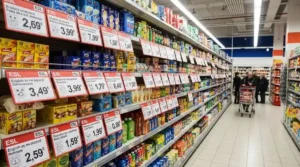
Private label is becoming more important to the economics of European grocery manufacturing.
NielsenIQ tracks 17 European markets for PLMA. Across them in 2025:
- Private-label sales reached €387 billion, up €15.3 billion.
- Private label accounted for 38.8% of grocery sales.
- Private-label turnover increased 4.1%, ahead of the overall grocery market.
Circana reported an even higher share specifically in supermarkets across six major European markets, including Italy. Private label represented 44% of supermarket CPG value sales, while confectionery recorded strong value growth.
What this means for packaging lines
That matters to packaging machinery. A confectionery manufacturer serving several retailers may produce similar sweets. But each may set different requirements for bag weight, count, film artwork, carton dimensions, multipacks, displays and shipping cases.
Shorter private-label and promotional runs increase the cost of slow changeovers. They also make product and packaging waste during start-up more important.
Premium private label adds another requirement. Retailers can use foil wraps, cartons, seasonal packs and display formats to set higher-tier confectionery apart from mainstream products.
For packaging suppliers, supermarket and private-label growth therefore creates demand for two things at once: high-throughput cost control and greater format flexibility.
How are packaging materials changing machine requirements?
Changing the packaging material can change the behaviour of the entire packaging process.
Paper, mono-material films and other alternative substrates can differ from conventional laminates. They vary in stiffness, friction, sealing behaviour and resistance to mechanical stress.
Chocolate adds another constraint because the product itself can be sensitive to heat and rough handling.
For buyers, a supplier’s general sustainability programme is therefore less useful than a successful test using the exact intended packaging material, product and operating speed.
Some companies in this ranking explicitly promote machinery that handles broader material ranges. SACMI, for example, presented its VPS40C at Interpack 2026 as able to work with a wide range of wrapping materials. Comek states that its systems can process several alternative film types.
Those statements are machine capability claims. They are not proof that every alternative material will deliver identical environmental or production performance.
Procurement teams should verify seal quality, product protection, waste rates and output during trials before committing to a new substrate.
Automation is moving beyond the wrapper
The fastest wrapper does not necessarily create the most productive confectionery line.
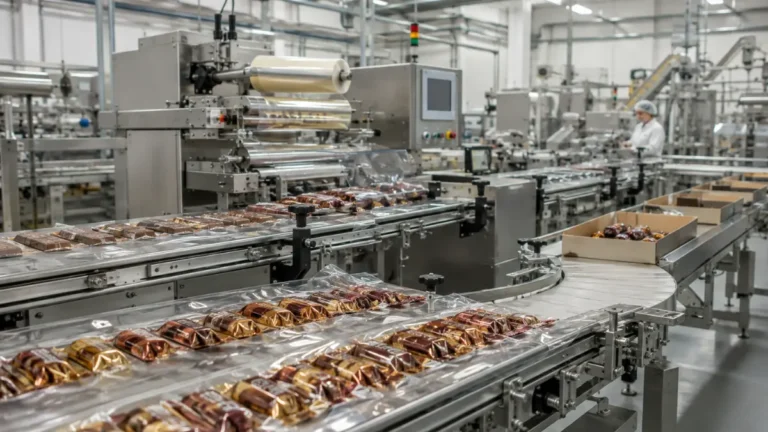
Products first need to reach the machine correctly spaced and orientated. After wrapping, they may need to be grouped into multipacks, placed into cartons or displays and packed into cases. Those interfaces are increasingly being automated.
Different approaches
- CT Pack shows the broader direction. Its lines can move from distribution and feeding through high-speed primary flow wrapping, robotic secondary packaging and case packing.
- Cavanna approaches the issue through flow wrapping, loading, transport and buffering.
- Cama focuses further downstream on robotic secondary packaging.
For supermarket and private-label suppliers, this matters because changing a retail format can affect several machines, not only the primary wrapper.
The more useful measure of performance is therefore overall line efficiency. This covers how consistently products move through the complete packaging process, how quickly the line changes format and how much labour is still needed around it.
Frequently Asked Questions
Who is the leading confectionery packaging supplier in Italy?
SACMI ranks first. It reported €1.526 billion in 2025 revenue and covers chocolate processing, primary packaging and downstream automation.
How big is Italy’s packaging machinery industry?
Italian packaging machinery manufacturers generated almost €10.5 billion in turnover in 2025, up around 4%, according to UCIMA.
Which Italian supplier suits weighed and bagged sweets?
Comek is the most directly focused supplier for weighed and bagged confectionery. Its line handles 60g to 500g bags at up to 120 packs per minute for pillow bags.
What happens next?
Italy’s packaging machinery sector entered the second half of 2026 with revenue still growing but a harder order environment. UCIMA reported in July that first-half 2026 turnover was increasing. However, orders were slowing and production costs were rising.
For confectionery manufacturers, that makes capital spending decisions more demanding.
Maximum rated speed will remain important. But buyers also need to examine:
- Changeover time
- Product damage
- Material waste
- Labour requirements
- Technical support
- The ability to handle future packaging formats
Private label adds further pressure. Manufacturers may need to serve several retailer specifications without installing a dedicated line for every contract.
Italy’s suppliers approach those requirements differently:
- SACMI and IMA offer broad automation capability.
- ACMA and M.C. Automations specialise in demanding individual wrapping applications.
- PFM, Cavanna and Tecno Pack are strong around flow-packed products.
- CT Pack connects multiple packaging stages.
- Cama targets secondary automation.
- Comek handles weighed confectionery.
For buyers comparing the top confectionery packaging suppliers in Italy, the starting point should therefore be the product and pack format—not company size alone.
Editor’s Note
This ranking was developed using a research-first verification process focused on companies based in Italy with direct, identifiable confectionery packaging activity.
Companies were assessed on confectionery relevance, technology specialisation, breadth of packaging capability, operating scale, international support and available application evidence. Generic food-packaging suppliers without sufficiently clear confectionery capability were excluded.
Corporate brands and acquired technologies were consolidated to avoid double counting. Carle & Montanari and OPM expertise, for example, is considered within SACMI rather than creating additional ranked suppliers.
Financial and workforce figures are used only where the reporting entity is clear. SACMI’s €1.526 billion figure refers to the SACMI group in 2025. PFM’s €210 million figure is consolidated group turnover. Standalone revenue has not been invented for ACMA, CT Pack, Cavanna, M.C. Automations, Tecno Pack or Comek where suitable public figures were not established.
Sustainability statements are treated as manufacturer-stated material or machinery capabilities unless independently demonstrated. Compatibility with a material should not be interpreted as proof of its environmental performance.
The ranking is editorial and is not based on sponsorship.
A higher position does not mean that a supplier is the best choice for every confectionery application.