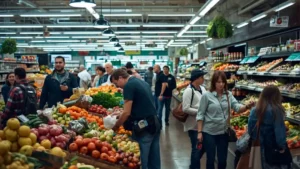
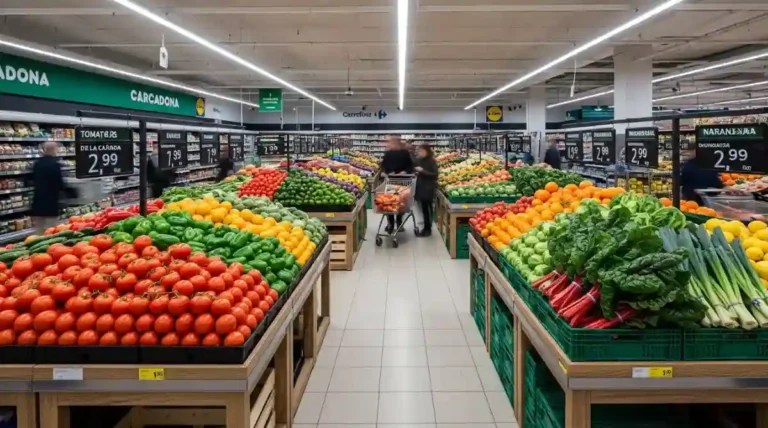

Grupo IFA has put fresh produce at the centre of its regional supermarket strategy, with fruit and vegetables accounting for between 35% and 40% of total perishable sales across its member businesses.
The figures were highlighted by Grupo IFA director general Diego Maus in an October industry interview focused on the changing role of fresh food in Spanish grocery retail.
Grupo IFA brings together some of Spain’s largest regional food retailers, including Ahorramas, Gadisa, Alimerka and Dinosol, alongside international partners in Portugal and Italy.
Maus said fresh food remains one of the strongest differentiators in the group’s commercial offer, with fruit and vegetables playing a particularly important role in attracting and retaining customers.
The strategy is built heavily around proximity sourcing.
IFA members work directly with local suppliers and producers, using longer-term relationships to secure supply while giving growers better visibility over volumes and pricing.
That model allows individual regional chains to adapt their fresh-produce offer to local preferences rather than operating a single national assortment.
The approach is becoming more important as shoppers place greater weight on origin, seasonality and transparency.
AECOC data cited by Grupo IFA shows that around three in four Spanish consumers prefer fruit and vegetables grown in Spain even when those products cost more than imported alternatives.
Origin has therefore become more than a sourcing issue.
It now influences merchandising, customer trust and the way regional supermarkets differentiate themselves from larger national chains and discount operators.
Grupo IFA also sees convenience as one of the main growth areas within fresh produce.
Member retailers are expanding space for prepared salads, peeled fruit and other ready-to-eat formats as shoppers look for healthier products that require less preparation time.
That shift reflects a broader change in how supermarkets manage the category.
Fresh produce is increasingly expected to deliver both traditional attributes such as freshness and local origin and newer requirements around convenience, sustainability and smaller household formats.
At the same time, the operational challenge is becoming more complex.
Fruit and vegetables remain highly exposed to seasonality, weather conditions and short shelf lives, making inventory control critical to balancing availability with waste.
Grupo IFA said improving demand forecasting is becoming an important part of that process.
The group sees newer artificial intelligence tools as increasingly useful for improving demand planning, helping stores manage availability while reducing unnecessary stock and shrinkage.
That is particularly relevant in fresh produce, where relatively small forecasting errors can quickly translate into higher waste or lost sales.
The combination of local sourcing and better forecasting also gives regional retailers more flexibility when supply conditions change.
Geopolitical instability, energy costs, agricultural inputs and transport costs continue to affect the fresh-food supply chain, while weather remains one of the biggest sources of uncertainty.
Grupo IFA’s model relies on maintaining a diversified supply base while keeping strong relationships with local producers wherever possible.
The group’s wider scale gives the strategy significant reach.
Grupo IFA reported consolidated sales in Spain of more than €19.15 billion for 2025, with more than 6,400 stores operating across the country.
That makes its fresh-produce strategy commercially significant beyond individual regional chains.
The latest comments also underline how competition in Spanish grocery is increasingly being fought through fresh food as well as price.
Regional supermarkets are using local sourcing, product origin and fresh-food quality to strengthen loyalty, while convenience formats and improved forecasting are helping the category adapt to changing shopping habits.
With fruit and vegetables already contributing up to 40% of perishable sales across IFA members, the category remains one of the most important parts of the group’s retail proposition.
Editor note: Based on comments from Grupo IFA director general Diego Maus published in the October 2026 edition of Mercados, together with Grupo IFA corporate information and GTN analysis of the implications for regional grocery, local sourcing and fresh-produce operations.