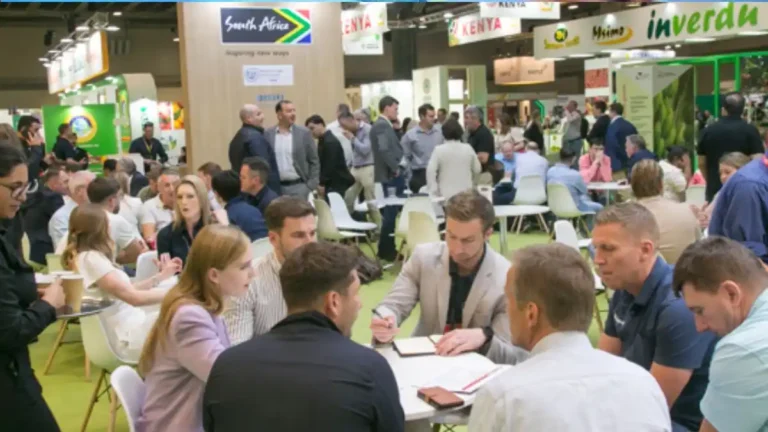

Anuga and SIAL Paris are two of the biggest food and drink trade shows in Europe. Both attract international manufacturers, distributors, retailers and foodservice buyers. But they are not identical.
Anuga is built around a highly structured category system in Cologne. SIAL Paris puts more emphasis on broad international sourcing, innovation and new-product discovery in Paris.
For most large grocery buyers, the question is not which show is “better”. It is which event fits the sourcing brief, calendar and target markets.
: choose Anuga when you want deep category-by-category sourcing across a huge global supplier base. Choose SIAL Paris when you want a broad international food and beverage show with strong innovation discovery and market-entry opportunities. Large buying teams can benefit from both because they run in different years.
Anuga vs SIAL Paris at a glance
| Factor | Anuga | SIAL Paris |
|---|---|---|
| Location | Cologne, Germany | Paris Nord Villepinte, France |
| Next edition | 9-13 October 2027 | 17-21 October 2026 |
| Frequency | Every two years | Every two years |
| Main strength | Deep category sourcing | Global sourcing and innovation |
| Latest scale | 8,015 exhibitors and 145,000 visitors in 2025 | Large international exhibitor base; 2026 edition still ahead at time of writing |
| Best for | Category teams, retail sourcing, foodservice, private label | International sourcing, innovation, export development |
| Structure | 10 trade shows under one roof | Broad food and beverage sectors plus innovation programmes |
What is Anuga?
Anuga is a global food and beverage trade fair held at Koelnmesse in Cologne, Germany.
The 2025 edition was the largest in the show’s history. Official figures recorded 8,015 exhibitors, around 290,000 square metres of gross exhibition space and 145,000 trade visitors from more than 190 countries.
The next main Anuga in Cologne runs from 9 to 13 October 2027.
Anuga is trade-only. Visitors need to demonstrate industry affiliation. That helps keep the event focused on business rather than general consumer attendance.
How Anuga is organised
Anuga’s defining feature is its structure. It combines ten specialist trade shows in one event.
These include areas covering:
- fine food;
- chilled and fresh food;
- meat;
- dairy;
- bread and bakery;
- drinks;
- hot beverages;
- organic products;
- out-of-home and foodservice;
- other specialist food categories.
That category structure makes Anuga useful for buyers who arrive with a precise brief. A dairy buyer can spend much of the visit around dairy suppliers. A frozen-food category manager can plan a very different route.
Who attends Anuga?
The show attracts supermarket buyers, wholesalers, importers, distributors, foodservice operators, manufacturers and other industry professionals.
Official visitor guidance specifically includes decision-makers from wholesale, retail and foodservice.
This matters because exhibitors are not only showing products. Many are actively looking for listings, distribution agreements, private-label contracts and export partners.
What is SIAL Paris?
SIAL Paris is an international food and beverage exhibition held at Paris Nord Villepinte in France.
The 2026 show takes place from 17 to 21 October 2026.
SIAL combines international product sourcing with a strong focus on food innovation. It attracts manufacturers, brands, importers, distributors, retailers and foodservice professionals from a wide range of countries.
What does SIAL Paris focus on?
SIAL covers a broad food and drink market rather than a single category.
Buyers can source across areas such as:
- grocery products;
- meat and poultry;
- dairy;
- frozen food;
- drinks;
- organic products;
- ingredients;
- fresh and processed food;
- private label;
- international speciality products.
Its innovation programme is one of the event’s most recognisable features. New products are reviewed, selected and showcased, helping buyers identify emerging formats, ingredients and consumption trends.
GTN has already followed SIAL innovation trends, which is a good example of how the show generates ideas beyond simple supplier meetings.
Which show is bigger?
Anuga’s latest completed edition provides very strong official scale figures: 8,015 exhibitors and 145,000 visitors in 2025.
SIAL Paris is also one of the world’s largest food exhibitions, but the 2026 edition had not taken place when this comparison was prepared. The final 2026 visitor and exhibitor totals therefore cannot yet be compared fairly with Anuga 2025.
Do not compare an organiser’s forward-looking registration number with another show’s audited final attendance. The periods need to match.
In practical terms, both are enormous. A buyer cannot cover either event properly without planning.
Which is better for supermarket buyers?
Anuga is especially strong for structured category sourcing. SIAL Paris is especially strong for broad international discovery and innovation.
That does not mean supermarket buyers should ignore SIAL for category sourcing or Anuga for innovation. Both do both.
The difference is emphasis.
Anuga’s ten-show structure helps a category team build a targeted route. SIAL’s broad international mix can be useful when a retailer wants to identify products and suppliers it was not already searching for.
Which is better for private label?
Both shows are relevant to private label, but neither is as narrowly focused on retailer-owned brands as PLMA Amsterdam.
At Anuga, private-label manufacturers appear across multiple categories. The scale of the event means retailers can compare branded and contract-manufacturing options in the same trip.
SIAL also has strong private-label relevance because many international manufacturers exhibit to find retail customers and distribution partners.
If the sole objective is own-label sourcing, a retailer may get a more concentrated supplier base at PLMA. GTN’s PLMA Amsterdam vs MARCA Bologna comparison looks at that narrower private-label decision.
Which is better for fresh produce?
Neither Anuga nor SIAL is as specialised in fresh produce as Fruit Logistica or Fruit Attraction.
Anuga includes fresh and chilled categories and can still be valuable for processed produce, convenience formats, prepared fruit and wider food sourcing.
SIAL can also surface produce-related innovation, ingredients and value-added food products.
But buyers focused mainly on growers, exporters, importers, ripeners and fresh-produce logistics may get more concentrated value from specialist produce events. GTN’s Fruit Logistica vs Fruit Attraction comparison covers that choice.
Which is better for innovation?
SIAL Paris has a particularly visible innovation identity.
The show actively curates and promotes new products through its innovation programmes. That makes it useful for buyers looking for packaging ideas, emerging ingredients, new flavours, health positioning and new convenience formats.
Anuga also showcases large numbers of launches and trends. Its scale means innovation appears throughout every category.
The practical difference is how buyers discover it. SIAL makes innovation a highly visible cross-show theme. Anuga can reward deeper category exploration.
Which is better for European market entry?
Both are strong.
Cologne gives Anuga excellent access to central European retail and distribution networks. Paris gives SIAL strong access to France while attracting buyers from Europe, Africa, the Middle East, Asia and the Americas.
A supplier should not assume that attending one European show creates “European distribution”. Europe is not one grocery market.
Retail structures, languages, price points, regulations and private-label penetration vary sharply between countries.
The right event helps a company meet potential partners. It does not replace local market work.
Which is better for foodservice?
Anuga has a dedicated out-of-home dimension and explicitly targets hotel, gastronomy, catering and communal-food decision-makers.
SIAL also attracts foodservice buyers and manufacturers.
If foodservice is central to the brief, Anuga’s structured areas can make planning easier. But a company seeking both grocery and foodservice customers can find relevant contacts at either event.
Anuga’s biggest strengths
- Scale: more than 8,000 exhibitors at the 2025 edition.
- Category structure: ten specialist shows under one roof.
- Internationality: exhibitors and visitors come from a very wide range of countries.
- Retail relevance: grocery and wholesale decision-makers are core audiences.
- Foodservice depth: out-of-home buyers are also strongly represented.
- Supplier density: buyers can compare many competing companies in one category.
Anuga’s limitations
Its greatest strength is also its biggest problem: size.
A buyer can lose hours walking between halls without a clear plan.
Large events also create meeting congestion. Popular suppliers can have full diaries. Restaurants, hotels and transport become busier.
For small suppliers, visibility is difficult. A good stand can still disappear among thousands of exhibitors.
Preparation is therefore critical.
SIAL Paris’s biggest strengths
- Innovation focus: strong visibility for emerging products and concepts.
- International sourcing: suppliers from a wide range of markets.
- Market entry: strong access to European and global buyers.
- Broad category mix: useful for multi-category buying teams.
- Paris location: major international transport connections.
- Trend discovery: valuable for teams looking beyond current ranges.
SIAL Paris’s limitations
SIAL is also extremely large.
Without a meeting plan, buyers can spend too much time browsing and too little time completing useful supplier assessments.
Innovation areas can also create noise. A product being new does not automatically mean it will sell.
Retail buyers still need to test:
- price;
- margin;
- production capacity;
- certification;
- shelf life;
- packaging;
- route to market;
- repeat purchase;
- consumer relevance.
How should buyers prepare for Anuga?
Start with the category brief.
- List the products you need.
- Set target price points.
- Identify required certifications.
- Define minimum production capacity.
- Build a priority exhibitor list.
- Book meetings before the show.
- Group meetings by hall.
- Leave time for discovery.
- Record samples and actions immediately.
- Set follow-up deadlines before leaving Cologne.
For large teams, split the show by category rather than having everyone walk together.
How should buyers prepare for SIAL Paris?
The same discipline applies, but SIAL’s innovation focus creates a useful second list.
Create:
- a must-meet supplier list;
- a new-product discovery list.
The first protects the commercial purpose of the trip. The second gives buyers permission to explore emerging products without losing the whole day.
What questions should buyers ask exhibitors?
A product sample is only the start.
Ask:
- Where is the product manufactured?
- What is the minimum order?
- What is the lead time?
- Which retailers already list it?
- Can the company produce private label?
- What certifications does the exact site hold?
- What is the shelf life?
- Which markets does the price include?
- Can packaging be changed?
- What is annual production capacity?
- Who handles distribution?
- What happens if demand doubles?
Those answers are more useful than a brochure.
Which show costs more to exhibit at?
There is no simple answer because stand size, construction, travel, freight and staffing drive the final budget.
Anuga publishes stand-space prices for 2027. Early-bird space starts at €358 per square metre, rising at later booking stages. That is only the floor-space charge.
Exhibitors also need to budget for:
- stand build;
- electricity;
- furniture;
- cleaning;
- badges;
- freight;
- samples;
- travel;
- hotels;
- staff time;
- marketing.
SIAL costs should be calculated from the current organiser proposal for the selected stand package. Third-party online estimates can be useful for rough budgeting, but official quotes should drive the decision.
Which event is easier to visit?
Both venues are designed for very large exhibitions and both require significant walking.
Cologne’s Koelnmesse has strong rail and city connections. Paris Nord Villepinte is connected to the Paris region and Charles de Gaulle airport.
Convenience depends heavily on hotel location and meeting schedule.
The cheapest hotel is not always the cheapest trip if the team spends hours commuting every day.
Which show gives better buyer density?
Both attract large numbers of professional buyers.
Anuga’s official 2025 numbers provide strong evidence of international trade attendance, with 145,000 visitors from more than 190 countries.
For SIAL 2026, final buyer and visitor density can only be judged properly after the event.
Exhibitors should therefore focus less on total footfall and more on the number of qualified meetings they can realistically secure.
Anuga vs SIAL for small food brands
Small brands need a very different strategy from multinational exhibitors.
A large stand is not necessary if the commercial proposition is clear.
Small brands should prioritise:
- pre-booked distributor meetings;
- clear export pricing;
- simple samples;
- one strong product story;
- evidence of existing sales;
- production capacity;
- professional follow-up.
Trying to “meet everyone” is usually a waste of budget.
Anuga vs SIAL for private-label manufacturers
Private-label manufacturers should arrive with a strong technical pack.
Buyers need:
- factory location;
- certifications;
- available formats;
- minimum order quantities;
- development lead times;
- packaging options;
- allergen capability;
- retailer references where permitted;
- annual capacity.
Anuga offers enormous category depth. SIAL offers strong international exposure. But if private label is the only objective, PLMA remains a more concentrated environment.
Should a supplier exhibit at both?
For a company with serious European ambitions, attending both over a two-year cycle can make sense.
SIAL Paris runs in even years. Anuga’s main Cologne edition runs in odd years. This means suppliers can use the events as part of a continuing commercial programme rather than choosing one forever.
The decision should still be measured against results.
Track:
- qualified leads;
- buyer meetings;
- samples requested;
- quotes issued;
- trials started;
- listings won;
- revenue generated.
If a show produces large crowds but no serious commercial pipeline, the stand strategy needs to change.
Which event should supermarket buyers choose?
Choose Anuga for deep category sourcing. Choose SIAL Paris for broad international discovery and innovation. Attend both over time if the buying brief is large enough.
A frozen-food buyer may prefer the dense category structure at Anuga. An innovation manager may find SIAL’s cross-category discovery especially useful. A central sourcing team can gain from both.
The best decision depends on the job the buyer needs to complete.
Frequently asked questions
Is Anuga bigger than SIAL?
Anuga’s completed 2025 edition recorded 8,015 exhibitors and 145,000 visitors. SIAL Paris is also one of the world’s largest food shows, but final 2026 figures were not yet available when this article was prepared.
Where is Anuga held?
Anuga is held at Koelnmesse in Cologne, Germany.
Where is SIAL Paris held?
SIAL Paris is held at Paris Nord Villepinte in France.
When is the next Anuga?
The next main Anuga in Cologne runs from 9 to 13 October 2027.
When is SIAL Paris 2026?
SIAL Paris runs from 17 to 21 October 2026.
Are Anuga and SIAL open to consumers?
They are professional trade events. Attendance rules and ticket conditions should be checked with the organisers for the relevant edition.
Which show is best for private label?
Both are useful, but PLMA Amsterdam is more narrowly focused on private label. Anuga and SIAL are broader food and beverage shows.
Which is best for fresh produce?
Fruit Logistica and Fruit Attraction are more specialised for fresh produce. Anuga and SIAL are broader food exhibitions.
Which show is best for innovation?
SIAL gives innovation particularly strong cross-show visibility. Anuga also presents major innovation but through a larger category-structured marketplace.
Can a buyer cover Anuga or SIAL in one day?
Only with a narrow brief and a highly planned schedule. Both are too large for a serious full-show review in one day.
Editor’s Note: Event dates and scale were checked against current organiser information.