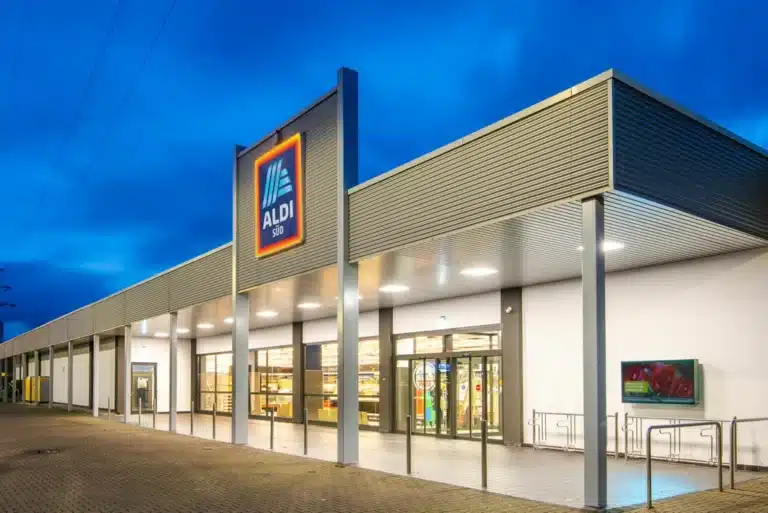

Aldi Süd will increase its internal minimum hourly wage in Germany from €15 to €16 on 1 December 2026, covering eligible staff in stores, logistics centres, regional companies and its central services organisation.
The supermarket discounter announced the decision on Monday, 9 November. It said the increase reflects economic conditions and renewed inflation in Germany. The change is an internal company pay floor, not an increase in Germany’s statutory minimum wage.
What is Aldi Süd’s minimum wage in Germany? From 1 December 2026, eligible employees will receive at least €16 an hour, compared with the previous €15 floor. That is an increase of €1 an hour, or about 6.7%, for workers previously paid at the minimum.
Germany’s national statutory minimum wage is currently €13.90 an hour and is scheduled to rise to €14.60 on 1 January 2027. Aldi Süd’s new rate will therefore be €1.40 higher than the forthcoming legal rate. This comparison applies to basic hourly pay, not total compensation or benefits.
| Pay measure | Hourly rate | Effective date |
|---|---|---|
| Aldi Süd previous company minimum | €15.00 | In place since 2024 |
| Aldi Süd new company minimum | €16.00 | 1 December 2026 |
| German statutory minimum | €13.90 | Current rate in November 2026 |
| German statutory minimum, next increase | €14.60 | 1 January 2027 |
Which Aldi Süd workers are covered? The announcement identifies employees at regional companies and their supermarkets and logistics centres, as well as staff at Aldi Süd Dienstleistungs-SE & Co. oHG. Entry-level cashiers, shelf-replenishment teams and casual support workers without completed vocational qualifications are among those most likely to benefit directly.
Many other employees already earn more than the internal minimum, depending on their role, experience and regional collective pay arrangements. Aldi Süd did not state that every employee will receive a €1 hourly increase.
The company has raised the floor in stages. In 2022, it increased the minimum from €12.50 to €14. The rate reached €15 in 2024 and will move to €16 this December.
Why does the pay increase matter to supermarket operators? The announcement brings recruitment, store staffing and logistics labour costs into focus. German grocery chains compete for staff in checkout operations, replenishment, warehouse shifts and distribution. Aldi Süd’s decision establishes a higher published baseline for eligible entry-level jobs at a major discount retailer.
Higher hourly rates can improve the appeal of entry-level work, but they may also affect staffing budgets. The retailer has not disclosed the total additional annual wage bill, the number of staff receiving a rise or any planned change to supermarket prices because of the decision. These commercial impacts should not be estimated without evidence.
The market context also matters. Germany’s leading grocery groups include Aldi Nord, Aldi Süd, Lidl, Kaufland, REWE and Edeka. Their formats and employment structures differ, making a simple group-wide wage ranking unreliable. The role of discount chains within Germany’s supermarket sector helps explain why retail wages attract attention from competitors and suppliers.
German press reporting on 9 November said Lidl is also increasing its company minimum from €15 to €16 in December. Aldi Nord, which is a separate German Aldi business, told reporters its company minimum would rise in stages to €14.90 by May 2027. All three rates refer to separate employer policies. They are not an industry-wide wage agreement or a joint Aldi-group decision.
What is the competitive difference? Against Germany’s planned €14.60 statutory minimum for January 2027, Aldi Süd’s €16 floor represents a premium of approximately 9.6%. The equivalent premium over the current €13.90 statutory rate is approximately 15.1%. These are mathematical comparisons of announced hourly floors, not measures of average pay or employee earnings.
For a full-time employee working 37.5 paid hours each week, the difference between €15 and €16 equals €37.50 in gross weekly wages before tax. This is an illustrative calculation, not an Aldi Süd employee’s verified contract. Different working hours, higher existing pay rates, bonuses and collective agreements can change the actual result.
What should competitors and suppliers monitor? Recruitment conditions in stores and distribution centres may influence supermarkets’ ability to fulfil orders and maintain shelf availability. However, neither wage increases nor a stronger hiring position automatically establish higher consumer prices. Buyers should watch published recruitment terms, actual service levels and subsequent company disclosures rather than infer an immediate change in grocery costs.
Does the change apply outside Germany? Aldi Süd’s announcement concerns its stated German entities. It does not establish new wage arrangements for Aldi businesses in other countries, including the United Kingdom, Austria, Slovenia or the United States.
The new internal rate takes effect on 1 December, one month before Germany’s next statutory increase. Aldi Süd has directed employees and applicants to its current salary information for role-specific details.
Editor’s Note: Source: Aldi Süd corporate announcement, 9 November 2026. The company minimum has been separated from the statutory wage and from pay arrangements at other German supermarket groups. Employment and pricing effects that Aldi Süd has not quantified are not inferred.