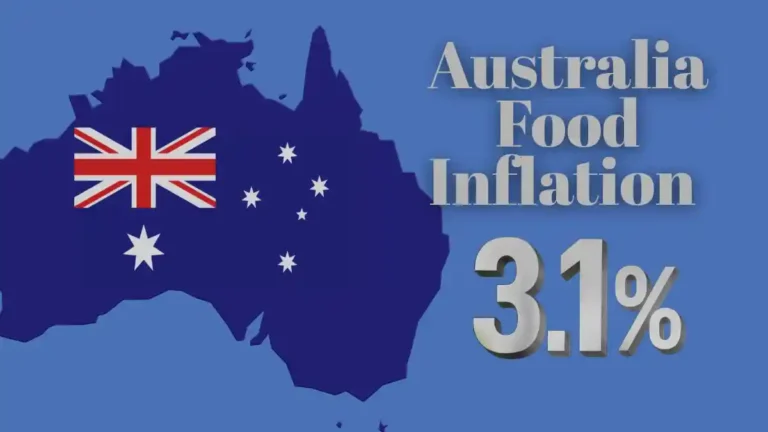

Food prices in Australian supermarkets continued to climb at the start of 2026, with grocery inflation reaching 3.1% in the 12 months to January, according to the latest Consumer Price Index data released by the Australian Bureau of Statistics.
The figures show that food and non-alcoholic beverages remain one of the largest contributors to household inflation, reflecting ongoing price movements across supermarket categories such as fresh produce, meat, dairy, and packaged groceries.
Monthly data also shows grocery prices increased 0.5% between December 2025 and January 2026, indicating that food inflation remains present across Australia’s retail food sector.
What Is Australia Food Inflation?
Australia food inflation measures how much grocery prices increase over time across supermarkets and food retailers.
The CPI food category tracks price movements for:
Fresh fruit and vegetables
Meat and seafood
Dairy products
Bread and cereals
Packaged grocery products
Non-alcoholic beverages
Retail price data used in the CPI is collected from a range of sources including supermarket scanner data, giving a real picture of grocery price trends across the country.
For the grocery industry, this index is widely used to monitor consumer food costs and supermarket pricing trends.
Key Supermarket Inflation Figures – January 2026
| Category | Annual price change |
|---|---|
| Food & non-alcoholic beverages | +3.1% |
| Alcohol & tobacco | +5.0% |
| Clothing & footwear | +5.6% |
| Housing | +6.8% |
| Transport | +1.1% |
| Health | +3.2% |
The data shows that food inflation remains moderate compared with other consumer costs, but it continues to influence weekly household spending.
Food represents around 17.4% of the CPI basket, meaning grocery purchases remain one of the most significant categories in household budgets.
Supermarket Prices Remain A key Driver Of Household Spending
Unlike housing or utilities, food purchases occur frequently, making grocery prices one of the most visible forms of inflation for consumers.
Even modest increases across supermarket categories can affect total household spending.
Examples of typical supermarket price movements tracked by CPI include:
Changes in fresh produce prices due to seasonal supply
Adjustments in meat and dairy prices linked to farm costs
Increases in packaged grocery products due to manufacturing or logistics costs
Because supermarkets account for the majority of food purchases in Australia, grocery price trends captured in CPI are closely watched by:
Retailers
FMCG manufacturers
food suppliers
economic analysts
How Supermarket Data Is Measured
The CPI food index is built using a combination of retail price collection methods.
These include:
Supermarket scanner data
Online retail pricing
Telephone price collection
Administrative price data
Scanner data from grocery retailers allows the statistics agency to capture millions of real supermarket transactions, improving the accuracy of food inflation measurements.
This means the CPI reflects actual prices shoppers pay at supermarkets, rather than estimated averages.
Food Inflation Compared With Overall Inflation
Overall consumer inflation in Australia remained 3.8% year-on-year in January 2026.
This means grocery inflation is currently lower than the overall inflation rate, although it remains one of the most visible cost pressures for consumers.
Key comparison:
| Inflation measure | Annual change |
|---|---|
| Overall CPI inflation | 3.8% |
| Food inflation | 3.1% |
| Trimmed mean inflation | 3.4% |
While housing and services are driving larger increases in overall CPI, food remains an important contributor because of its frequency of purchase and share of household spending.
Why Grocery Inflation Matters For Supermarkets
For the supermarket sector, the CPI food index acts as an important benchmark. The wider pressure on pricing, private label and shopper behaviour is explored in GTN’s Australia FMCG trends market analysis.
Retailers monitor the data to understand:
consumer purchasing power
food price trends
demand pressure across grocery categories
Moderate food inflation can signal stable supermarket pricing conditions, while sharp increases may lead to shifts in consumer behaviour such as:
switching to private label products
reducing discretionary grocery spending
buying fewer premium items
For suppliers and food manufacturers, CPI data also provides a reference point when negotiating retail pricing and supply contracts.
What Happens Next For Supermarket Food Prices?
Early indicators suggest that grocery inflation may remain relatively stable in the near term, although several factors could influence supermarket prices through 2026.
These include:
agricultural production levels
global commodity prices
energy and logistics costs
weather impacts on fresh produce supply
Supermarket pricing trends will continue to be closely monitored as new CPI data is released in the coming months.
Conclusion
Food prices in Australian supermarkets continue to rise moderately, with grocery inflation reaching 3.1% in January 2026. While food inflation is lower than housing and some other consumer costs, grocery prices remain a key factor in household spending and supermarket market conditions. Future CPI releases will show whether food inflation stabilises further or begins to accelerate again.
Editor’s Note: This article is based on the latest Consumer Price Index (CPI) data released by the Australian Bureau of Statistics for January 2026. The analysis focuses specifically on the food and supermarket categories within the CPI report.