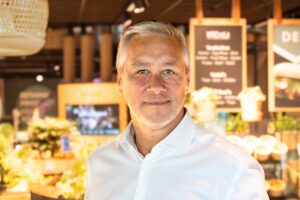
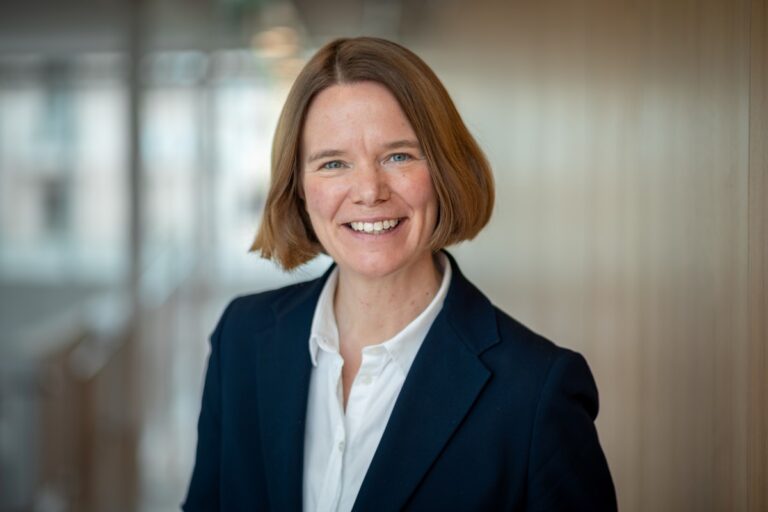

Dorothea Lüftner, head of private label at Dagab, which handles Axfood’s purchasing and logistics. Photo: Elin Andersson / Axfood.
Axfood has launched a three-year programme with Falköpings Mejeri to increase Swedish organic milk production for its Garant own brand, offering financial incentives for higher output.
The initiative, announced on 3 November, covers Swedish KRAV-certified milk and organic dairy products sold through Willys, Hemköp and City Gross. It aims to give farmers better conditions to continue and expand organic production.
The announcement focuses on securing raw material supply. It does not set out a new factory project, a specific investment budget or a quantified increase in milk volumes.
For Swedish supermarket groups, the programme addresses a practical constraint on own-brand development: a retailer needs a reliable supply of certified milk before it can expand the products made from it.
Axfood says the financial incentives will reward increased production. The release does not disclose the premium per kilogram, the number of participating farms or the detailed conditions producers must meet.
Those details matter to the commercial outcome. A three-year commitment can give a farmer more time to plan, but its value will also depend on production costs, payment terms and the volume the dairy can take.
Dorothea Lüftner, head of private label at Dagab, Axfood’s purchasing and logistics business, said the group sees substantial scope to develop its organic business. She said the programme is intended to help more dairy farmers invest while increasing product availability.
Falköpings Mejeri chief executive Anders Segerström also stressed the importance of a longer planning horizon. The dairy aims to increase organic milk volumes gradually through the programme.
The supplier is a farmer-owned cooperative. Its role connects the retailer’s product plans with the farms producing the milk, making the arrangement relevant to procurement teams as well as dairy processors.
The investment comes against a difficult organic market. In a September update drawing on Sweden’s 2025 Organic Market Report, Axfood said organic grocery sales had fallen by 2% in 2025, despite growth in the wider food market.
Organic products accounted for 3.7% of Swedish grocery sales in that report, down from 3.9% a year earlier. Axfood’s own organic share was 3.9%, compared with 4.2% in 2024.
Axfood nevertheless retains a target for organic food to represent at least 10% of its food sales by 2030. The milk programme is one step towards that ambition, rather than evidence that the target has already been secured.
For Sweden’s food suppliers, the challenge runs in both directions. More farm output needs an outlet, while wider supermarket ranges need dependable certified ingredients. Increasing supply alone will not establish how much shoppers are prepared to buy.
Axfood says its chains are working on product development and organic promotions alongside supply initiatives. It is also examining opportunities to improve access to organic ingredients in other major categories.
The group’s wider proposals include national targets for organic production and consumption, and lower or removed VAT on organic and other sustainability-labelled food. These are policy proposals, separate from the commercial milk programme.
The next test will be whether the incentives encourage additional farm production and help Axfood expand its organic dairy range over the three-year period.
Editor’s Note: Based on Axfood’s Swedish press release and accompanying PDF dated 3 November 2026, its September update on the 2025 Organic Market Report, and Falköpings Mejeri’s company information. Swedish material has been translated and paraphrased. Procurement implications are GTN analysis; financial terms and volume targets were not disclosed in the announcement.