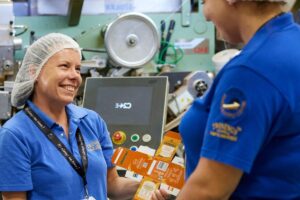
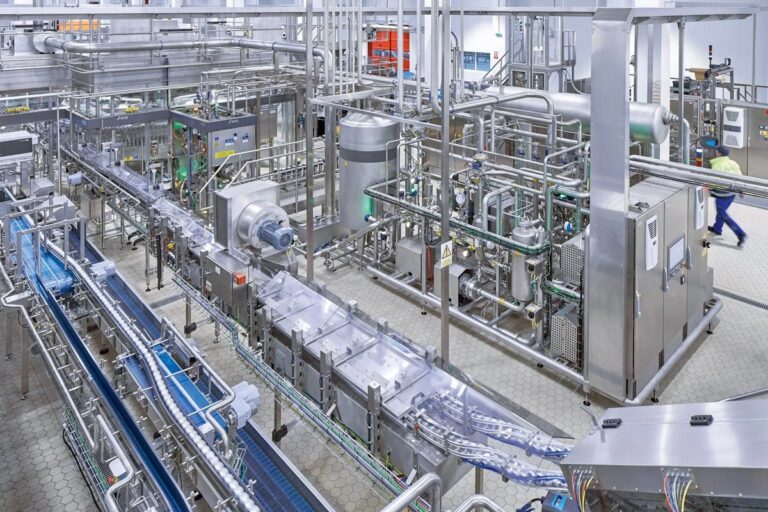

Canning equipment at CCEP’s Wakefield factory. Archive photograph from 2021: Frank Reinhold / KHS.
Coca-Cola Europacific Partners reported a 6.5% rise in third-quarter revenue to €5.764 billion on 3 November, as higher drinks volumes supported growth despite pressure on operating costs.
The bottler kept its full-year outlook unchanged. Its update covers the quarter ended 2 October 2026.
Revenue increased 5.8% on a comparable, currency-neutral basis. Reported volume rose 3.6%, while revenue per unit case increased 2.2% to €5.46.
Those measures answer different questions. Reported revenue includes exchange-rate movements. Currency-neutral growth helps separate trading performance from currency changes. Revenue per case reflects pricing and the mix of products and packs sold; it is not a measure of supermarket shelf-price inflation.
The detailed reconciliation puts growth in average daily sales at 3.5%. That differs slightly from the headline volume figure because the company calculates daily sales before rounding. For the first nine months, the gap is larger: volumes rose 4.9%, against 2.7% after adjusting for consumption days.
Volumes grew in both Europe and the Australia, Pacific and Southeast Asia region. The latter recorded the faster increase.
Coke Zero Sugar volumes grew 9.7%, energy drinks 17.3% and sports drinks 10.8%. The figures point to different rates of growth within the drinks aisle, rather than a uniform increase across every category.
For supermarket buyers, that makes the balance between established lines and faster-growing ranges more useful than the group revenue figure alone. Extra shelf space for energy or zero-sugar drinks still needs to earn a return through sales, availability and margin.
Great Britain’s revenue rose 9.3% to €1.003 billion, or 8.0% at constant currency. Local pack formats and promotional plans matter when translating that performance into individual retailer ranges.
CCEP is one of the major FMCG suppliers serving UK supermarkets. Its results concern the bottling and distribution business. They are separate from the Coca-Cola Company’s global results, published in October. Combining the two would mix different businesses and reporting periods.
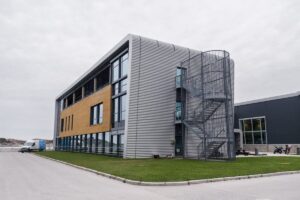
The production network behind those listings also matters. At Wakefield, CCEP said in August that it employed 600 people and had invested £103 million in operations since 2019. That provides local context for a group update spanning markets with different demand patterns and supply requirements.
For procurement teams, a stronger sales result does not establish that costs have eased or that buying prices will fall. Discussions over future terms still depend on the relevant market, pack, delivery arrangements and promotion. Group averages cannot settle those individual negotiations.
CCEP retained its forecast for currency-neutral revenue growth of 3%–4%, operating-profit growth of about 7% and comparable free cash flow of at least €1.7 billion.
The next scheduled financial update is its fourth-quarter and full-year results on 18 February 2027. That will show how the business finishes the year and set out the next outlook for customers and investors.
Editor’s note: Based on CCEP’s trading update dated 3 November 2026 and its published Great Britain operations information. Grocery Trade News added analysis of the reporting measures and implications for grocery buyers.