
Ball Corporation is investing in a new aluminium beverage can plant in Baruth, Germany, to serve a major energy drinks customer. The US canmaker announced the project on 3 November and expects the plant to start ramping up in late 2028.
Chief executive Ron Lewis told investors the plant would have multiple lines and serve the customer’s European business. He said the investment was backed by long-term commitments from an existing customer. Ball did not name that customer or disclose the plant’s annual capacity in its announcement.
The project adds to Ball’s investment in European production. In January, the company bought an 80% stake in Benepack’s European can business, which has factories in Belgium and Hungary. The Baruth project is a separate investment in German packaging production, planned around demand from an existing customer.
Global aluminium packaging shipments rose 4.7% in the third quarter. Ball’s Europe, Middle East and Africa reporting segment recorded a mid-single-digit rise in shipments, with sales up to $1.33 billion from $1.13 billion. That segment also includes operations outside Europe, so its growth figure does not measure demand in Germany alone.
Ball, one of the largest US packaging companies, reported group sales of $4.19 billion, up from $3.38 billion. It recorded a $94 million net loss attributable to the company, compared with a $321 million profit a year earlier. Its results included a $475 million non-cash charge linked to a UK pension buyout. Comparable operating earnings, which exclude certain items, increased from $440 million to $451 million.
For beverage brands and supermarket own-label teams, the late 2028 date is the start of a production ramp. It gives no indication of when other buyers might be able to order cans from Baruth. The long-term customer commitment makes it especially useful to ask which can sizes and order volumes Ball expects to offer to other accounts.
Before counting Baruth as a second source, buyers will need to check which lines can supply their can and end specifications, whether those packs run on their fillers and what delivery lead times the supplier can commit to. The next details to watch are the plant’s commissioning timetable and how much capacity Ball makes available beyond its anchor customer.
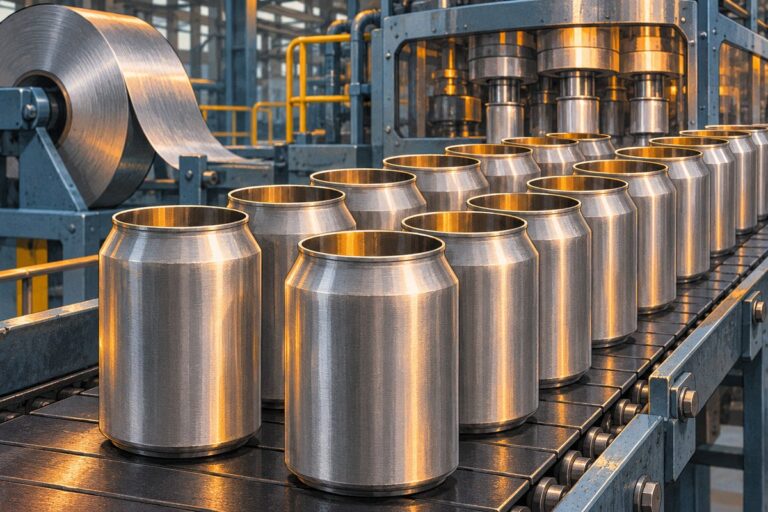
AI-generated illustration of aluminium beverage cans on a production line. It does not depict the planned Baruth plant. Illustration: Grocery Trade News.