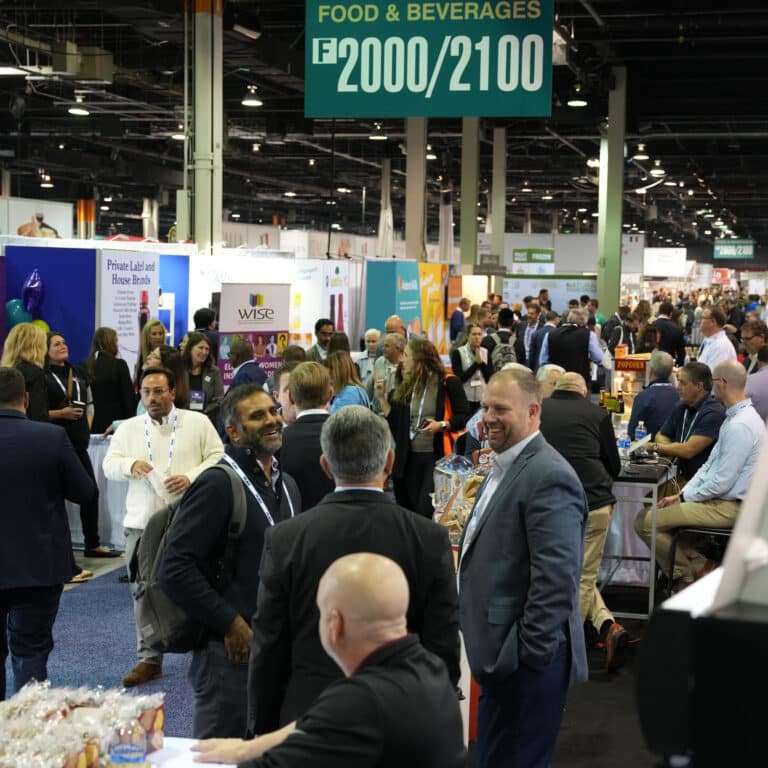

PLMA has expanded the buyer programme for its 2026 Private Label Trade Show in Chicago, where nearly 1,900 suppliers from about 60 countries are expected to exhibit from 15 to 17 November. The Private Label Manufacturers Association announced the latest details on 3 November, saying its exhibition floor is at capacity with more than 3,000 booths.
Held at the Donald E. Stephens Convention Center, the event brings together supermarket buying teams, wholesalers, brand owners and manufacturers looking to produce products sold under retailers’ own labels. Exhibitors span food, drinks, health and beauty, household products and general merchandise.
This year’s programme places greater emphasis on products, education and arranging meetings before visitors arrive. PLMA’s Show Navigator platform includes a Matchmaker function allowing retail buyers to request appointments with exhibitors. It also provides exhibitor information, digital directories, event schedules and a Product Spotlight preview.
For buyers attending a large exhibition, advance preparation can make the difference between collecting samples and finding a workable supply partner. An exhibitor may offer attractive products but lack the production scale, certifications, import arrangements or delivery model required by a national retailer.
PLMA has added a product showcase, World of Ideas, bringing together new products and examples of retailer-brand development. Its displays include recognised products and emerging categories. Buyers assessing these products should distinguish products already available commercially from concepts, samples and items still being developed.
John Conlin, senior vice president of merchandising, food and beverage at Target, is scheduled to speak on Monday 16 November at 08:00. Abby Cook, senior vice president of own brands at Ahold Delhaize USA, is due to speak on Tuesday 17 November at 08:00. Their sessions give suppliers an opportunity to hear how major retail groups approach category development and own-label growth.
PLMA’s published sample buyer list includes US grocery groups such as Albertsons, Aldi, Kroger, Publix, Trader Joe’s and Wegmans, as well as international retailers. A published buyer list should not be treated as a guarantee that a particular retailer will make purchasing decisions or place orders during the event.
The exhibition’s food and beverage areas are in the North Hall and Sky Hall. The South Hall hosts health, beauty, household and general merchandise suppliers. This layout matters for buyers balancing grocery sourcing with non-food own-label categories and private-label packaging requirements.
For manufacturers, the first commercial check is whether the buyer wants finished retailer-ready products, a co-manufacturing arrangement or a packaging and formulation partner. Discussions also need to address minimum order quantities, allergens, food-safety standards, traceability, labelling, shelf life, lead times and whether deliveries are made to a central warehouse or directly to stores.
Cross-border exhibitors should also clarify US and Canadian regulatory requirements before promising launch dates. A successful discussion at the show is only the start of qualification, pricing and logistics work, especially for refrigerated or frozen food.
The new programme makes this a useful event for supermarket buyers who want more than a general overview of the US private-label market. GTN’s US food and retail trade-event guide offers additional context for businesses planning the remainder of their sourcing calendar.
With the opening less than two weeks away, buyers can now use the published exhibitor information to identify priority suppliers and set up initial conversations ahead of the 15 November start.
Editor’s Note: Based on PLMA’s official 3 November 2026 announcement and published exhibitor and buyer guidance. GTN adds practical supplier qualification, import and distribution considerations. Listed attendance does not imply a purchasing commitment.