
Belgium plays an outsized role in Europe’s fresh produce trade. Not because it grows the most fruit and vegetables, but because it moves them with exceptional speed, structure, and precision.
Positioned between the Netherlands, France, and Germany, and anchored by the Port of Antwerp-Bruges, Belgium functions as a high-efficiency gateway for fresh produce entering and circulating across north-west Europe. In 2025, that gateway role is evolving fast. Digital customs systems, tighter sustainability rules, and shifting grower economics are reshaping how produce travels from farm to shelf.
For exporters, grower organisations, and supermarket buyers, the Belgium fresh produce market is no longer just about geography. It is about compliance, digital readiness, and the ability to operate inside one of Europe’s most tightly managed supply chains.
Belgium’s Role As A European Fresh Produce Gateway
Belgium’s logistical advantage starts with location, but it is sustained by infrastructure.
The Port of Antwerp-Bruges now handles nearly 30% of total cargo volume in the Hamburg–Le Havre range, making it the primary maritime entry point for fresh produce into north-west Europe. From there, dense road and cold-chain networks allow same-day or next-day delivery to Benelux, northern France, and western Germany.
What has changed in 2025 is how controlled that gateway has become. From December, the Inbound Release Platform (IRP) goes live across Belgian seaports. This mandatory digital system links customs clearance, terminal release, and pre-notification into one platform. For fresh produce, it means speed now depends as much on digital transparency as on physical logistics.
Belgium’s gateway advantage increasingly rewards exporters who arrive prepared — with aligned documentation, traceability data, and compliance systems already in place.
Market Momentum And Production Context
Belgium’s fresh produce sector sits within a wider “fresh food” growth cycle, but vegetables remain its most strategically important segment.
Fresh vegetable production value is expected to reach around €1.14 billion in 2025, supported by greenhouse investment, export demand, and consistent supermarket sourcing. Growth is steady rather than explosive, with value creation driven by quality, reliability, and logistics efficiency.
At the same time, growers face mounting structural pressure. Nitrogen reduction policies in Flanders are limiting usable agricultural land and accelerating consolidation. This has pushed producers toward higher yields per hectare, contract farming, and further investment in controlled-environment agriculture.
The Power Players: Top Categories Shaping The Trade
Potatoes: processing growth vs fresh market volatility
The Belgian potato sector has split into two very different realities.
On one side, processing capacity continues to expand, driven by global demand for frozen fries and potato products. Investments by processors such as Lutosa and Aviko reinforce Belgium’s role as a global processing hub.
On the other, the fresh table potato market has become highly volatile. During 2024 and into 2025, free-market prices fell sharply, in some cases nearly halving. As a result, many growers are moving away from open market exposure toward fixed contracts and stricter quality segmentation to manage risk.
For buyers and exporters, this means fresh potatoes are becoming more contract-driven and less tolerant of price-only competition.
Greenhouse vegetables: the backbone of Belgian exports
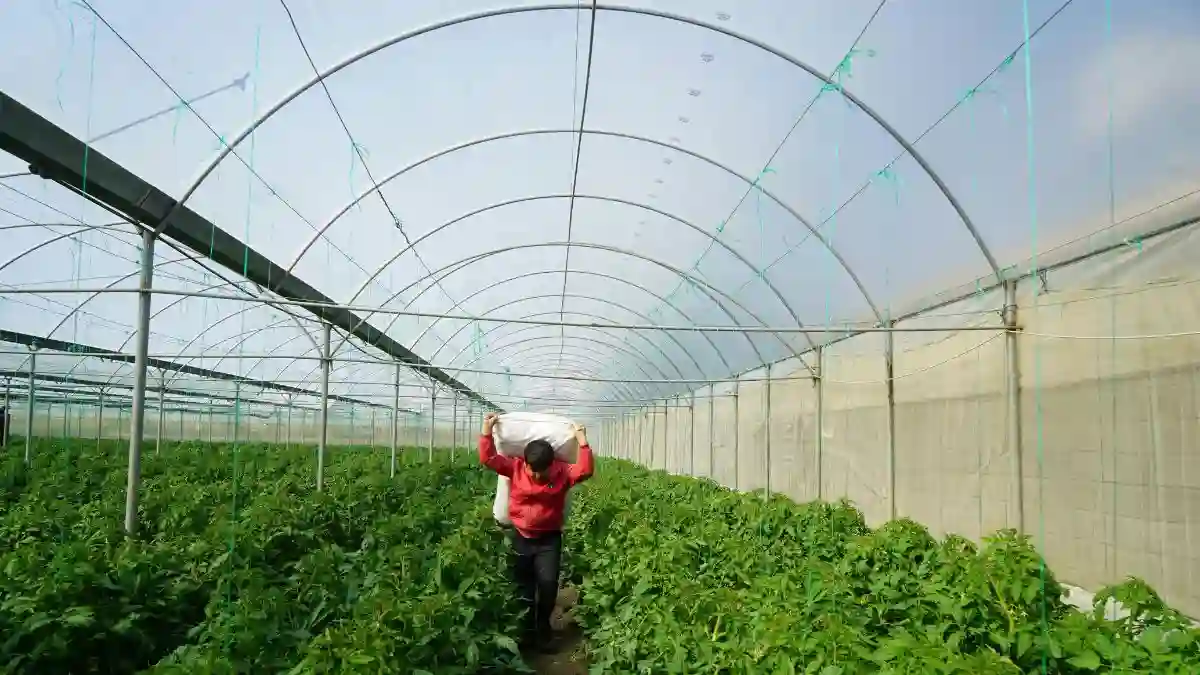
Tomatoes, peppers, and cucumbers remain the core of Belgium’s fresh produce exports.
High-tech greenhouses allow:
-
Year-round supply
-
Tight quality control
-
Uniform sizing and appearance
-
Predictable volumes for retail programmes
These products move rapidly through auction systems and direct supermarket contracts. Belgium’s competitive edge lies not in being the cheapest supplier, but in being one of the most reliable.
Pears: Belgium’s flagship fruit
Belgium is best known internationally for Conference pears, which dominate the country’s fruit exports.
Pear production is highly organised and export-oriented, supported by long-term storage, strict grading, and coordinated sales structures. Retailers value Belgian pears for their consistency and shelf life rather than novelty.
Berries, salads, and mushrooms
Berries are increasingly positioned as premium, seasonal products, where speed to shelf matters more than scale. Strawberries dominate, with smaller volumes of blueberries and raspberries.
Leafy salads are driven by convenience and private label strategies, while mushrooms benefit from stable, year-round demand and short production cycles. Across all three categories, visual quality and freshness determine success more than price.
How The Supply Side Works
Grower organisations and cooperatives
Belgium’s fresh produce sector is highly organised. Grower organisations and cooperatives aggregate supply, standardise quality, and manage sales. This structure reduces volatility and provides buyers with predictable volumes and specifications.
Auction systems: from clock to cloud
Auctions remain a defining feature of the Belgian market, but their operation has evolved.
While the physical auction clock remains symbolic, 2025 has seen a sharp rise in hybrid and fully digital auction platforms, with online participation increasing significantly. Global buyers can now bid in real time without being physically present in Flanders.
This digital shift lowers entry barriers for exporters, but raises expectations around data accuracy, timing, and responsiveness.
Wholesalers and distribution platforms
Wholesalers connect auctions and growers with supermarkets, foodservice operators, and export channels. They handle packing, cold storage, order consolidation, and cross-border distribution. For many exporters, wholesalers remain the most practical entry point into the Belgian system.
From Auction To Shelf: How Belgian Supermarkets Handle Fresh Produce
Supermarkets dominate fresh produce sales in Belgium and run these categories with a strong focus on consistency rather than headline price competition.
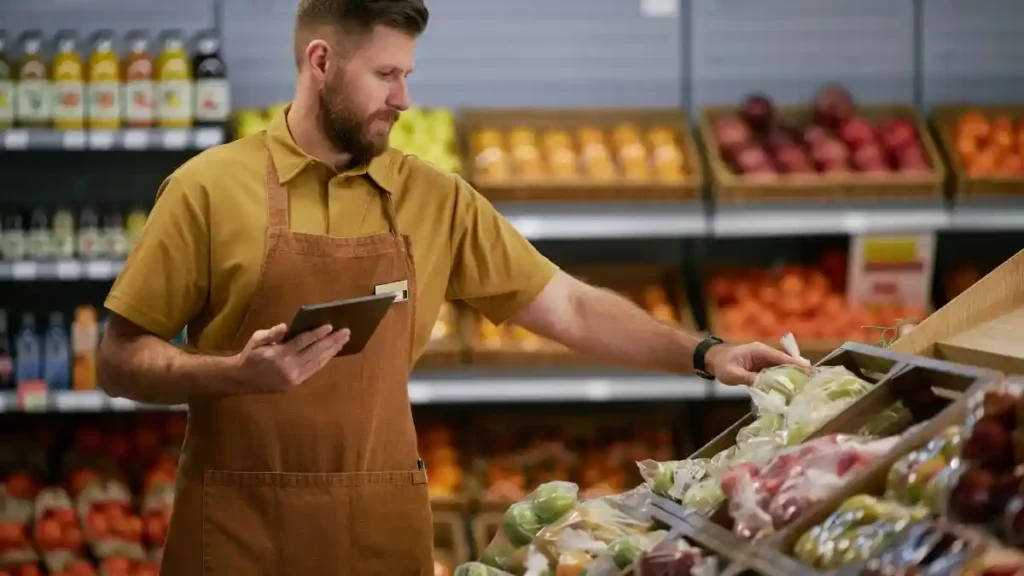
Across supermarkets in Belgium, fresh departments are managed as high-frequency traffic drivers. Buyers prioritise clean presentation, clear origin labelling, and fast stock rotation to protect quality and reduce waste.
Retailers carefully balance loose and pre-packed formats. Loose produce continues to play an important role in signalling freshness and transparency, particularly for vegetables and fruit sold by weight. At the same time, pre-packed lines are expanding, especially in private label ranges, where portion control, clearer pricing, and improved shelf life matter more.
This balance is increasingly shaped by packaging regulation and sustainability targets, with retailers adjusting formats to reduce plastic use while maintaining operational efficiency and visual appeal.
Sustainability And Packaging: The PPWR Reality
The most significant regulatory shift affecting the Belgium fresh produce market is the EU Packaging and Packaging Waste Regulation (PPWR), which entered into force in February 2025.
Under the PPWR framework, single-use plastic packaging for fresh produce under 1.5 kg will be banned by 2030, while recyclability standards are being tightened well ahead of that deadline. Belgium is already moving faster than the EU minimum, reflecting its broader push toward circular economy targets.
These changes are now shaping food packaging in Belgian retail, particularly in fresh produce categories where retailers are actively reducing plastic use while testing alternative materials and reusable systems.
Exporters entering the market must plan for reusable secondary packaging such as crates, meet Grade A and B recyclability requirements, and provide clear material labelling and documentation. Packaging is no longer a branding choice — it is a market-access requirement.
Logistics, Speed, And Digital Transparency
Belgium’s logistics advantage is now defined by precision as much as speed.
With IRP becoming mandatory at Antwerp-Bruges, customs clearance and terminal release depend on digital alignment. For fresh produce, this reduces delays for compliant operators but penalises poor preparation.
Exporters without strong digital traceability systems will struggle to compete in Belgium’s gateway environment.
Practical Advice For Exporters Targeting Belgium
Belgian buyers are specification-driven. Quality consistency, uniform sizing, and strict residue control are non-negotiable requirements across both retail and wholesale channels.
Traceability and certification are baseline expectations, particularly because Belgium operates as a redistribution hub serving multiple EU markets. Exporters are expected to provide clear batch tracking, harvest timing, and origin documentation. Seasonality also matters. Suppliers tend to perform best when their volumes complement local Belgian production windows rather than compete directly with peak domestic supply.
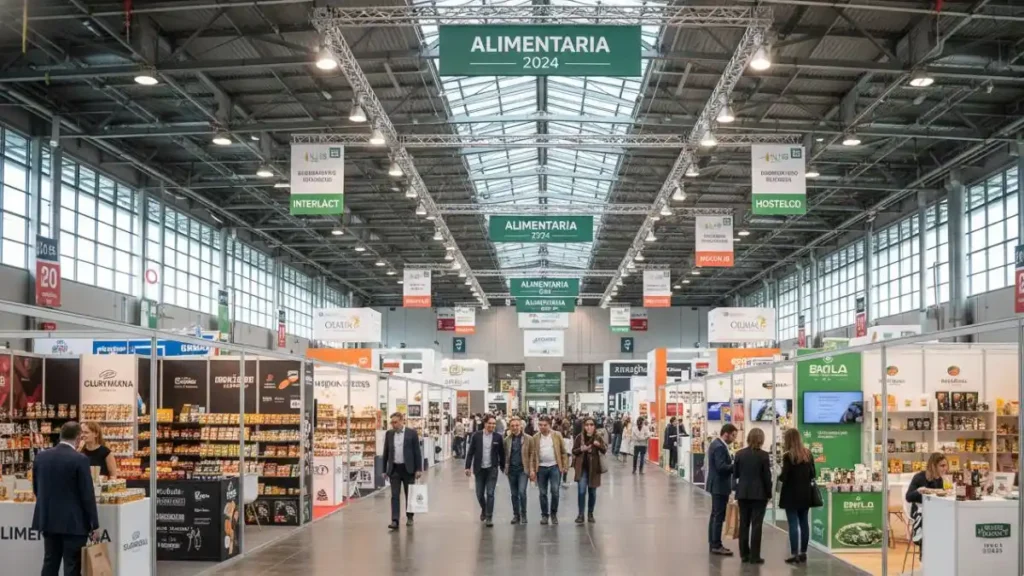
Most exporters succeed by first working with wholesalers or auction platforms, where volumes can be tested and relationships built. Direct supermarket programmes usually follow only after reliability and compliance are proven over time. In practice, many first contacts and long-term partnerships still begin at Belgium trade shows, which remain a key meeting point for growers, exporters, wholesalers, and retail buying teams.
Outlook
The Belgium fresh produce market will continue to grow — not through scale, but through efficiency.
Tighter regulation, digital customs, sustainability targets, and land-use constraints are raising the bar. For exporters and grower groups that can meet these standards, Belgium remains one of Europe’s most effective launchpads into regional trade.
FAQ
What does Belgium produce the most?
Belgium produces the most potatoes and vegetables, particularly greenhouse-grown vegetables such as tomatoes, peppers, and cucumbers. While agricultural land is limited, production is highly efficient and export-oriented.
What fruits are grown in Belgium?
Belgium’s fruit production is specialised. The most important fruits are:
-
Pears, especially Conference pears
-
Apples for domestic and regional markets
-
Strawberries and other berries, mainly seasonal
Pears are Belgium’s strongest fruit export category.
What is Belgium’s most famous food?
Belgium is best known for potatoes and potato-based foods, especially fries. From a fresh produce perspective, potatoes, greenhouse vegetables, and pears define the country’s agricultural identity.
What are the main crops grown in Belgium?
Belgium’s main crops include:
-
Potatoes
-
Sugar beet
-
Wheat and barley
-
Greenhouse vegetables
-
Pears and apples
Vegetables play a disproportionately large role in value terms due to exports and processing.
Editor’s Note: This article is based on European fresh produce market research, industry reporting, trade data summaries, and supply-chain analysis. No paywalled data has been reproduced directly.