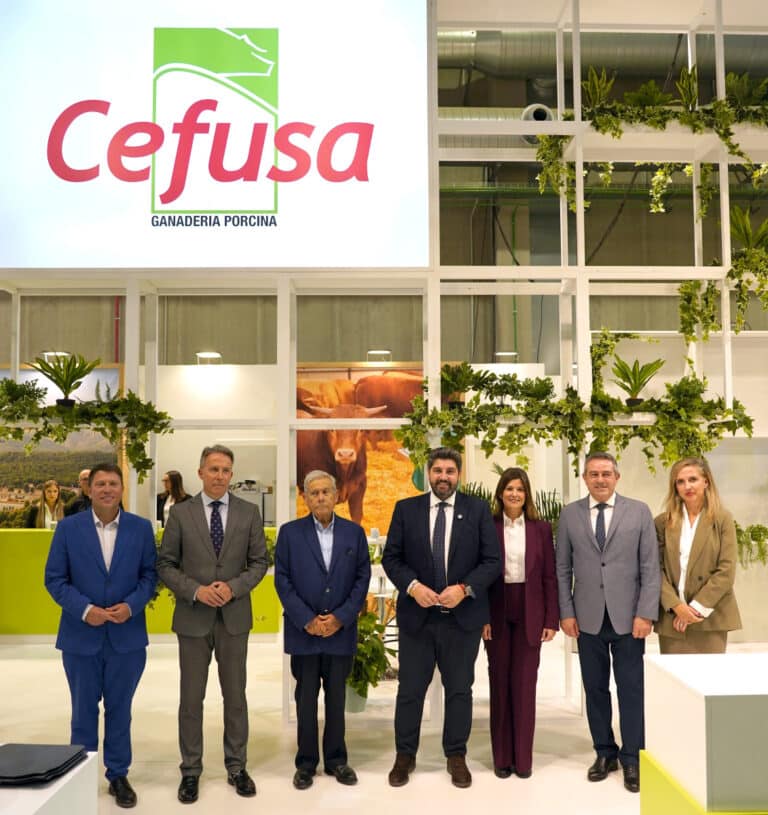

Cefusa, Grupo Fuertes’ livestock business, has set out its work on reducing pig-farm emissions at SEPOR in Lorca, putting slurry treatment and future biofertiliser projects in focus for Spain’s pork supply chain.
In an announcement dated 27 October, Grupo Fuertes said a treatment system developed through its collaboration with the Polytechnic University of Cartagena had reduced ammonia and greenhouse-gas emissions by 40%.
The system combines separation of slurry into different fractions, settling and biofiltration. The company also reported improvements in waste treatment.
The announcement is a new update on established research, rather than confirmation that the technology was invented or first installed this week. It does not provide a farm-by-farm rollout schedule, investment budget or the measurement baseline behind the 40% figure.
That distinction matters for supermarket meat buyers. A reduction measured within a treatment process cannot automatically be applied to an entire farm, a supplier’s total operations or the footprint of a retail pork product.
Ammonia and greenhouse gases also need separate assessment. Buyers seeking to use the results in supplier scorecards or product communications would need the gases measured, the comparison period, the facilities covered and the methodology used.
Grupo Fuertes, profiled among Spain’s major food manufacturers, has substantial exposure to the protein sector through ElPozo Alimentación. Improvements upstream can therefore be relevant to retail sourcing discussions, but the corporate relationship alone does not establish which finished products benefit.
For procurement teams, the practical question is how farm-level evidence can be connected to the animals and meat entering a particular supply programme. That requires traceability through the relevant production and processing stages, alongside a clear definition of the claim.
There is also a cost question. A treatment installation has to be operated, maintained and monitored. Without capital and operating-cost figures, the announcement does not establish a saving that buyers can build into price negotiations.
Those considerations apply equally to the Spanish manufacturers supplying supermarket own-label ranges. Environmental performance can support supplier selection, while food safety, animal welfare, service levels and commercial terms still require their own checks.
Grupo Fuertes says its university collaboration is expanding into projects intended to turn slurry and manure into biofertilisers. It also identifies precision feeding, genetics, disease control and artificial intelligence as further areas of work.
These are development priorities, rather than a published timetable for commercial availability. For a biofertiliser project, the relevant next evidence would include product specifications, consistent quality and a viable route from the livestock operation to agricultural users.
SEPOR gives Cefusa a forum to discuss the work with producers and other industry participants. For grocery buyers, the next useful step is detailed evidence showing where the treatment is operating and how its results can be verified within their own supply chains.
Editor’s Note: Based on Grupo Fuertes’ Spanish-language announcement dated 27 October 2026. GTN has added analysis of measurement boundaries, sourcing evidence and procurement costs. The reported emissions reduction is attributed to the company.