
Denmark has quietly built one of Northern Europe’s strongest retail technology ecosystems. The country is widely known for food production and cooperative retail models.
But it has also become a major supplier of digital infrastructure that now runs supermarket operations across Europe.
Danish technology companies operate behind the scenes of modern grocery retail. Their products include:
- payment terminals
- checkout software
- product data management platforms
- automated forecasting systems
These systems control how:
- prices are synchronised
- shelves are replenished
- promotions are executed
- customers move between physical stores and digital channels
This ranking focuses on retail technology companies with direct grocery relevance. They are measured by revenue scale, workforce size, operational footprint and depth of supermarket deployment.
The emphasis is on infrastructure and production-grade systems, not consumer apps or experimental platforms.
Company Overview (Revenue Leaders)
| Rank | Company | Revenue (Latest FY) | Employees | Retail / FMCG Presence |
|---|---|---|---|---|
| 1 | Nets | €1.2B+ | 2,000+ | Nordic grocery chains, international retailers |
| 2 | Netcompany | €800M+ | 7,500+ | European retail groups |
| 3 | EG A/S | €300M+ | 2,300+ | Supermarket chains |
| 4 | Stibo Systems | €200M+ | 1,000+ | Global grocery operators |
| 5 | Trifork Group | €240M+ | 1,300+ | Retail digital platforms |
| 6 | Sitecore | €300M+ (est.) | 1,800+ | Ecommerce grocery operators |
| 7 | cBrain | €30M+ | 200+ | Retail compliance systems |
| 8 | Impact Commerce | €25M+ | 200+ | Online grocery retailers |
| 9 | TwentyThree | €15M+ | 120+ | Retail media platforms |
| 10 | RELEX (DK operations) | €20M+ (local ops) | 150+ | Danish supermarket groups |
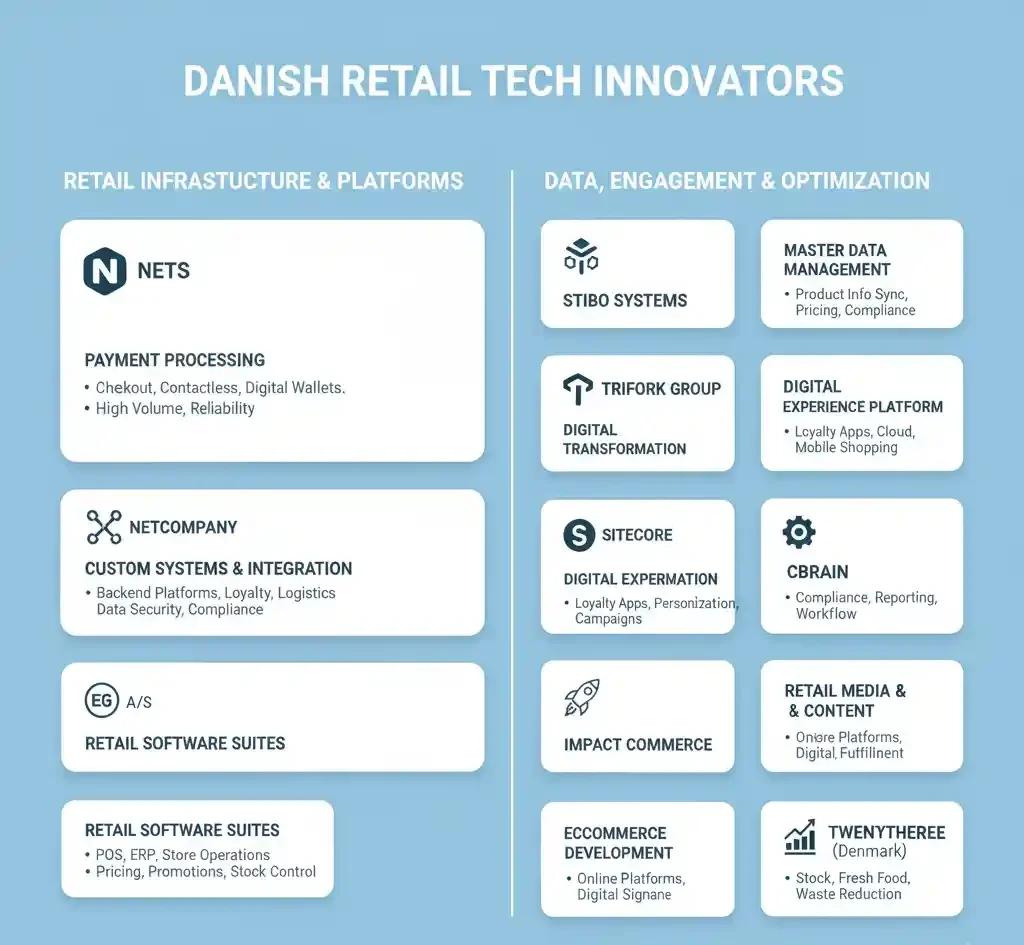
Nets
Nets sits at the foundation of Denmark’s retail transaction infrastructure.
The company runs one of the largest payment processing and merchant service platforms in Northern Europe. It handles millions of grocery transactions every day.
What it supplies
In supermarkets, Nets technology powers:
- checkout counters
- self-service terminals
- mobile payment stations
- online checkout flows
Reliability is critical in grocery retail. High volumes and peak-hour traffic leave no room for downtime.
Nets also enables contactless payment adoption and digital wallet integration across store networks. Nordic retailers are pushing for faster checkout and less cash handling, so Nets remains a core infrastructure provider.
Key deployments:
- Payment terminals across supermarket chains
- Self-checkout payment integration
- High-volume transaction processing
Netcompany
Netcompany plays a different role from traditional retail software vendors. It does not sell packaged POS or store management products. Instead, the company works as a custom systems builder for large organisations.
What it supplies
In grocery retail, Netcompany projects typically involve backend platforms that connect:
- store systems
- ecommerce operations
- loyalty programs
- logistics networks
- enterprise data platforms
These are large, multi-year infrastructure builds rather than off-the-shelf retail tools.
The company’s strong government IT background also brings experience in compliance systems, data security and national-scale digital platforms. These capabilities are increasingly important for large supermarket groups.
Key deployments:
- Custom omnichannel retail platforms
- Enterprise system integration
- Secure retail data architecture
EG A/S
EG A/S is one of Denmark’s strongest pure-play retail software providers.
The company delivers POS systems, ERP platforms and operational management software. These are used by supermarkets and convenience store chains across the Nordic region.
What it supplies
EG solutions focus on daily retail execution. This includes:
- pricing updates
- promotion management
- stock control
- operational reporting
Many mid-sized grocery groups rely on EG platforms to keep consistency across store networks.
Through acquisitions and platform expansion, EG has strengthened its regional footprint. It has also built long-term partnerships with grocery operators.
Key deployments:
- Grocery POS systems
- Retail ERP platforms
- Store operations management tools
Stibo Systems
Stibo Systems is one of Denmark’s most important global retail technology exports. The company is a leader in Master Data Management (MDM). This is the infrastructure layer that controls product information across retail ecosystems.
What it supplies
Every grocery product carries multiple data points:
- price
- packaging details
- nutritional information
- supplier codes
- promotions
- regulatory data
Stibo platforms keep this information synchronised across POS systems, warehouse platforms, ecommerce stores, mobile apps and supplier portals.
Why it matters to supermarket buyers
Without this layer, retailers face pricing mismatches, incorrect shelf labels, inventory errors and compliance risks.
This makes Stibo one of the most operationally critical players in grocery retail. Consumers rarely see the technology directly.
Key deployments:
- Product data platforms for large assortments
- Price and promotion synchronisation systems
- Global grocery enterprise implementations
Trifork Group
Trifork works as a digital transformation partner for retailers modernising customer engagement and internal systems.
The company develops cloud platforms, mobile applications and data solutions. These support both physical stores and ecommerce operations.
What it supplies
In grocery retail, Trifork is commonly involved in:
- loyalty platforms
- mobile shopping tools
- digital receipts
- omnichannel engagement systems
These technologies help retailers strengthen customer retention while improving backend efficiency.
Trifork also supports cloud migration and system optimisation projects. These let retailers scale digital services without legacy IT bottlenecks.
Key deployments:
- Loyalty and engagement platforms
- Cloud retail systems
- Omnichannel integration tools
Sitecore
Originally founded in Denmark, Sitecore has grown into a global digital experience platform provider.
Grocery retailers widely use its technology to manage ecommerce storefronts, personalised promotions and digital marketing campaigns.
What it supplies
Online grocery platforms rely on Sitecore tools for:
- product presentation
- content management
- customer personalisation
- campaign execution
As supermarkets keep investing in omnichannel retail, digital experience layers become increasingly central to performance.
Retailers use Sitecore to unify customer data. It helps them deliver consistent brand experiences across physical stores and digital channels.
Key deployments:
- Grocery ecommerce platforms
- Digital promotion engines
- Customer experience personalisation tools
cBrain
cBrain provides workflow automation and digital process management platforms. These are increasingly used in retail operations.
Supermarket groups face growing reporting requirements related to:
- sustainability
- supplier documentation
- packaging compliance
- regulatory audits
Manual reporting creates operational risk and inefficiency.
cBrain systems automate these workflows. This lets retailers manage documentation more efficiently and improve operational transparency.
Key deployments:
- Compliance automation platforms
- Sustainability reporting systems
- Internal process optimisation tools
Impact Commerce
Impact Commerce focuses on ecommerce development and digital retail infrastructure. The company supports online grocery retailers by building scalable shopping platforms and integrating backend fulfilment systems.
Online grocery demand continues to grow. Retailers need stable platforms that can handle:
- peak order volumes
- real-time inventory updates
- fast checkout processes
Impact Commerce helps retailers optimise performance and maintain reliability during high-demand trading periods.
Key deployments:
- Ecommerce platform development
- Checkout optimisation
- Fulfilment integration systems
TwentyThree
TwentyThree operates in the retail media and digital engagement space. Retailers use its video and content management platforms to manage in-store screens, training content and marketing campaigns.
Retail media is becoming an important revenue stream for supermarkets. Digital signage and in-store displays let retailers monetise customer attention while improving brand communication.
TwentyThree platforms let retailers manage this content centrally and deploy campaigns efficiently across store networks.
Key deployments:
- Retail media platforms
- Digital signage management
- Training content systems
RELEX (Denmark Operations)
RELEX is headquartered in Finland, but its Danish operations play a major role in the country’s grocery sector. Danish teams manage planning and forecasting deployments for several major supermarket groups.
RELEX provides demand forecasting and replenishment software. It helps retailers manage:
- stock availability
- promotional demand spikes
- fresh food category performance
These systems directly affect shelf availability and waste reduction. That makes RELEX a critical operational partner for grocery chains.
Key deployments:
- Demand forecasting platforms
- Automated replenishment systems
- Waste reduction optimisation tools
Why Denmark’s Retail Tech Sector Matters
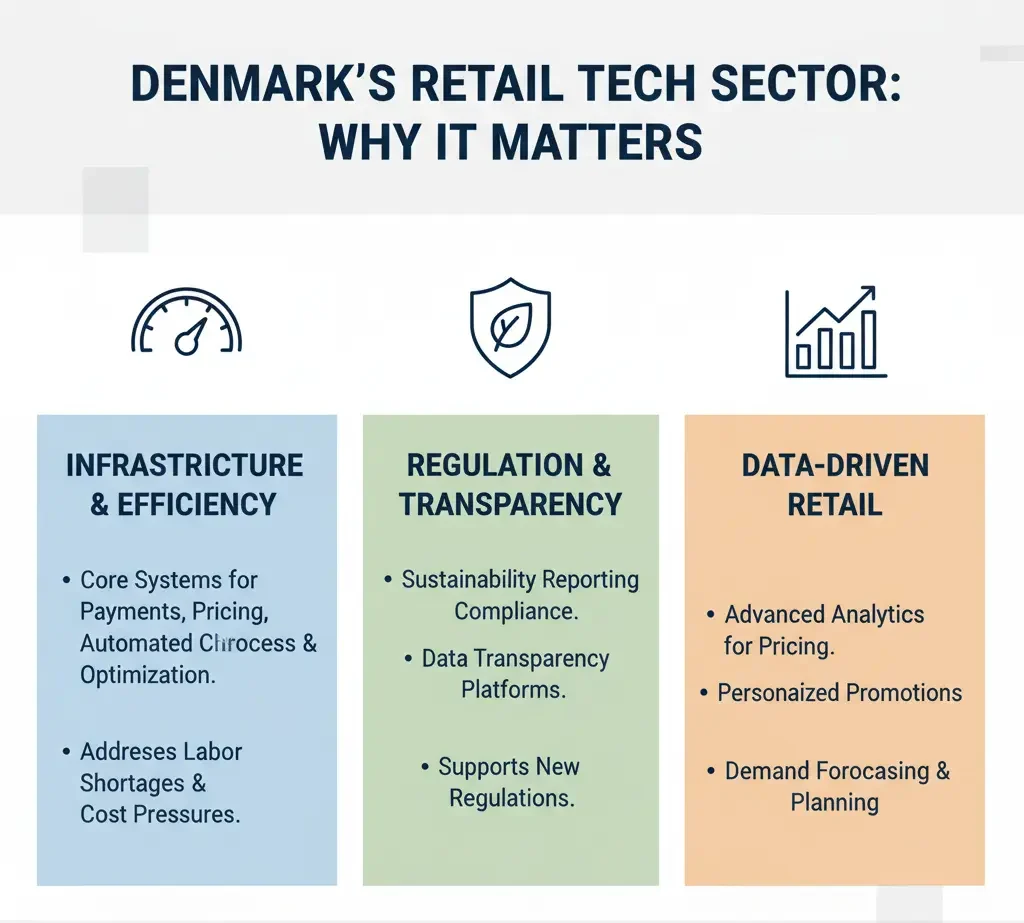
Denmark’s retail technology sector operates at the infrastructure level of grocery retail.
These companies control the systems that determine:
- how quickly customers pay
- how accurately prices are displayed
- how efficiently shelves are replenished
- how reliably data moves across retail networks
Automation demand continues to rise. Labour shortages and cost pressures push supermarkets towards self-checkout systems and process optimisation.
At the same time, sustainability regulation increases demand for digital reporting tools and data transparency platforms.
Retailers are also becoming more data-driven. Pricing optimisation, personalised promotions, demand forecasting and inventory planning now rely heavily on advanced software rather than manual processes.
What Comes Next
Denmark’s retail technology companies are expected to expand further into international markets. Many already operate across Europe and North America, exporting Nordic retail infrastructure to global supermarket groups.
Growth areas include:
- artificial intelligence forecasting
- automated fulfilment systems
- retail media monetisation platforms
- sustainability reporting software
- omnichannel integration tools
As grocery retail becomes more technology-dependent, Danish suppliers will remain central to shaping how supermarkets operate behind the scenes.
Frequently Asked Questions
Which is the largest retail technology company in Denmark?
Nets ranks first, with revenue of €1.2B+ and 2,000+ employees. It runs one of the largest payment processing and merchant service platforms in Northern Europe.
What does Stibo Systems do for grocery retailers?
Stibo Systems is a leader in Master Data Management (MDM). Its platforms keep product data such as prices, promotions and nutritional information synchronised across POS, warehouse and ecommerce systems.
Is RELEX a Danish company?
No. RELEX is headquartered in Finland. Its Danish operations manage planning and forecasting deployments for several major supermarket groups in Denmark.
Conclusion
Retail technology has become a core operating layer for every major supermarket in Denmark.
Checkout systems, payment infrastructure, forecasting platforms and product data management tools now shape how stores run day to day.
As competition intensifies and operating costs rise, retailers are using automation, data platforms and digital pricing systems to protect margins and improve efficiency.
This shift is also changing how private label in Denmark is managed. Better demand forecasting, packaging data control and digital shelf management are helping retailers scale store brands more effectively.
Looking ahead, investment in retail technology is expected to accelerate. Grocery operators are preparing for tighter sustainability rules, more advanced loyalty programs and stronger omnichannel integration.
For both supermarkets and suppliers, the companies highlighted in this ranking will continue to influence how Denmark’s grocery sector evolves behind the scenes.
Editor’s Note: This ranking is based on publicly available financial data and company disclosures at the time of publication. Revenue figures are rounded and reflect the latest reported fiscal year, with rankings also factoring grocery retail relevance and operational scale.