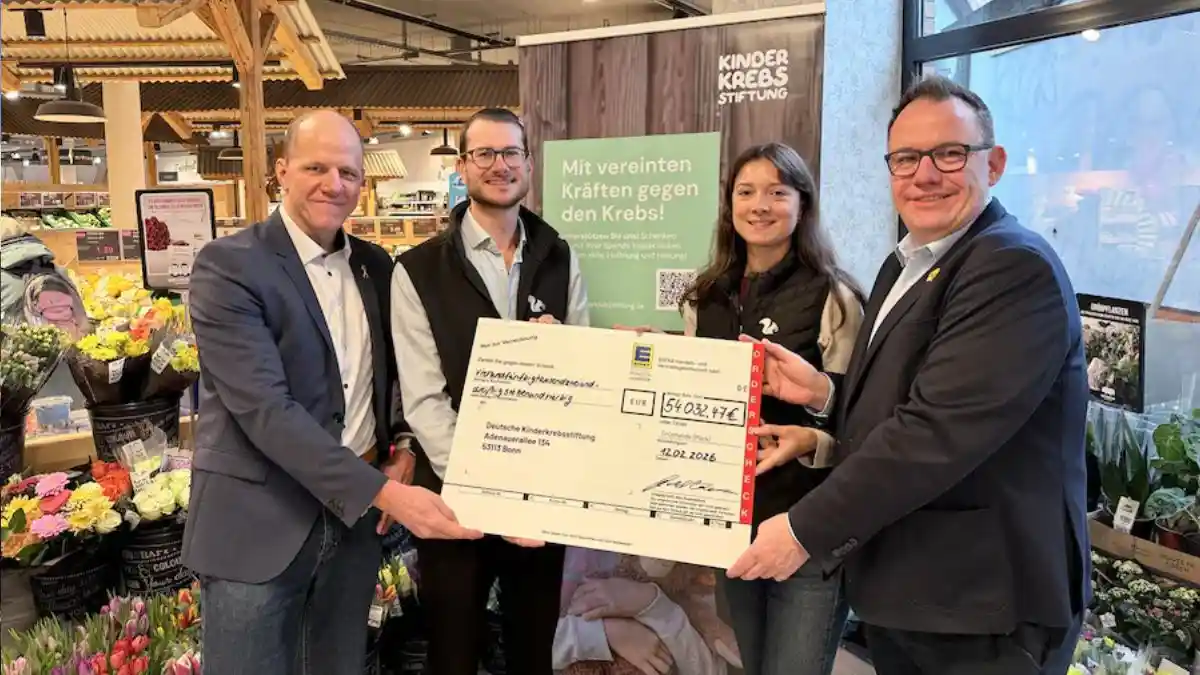

Berlin/Brandenburg, 12 February 2026 — EDEKA Minden-Hannover has donated €54,032.47 to the German Childhood Cancer Foundation after customers across Berlin and Brandenburg voluntarily donated refundable bottle deposits throughout 2025. The funds were collected in participating EDEKA supermarkets through the deposit return system and formally transferred in February 2026.
The campaign has operated regionally since 2012 and has now generated more than €500,000 in cumulative donations.
What Is A Bottle Deposit Donation Campaign?
A bottle deposit donation campaign allows supermarket customers to donate the refund value of returned beverage containers to charity instead of receiving cash.
Under Germany’s Pfand system, shoppers typically receive between €0.08 and €0.25 per container when returning bottles or cans to reverse vending machines. By selecting a donation option or placing the receipt in a collection box, the refund amount is transferred directly to a designated non-profit organisation.
Germany operates one of Europe’s most established deposit return systems, with supermarkets processing millions of containers daily.
At A Glance
-
€54,032.47 donated in February 2026
-
Funds collected during the 2025 calendar year
-
Campaign active in Berlin and Brandenburg supermarkets
-
Donations made through Germany’s Pfand deposit system
-
Over €500,000 donated cumulatively since 2012
-
Beneficiary: German Childhood Cancer Foundation (Bonn)
-
Mechanism: Voluntary customer deposit refunds
How Was The €54,000 Raised?
The amount was generated through thousands of small, individual deposit refunds donated by customers during routine bottle returns. Instead of redeeming the cash value, shoppers transferred their refund slips to the campaign.
EDEKA Minden-Hannover aggregated these micro-donations across participating stores to reach the final total.
Why Is This Relevant To Supermarket Operations?
Deposit return systems are a mandatory and permanent feature of German food retail. Supermarkets manage reverse vending infrastructure, financial reconciliation, and compliance daily.
By embedding a donation option into this existing system, retailers combine recycling logistics with structured community engagement without altering core store operations.
What Does The German Childhood Cancer Foundation Do?
The German Childhood Cancer Foundation supports children and adolescents undergoing cancer treatment and provides assistance to their families.
Based in Bonn, the organisation funds research, recovery programs, and social support initiatives designed to improve treatment outcomes and long-term quality of life.
How Does This Fit Into EDEKA’s Regional Strategy?
The bottle deposit donation initiative has been active in Berlin and Brandenburg since 2012. Rather than a one-time campaign, it functions as a recurring annual programme tied to daily store traffic.
The long-term structure allows donation volumes to scale with customer participation and retail activity.
What Happens Next?
The donation infrastructure remains in place across participating German supermarket locations for 2026. Future totals will depend on continued customer participation through the deposit return system.
As Germany’s Pfand network remains embedded in retail operations, similar campaigns are expected to continue contributing to regional social initiatives in the coming years.
Editor’s Note: This report is based on the official 12 February 2026 announcement from EDEKA Minden-Hannover. Donation figures and details reflect the company statement.