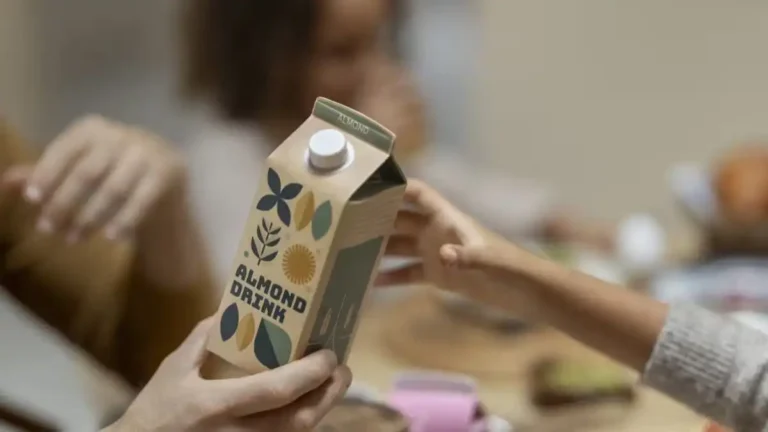

Elopak has introduced low-carbon aluminium for its liquid packaging cartons in Europe, reducing the carbon footprint of its standard ambient aluminium cartons by 8%. The packaging company has started using the material at production plants in the Netherlands, Denmark and Ukraine as part of its broader low-emission packaging strategy.
The transition lowers the carbon footprint of a standard aseptic Pure-Pak carton from 53g CO₂e to 49g CO₂e per carton using cradle-to-gate calculations. Elopak said the low-carbon aluminium is produced using renewable electricity.
What is low-carbon aluminium packaging?
Low-carbon aluminium packaging refers to aluminium produced using lower-emission manufacturing methods, including renewable electricity instead of fossil-fuel-heavy energy sources.
In liquid food cartons, aluminium is used as a barrier layer to protect products from light and oxygen. This helps maintain shelf life and food safety, especially in aseptic packaging systems used for ambient distribution.
At a glance
- Elopak introduced low-carbon aluminium in European carton production
- The material is now used in the Netherlands, Denmark and Ukraine
- Standard ambient carton emissions were reduced by 8%
- Pure-Pak carton emissions fell from 53g to 49g CO₂e
- Aluminium supports shelf life and aseptic sealing
- Elopak also offers aluminium-free Pure-Pak eSense cartons
- The company operates using 100% renewable electricity
Why is Elopak changing its aluminium sourcing?
Elopak is changing its aluminium sourcing to reduce the environmental impact of liquid packaging cartons while maintaining product protection standards.
The company said aluminium remains important in ambient cartons because it provides strong barrier protection against oxygen and light. These properties help extend shelf life and reduce food waste without requiring preservatives.
How much carbon reduction does the change deliver?
The introduction of low-carbon aluminium delivers an immediate reduction in packaging emissions for Elopak’s standard ambient cartons.
According to the company, cradle-to-gate emissions for a standard aseptic Pure-Pak carton decreased from 53g CO₂e to 49g CO₂e per carton after the material transition. The reduction applies to cartons produced at selected European facilities.
What role does aluminium play in liquid packaging cartons?
Aluminium is used inside aseptic cartons as a thin protective barrier layer that prevents oxygen and light from affecting food and beverage products.
This barrier technology allows products to remain shelf stable during ambient distribution. It also supports aseptic sealing processes widely used across dairy, juice and plant-based beverage packaging.
How does this fit into wider packaging industry trends?
The packaging sector is facing growing pressure to lower emissions, improve recyclability and comply with stricter sustainability regulations across Europe.
Food and beverage companies are increasingly evaluating packaging materials based on carbon footprint, recycled content and circularity performance. The upcoming EU Packaging and Packaging Waste Regulation is also pushing packaging suppliers to accelerate low-carbon material development.
Elopak said it introduced cartons made with recycled polymers in 2025 as part of its preparation for future regulatory requirements.
What other sustainability initiatives is Elopak pursuing?
Elopak said it works exclusively with members of the Aluminium Stewardship Initiative, which focuses on responsible aluminium sourcing and environmental standards.
The company also continues developing recyclable carton structures and lower-emission packaging formats. Its Pure-Pak eSense carton removes the aluminium layer entirely and is designed to support lower emissions and improved recycling performance.
Across its manufacturing operations and offices, Elopak operates using 100% renewable electricity.
What happens next?
Elopak is expected to continue expanding low-carbon packaging materials across its carton portfolio as customer sustainability targets and regulatory requirements become stricter.
The wider liquid packaging sector is also likely to accelerate investment in renewable materials, recycled content and lower-emission manufacturing as retailers and food producers push for measurable reductions in packaging-related emissions.
For the European packaging industry, low-carbon aluminium could become an increasingly important transition material while fully recyclable and aluminium-free carton technologies continue to scale.
Editor’s Note: Information in this article is based on an official announcement published by Elopak on 9 June 2026 regarding the company’s introduction of low-carbon aluminium in liquid packaging carton production across Europe.