
General Mills has relaunched La Tiara taco shells and seasonings across the United States, taking the former Kansas City regional brand nationwide for the first time through an exclusive Walmart rollout beginning in April 2026. The relaunch follows General Mills’ acquisition of La Tiara in May 2025 and supports more than 100 jobs at the reopened Gladstone, Missouri, production facility.
What is La Tiara?
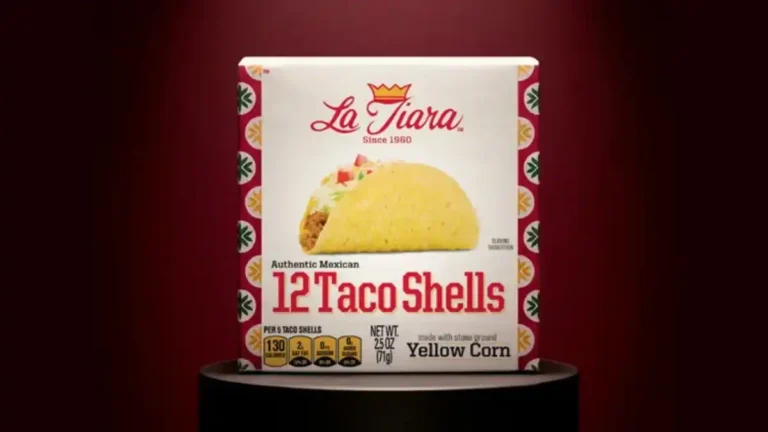
La Tiara is a US food brand known for thin, crispy corn taco shells and taco seasoning. The brand originated in the Kansas City, Missouri, area and developed a following across the surrounding states. Its shells are made with stone-ground masa and are available in yellow and white corn varieties.
At a glance
- General Mills acquired La Tiara in May 2025.
- The brand returned to US stores in April 2026.
- Walmart is the exclusive nationwide retail partner.
- The range includes yellow and white corn taco shells.
- The original taco seasoning has also returned.
- Three new seasonings have been added.
- Production has created more than 100 Missouri jobs.
Why has General Mills relaunched La Tiara?
General Mills relaunched La Tiara after continued demand from consumers in its original Midwest market. A public Facebook group campaigning for the return of the taco shells attracted more than 20,000 members, giving the food manufacturer evidence that the discontinued regional brand retained a substantial following.
The company acquired La Tiara in May 2025 before preparing the brand for a national launch. The move gives General Mills another product range within the Mexican-inspired meal category, where it already operates the Old El Paso brand.
General Mills said the returning products retain the thin texture and flavour associated with the original La Tiara range. Keeping these characteristics could be important as the brand attempts to retain existing customers while reaching shoppers unfamiliar with its regional history.
The relaunch also illustrates how large FMCG companies can use the recognition attached to smaller regional brands. Instead of introducing an entirely new name, General Mills is bringing an existing product back to market with established consumer awareness in part of the country.
Which La Tiara products are returning?
The relaunched range includes La Tiara taco shells made with stone-ground masa in yellow corn and white corn varieties. General Mills has also restored the brand’s original taco seasoning.
Three additional seasoning varieties have been introduced:
- Chorizo
- Tinga
- Reduced Sodium
The new products extend La Tiara beyond the range previously recognised by regional customers. They also give Walmart more options within its Mexican meal ingredients assortment, covering both taco preparation and flavour variation.
Walmart’s online grocery listings show La Tiara yellow and white corn taco shells in 12-count and 18-count packs. Product availability may differ by store and location.
Where can shoppers buy La Tiara products?
La Tiara taco shells and seasonings became available nationwide exclusively through Walmart beginning in April 2026. The agreement moves the brand beyond its previous Kansas City-area distribution and gives it access to one of the largest physical and online grocery networks in the United States.
Walmart had 3,569 Supercenters, 351 discount stores and 673 Neighborhood Markets in the United States as of 30 April 2026. However, General Mills did not specify whether every Walmart location would carry the complete La Tiara range.
The exclusive arrangement gives Walmart a differentiated branded offer in the taco shell and seasoning category. It also provides General Mills with a single national retail partner through which it can build distribution and measure demand outside La Tiara’s traditional Midwest market.
How does the relaunch support Missouri jobs?
General Mills reopened La Tiara’s production facility in Gladstone, Missouri, as part of the brand’s return. The operation had created more than 100 jobs by the time of the announcement, connecting the nationwide retail launch with local food manufacturing and employment.
The investment builds on General Mills’ long-standing presence in Missouri. The company has operated in the state since 1921.
As of 2024, activities involving General Mills brands such as Nature Valley, Old El Paso, Progresso and Blue Buffalo contributed to almost 2,400 jobs in Missouri. La Tiara adds another brand and production operation to that existing manufacturing base.
The Gladstone facility will be important to the national rollout. Moving from regional to nationwide availability requires production to support a larger retail market while maintaining the product characteristics associated with the original brand.
Why does the Walmart exclusivity matter?
The Walmart partnership gives La Tiara immediate national visibility while allowing General Mills to concentrate the initial rollout with one major retailer. For Walmart, the exclusivity adds a recognised regional brand to a category that already includes national manufacturers, specialist brands and private-label products.
La Tiara will compete for shelf space and customer attention with taco shell products from Old El Paso, Taco Bell, Siete Foods, La Preferida and Walmart’s Great Value range.
The competitive position is unusual because General Mills owns both La Tiara and Old El Paso. The two brands can address different parts of the category: Old El Paso already has broad national recognition, while La Tiara enters with a regional heritage and a thinner shell format.
General Mills has not said how the two brands will be positioned against each other in Walmart stores. Product formats, pricing, merchandising and consumer response will determine whether La Tiara attracts additional category buyers or competes mainly with existing taco shell products.
Why does this matter for the US FMCG market?
The La Tiara relaunch demonstrates the potential value of regional food brands with strong consumer loyalty. Large manufacturers can provide the production, marketing and retail relationships needed to move these brands into wider distribution without starting with an unknown product name.
For the US FMCG market, the launch also shows the continuing importance of retailer exclusivity. A national supermarket group can offer a product unavailable through direct competitors, while the manufacturer gains broad reach through a single commercial relationship.
This approach still carries a commercial test. La Tiara’s established following is concentrated around Kansas City and nearby states. General Mills must now determine whether the brand’s shell texture, product range and regional story appeal to shoppers elsewhere in the country.
The addition of Chorizo, Tinga and Reduced Sodium seasonings may help the brand reach consumers beyond its original audience. The broader range also gives Walmart more opportunities to merchandise La Tiara as a meal solution rather than as a single returning product.
General Mills reported fiscal 2025 net sales of $19 billion and markets more than 100 consumer brands. Its scale provides La Tiara with manufacturing, distribution and retail capabilities that would be difficult for a small regional supplier to replicate independently.
What happens next?
General Mills and Walmart will now assess how La Tiara performs outside its established Midwest customer base. Sales across different US regions will indicate whether a brand built around Kansas City loyalty can secure a lasting position in the national taco shell and seasoning category.
The Gladstone facility will support production as distribution develops. General Mills has not announced whether La Tiara will later become available through other retailers, and Walmart remains the exclusive nationwide partner for the current rollout.
The next stage will depend on national demand, repeat purchases and the performance of the new seasoning varieties. If the relaunch succeeds, La Tiara could demonstrate how regional FMCG brands can be revived and expanded through a combination of local manufacturing and national supermarket distribution.