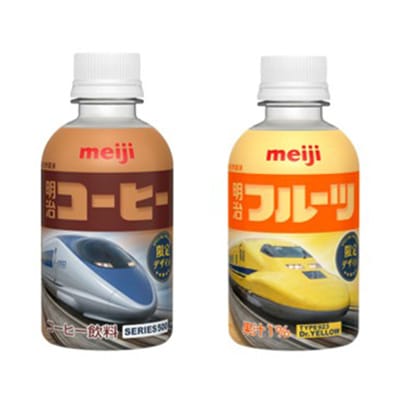

Meiji is launching limited-edition versions of two established drinks across western Japan, using retiring Shinkansen trains to target travel retail and souvenir demand.
From 1 October, Meiji Coffee will feature the 500 Series Shinkansen, while Meiji Fruit will carry designs based on the 923 Doctor Yellow inspection train.
The 220ml drinks will be sold in limited quantities through 34 station retail outlets across the JR West network, alongside station vending machines and selected online channels.
The distribution covers major travel hubs including Kyoto, Shin-Osaka, Kobe, Hiroshima, Hakata, Kanazawa and Fukui.
For FMCG buyers, the commercial interest lies in how Meiji is combining established products with tightly controlled distribution and location-specific packaging.
The 500 Series currently operates as a Kodama service on the Sanyo Shinkansen and became the first commercial train in the world to operate at 300 km/h.
Doctor Yellow has a different type of recognition. The bright-yellow 923 Series is used to inspect Shinkansen tracks and overhead power infrastructure and has developed a strong following because its operating timetable is not generally published.
That gives both pack designs a direct connection to the railway environment in which most of the products will be sold.
Meiji said the launch is intended to encourage purchases during journeys and increase souvenir demand.
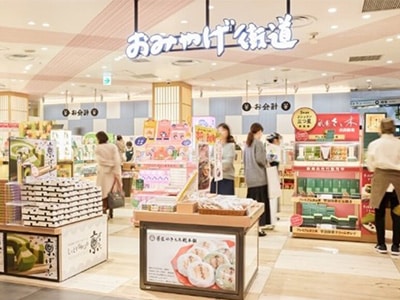
Rather than distributing the packs nationally through supermarkets, Meiji is concentrating them in stations where passengers are already in a travel-spending mindset.
The drinks will also be available from JR West station vending machines operated under the curico network.
Each product has a recommended retail price of ¥184, although prices may differ by sales channel.
Meiji Coffee combines milk and coffee, while Meiji Fruit combines milk with six fruit flavours. Both products use 220ml PET bottles and can be stored at room temperature, making them well suited to transport hubs and impulse purchasing.
For retailers, the model offers another way to build incremental sales around high-footfall locations.
Railway stations, airports, tourist destinations and major events can support products that are commercially stronger in a specific place than they would be through a nationwide grocery rollout.
The approach can also reduce some of the risk attached to broader limited-edition launches. Production volumes can remain controlled while manufacturers test demand through a clearly defined network of outlets.
Meiji is working with JR West Trading on the launch.
The packs will be available across stations in the Hokuriku, Kansai, Sanyo, Sanin and Kyushu areas, as well as through JR West’s travel-retail e-commerce channels.
The campaign therefore links the product, packaging and point of sale unusually closely.
For wider market context, Meiji is included in GTN’s guide to Japan’s leading FMCG brands.
For grocery and FMCG buyers, that is the more important lesson from the launch: limited editions can be used not only to refresh a brand, but to create specific purchasing occasions through carefully selected retail channels.
Editor’s note: Meiji announced the limited-edition drinks on 25 September 2026. Japanese product and distribution details have been translated into English by GTN.