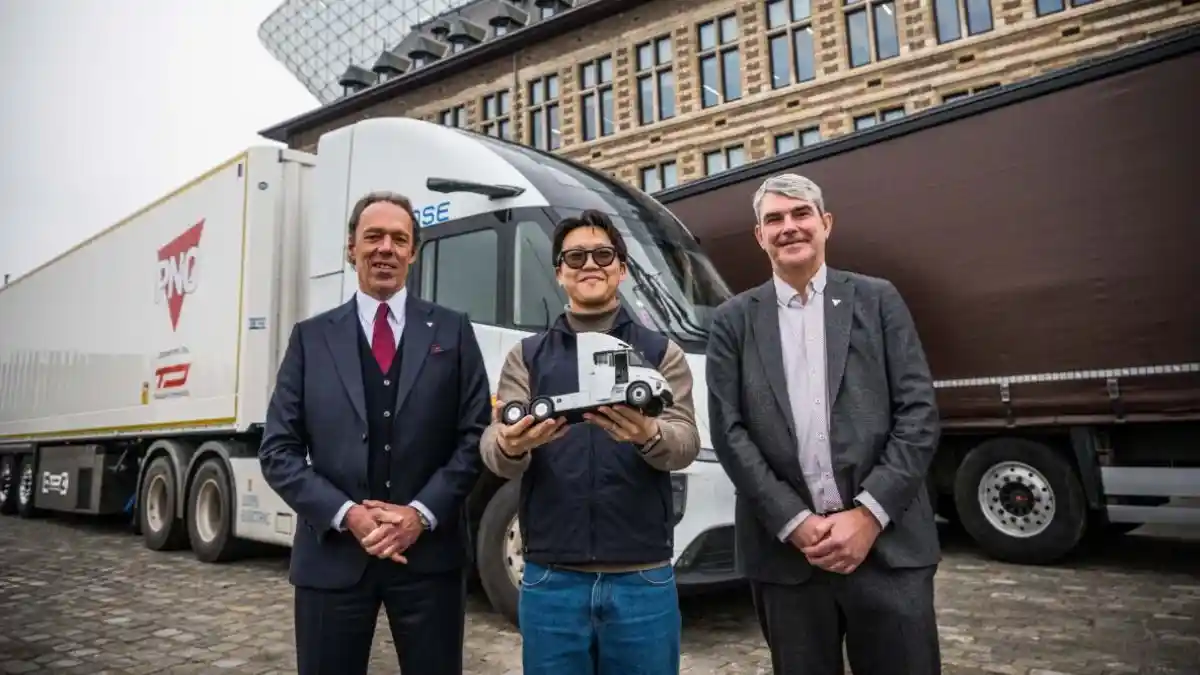

The Port of Antwerp-Bruges has confirmed a new logistics and mobility investment after Chinese electric truck manufacturer Windrose selected the Belgian port for its first European flagship assembly and operations site.
The new facility will be located along Antwerp’s Noorderlaan, following a concession process covering two plots totalling 9.5 hectares at the Romeynsweel site. The project will combine vehicle assembly, research and development, and after-sales operations aimed at serving European markets.
Port of Antwerp-Bruges said the project strengthens its position as a logistics and industrial hub while supporting the shift toward low-emission freight transport.
Windrose will ship vehicle components from Asia to Antwerp, where final assembly will take place. Finished electric trucks will then be distributed across Europe, with potential export volumes also targeted for North America. The development is expected to increase container throughput from the Far East and generate new port-side logistics activity.
The site, branded Windrose Park Antwerp, will be developed through a joint venture with Belgian real estate partner Van Wellen Group. Once fully operational, the project is expected to support around 200 full-time jobs, spanning assembly operations, technical services, and logistics roles.
Windrose has positioned the Antwerp location as a foundation for its wider European expansion strategy. The port location provides direct access to inland waterways, road freight corridors, and regional distribution routes connecting Belgium with neighbouring markets.
Port management has highlighted that the investment fits into a broader strategy to attract clean transport manufacturing and logistics projects. The port continues to invest in renewable energy integration, circular material use, and inland shipping connections to strengthen its role in low-carbon freight movement.
The Windrose project also complements wider infrastructure developments underway across the Antwerp-Bruges port area, including upgrades to logistics zones and transport corridors supporting high-volume import and export flows used by FMCG, packaging, and retail supply chains.
As European retailers continue to face pressure to decarbonise distribution networks, projects like this are expected to play a growing role in modernising regional transport fleets and reducing last-mile emissions.
This investment further reinforces Belgium’s growing position within Belgium Retail Technology infrastructure development, as ports, logistics operators and transport manufacturers expand low-emission capacity across the national supply chain network.
Why This Matters
The Windrose investment strengthens one of Europe’s most important logistics gateways at a time when supermarket supply chains are under pressure to move faster, cheaper, and with lower emissions.
For retailers and FMCG distributors, the Port of Antwerp-Bruges plays a critical role in handling imported food, packaging materials, and private label products. Expanding electric truck assembly capacity at the port supports the shift toward cleaner regional transport fleets used in warehouse-to-store delivery routes.
The project also increases container throughput and logistics activity, helping stabilise inbound supply flows from Asia into Northern and Western Europe. This improves reliability for supermarket distribution centres that depend on predictable port operations.
As retailers push to meet sustainability targets while protecting margins, access to low-emission freight infrastructure is becoming a competitive advantage. Investments like this help modernise the transport backbone that keeps supermarket shelves stocked.