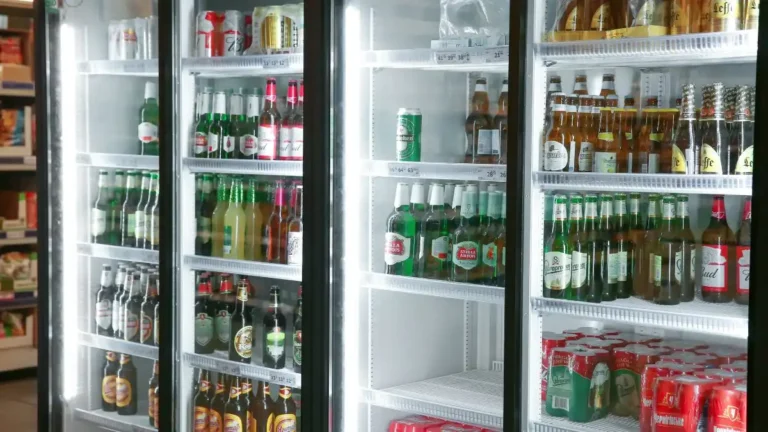

Croatia’s supermarket refrigeration market is being reshaped by EU refrigerant rules, higher energy costs and the demands of a tourism-driven food economy. Grocery retailers need systems that can handle busy coastal stores in summer. They also need systems for smaller regional outlets and large distribution facilities serving nationally dispersed networks.
Natural refrigerants, heat recovery and remote temperature monitoring are gaining importance. Even so, the market still depends heavily on domestic contractors. They must install and service equipment across different regions.
The companies ranked below have documented Croatian food-retail, supermarket or grocery cold-chain roles. They cover complete refrigeration systems, installation, monitoring and specialist engineering.
At a Glance
| Rank | Company | Base | Strategic role |
|---|---|---|---|
| 1 | Daikin Croatia | Zagreb operations | Integrated refrigeration and heat recovery |
| 2 | Eurofrigo | Metković | Design, installation and supermarket service |
| 3 | Frigo Plus | Sesvete | Retail refrigeration equipment and engineering |
| 4 | KnowIT | Croatia | Refrigerated-asset monitoring for Konzum |
| 5 | Hlađenje Sistemi | Croatia | Grocery cold-chain and storage engineering |
Methodology
This ranking is based on documented involvement in Croatia’s supermarket refrigeration and grocery cold-chain sector.
Companies were assessed on these factors:
- Named Croatian food-retail projects
- Supermarket references
- Installation capability
- Refrigeration engineering
- Natural-refrigerant expertise
- Monitoring technology
- Lifecycle support
The ranking does not represent audited market share. Croatia’s retailers generally do not publish full national procurement lists. No exclusive supplier relationship is implied unless publicly disclosed.
Companies with named store projects or direct retailer evidence were given greater weight. Businesses offering refrigeration products without a documented Croatian food-retail role scored lower.
Why Croatia Matters
Croatia presents a distinctive operating environment for supermarket refrigeration.
The country combines major urban grocery markets around Zagreb and Split with a long Adriatic coastline, many islands and strong seasonal tourism. Retailers must keep stores supplied during summer demand peaks. They also run refrigeration equipment in high ambient temperatures, which can increase system load and electricity use.
Large national and international retailers include Konzum, Lidl Hrvatska, SPAR Hrvatska, Kaufland Hrvatska, Plodine, Studenac and Tommy. Store formats range from large hypermarkets and supermarkets to compact neighbourhood and coastal outlets.
SPAR Croatia says newer stores reuse waste heat from refrigeration for heating. It also says they increasingly use lower-global-warming-potential refrigerants, including CO₂. However, the retailer does not publicly identify one national refrigeration supplier.
This limited supplier disclosure makes domestic engineering capability particularly important. Local contractors must support stores spread across inland and coastal regions. They must respond quickly during tourism peaks. They must also adapt equipment to different buildings, including historic urban sites where space and noise restrictions can complicate installation.
1. Daikin Croatia
- Founded: Daikin Industries was established in 1924
- Croatian operations: Zagreb
- FY revenue: Public at group level
- Core role: Integrated refrigeration, heating, cooling and heat recovery
Daikin has the strongest publicly documented portfolio of named Croatian food-retail refrigeration projects among the companies reviewed.
Key projects
Its Croatian references include these sites:
- A Vindija food store in Varaždin
- A Billa supermarket inside Diocletian’s Palace in Split
- A SPAR supermarket at the Galerija Sjever retail development in Čakovec
These are actual refrigeration projects rather than general HVAC references.
At the Vindija store, Daikin supplied a Conveni-Pack system connected to fresh-food displays and a booster serving deep-freeze cabinets. The system combines refrigeration and store climate control. It also recovers rejected refrigeration heat for space heating.
Daikin says similar applications across Vindija stores produced energy savings of up to 60%.
The Billa Split installation was particularly challenging because the supermarket occupied buildings within Diocletian’s Palace. Limited equipment space and strict noise requirements influenced the choice. Compact Conveni-Pack and ZEAS systems serve refrigeration, frozen storage and climate control.
At Galerija Sjever, a Daikin Conveni-Pack serves the SPAR supermarket. A ZEAS unit supports deep-freeze cold rooms and cabinets. Waste heat from refrigeration is reused within the store.
Why it matters to supermarket buyers
Daikin’s strength in Croatia is its integrated model. It does not treat refrigeration and store heating as separate investments. Instead, it combines them into one energy system.
This is particularly relevant for medium-sized supermarkets and urban food stores where plant space is limited.
2. Eurofrigo
- Founded: More than 15 years of operating experience
- Headquarters: Metković, Croatia
- FY revenue: Private
- Core role: Refrigeration design, installation, equipment supply and service
Eurofrigo is a Croatian refrigeration contractor serving commercial customers from its base in Metković.
What it does
The company provides refrigeration-system design, equipment sales, installation, servicing and maintenance. Its official portfolio lists Lidl among its references. This gives Eurofrigo a direct connection to supermarket refrigeration in Croatia.
The company also reports more than 300 completed projects and more than 300 customers.
What is and is not verified
The public reference does not specify which Lidl stores were covered. It does not give the number of locations. It also does not say whether Eurofrigo acted as a national partner. Those limits should be stated clearly.
What is verified is that the company has completed work connected to Lidl. It also has the practical capabilities required for food-retail refrigeration.
Why it matters to supermarket buyers
Eurofrigo’s location also matters. Southern Croatia and the Dalmatian market present different service challenges from Zagreb and northern regions. Coastal stores operate under high summer temperatures and tourism-driven peaks. Regional access to technicians and spare parts is therefore commercially important.
Its services span project planning, system installation and after-sales support. That gives Eurofrigo a broader role than a component distributor. For supermarket operators, the ability to commission equipment and provide ongoing service can carry as much weight as the original refrigeration brand.
Eurofrigo ranks second because it combines direct supermarket evidence with a clear Croatian installation and maintenance operation.
3. Frigo Plus
- Founded: 2000
- Headquarters: Soblinec, Sesvete, Croatia
- FY revenue: Private
- Core role: Commercial refrigeration manufacturing, engineering and contractor support
Frigo Plus is one of Croatia’s most important domestic refrigeration engineering and equipment businesses.
What it supplies
The company began as a wholesaler of refrigeration and air-conditioning components. It then expanded into equipment manufacturing, engineering and technical support. Its current production programme includes refrigeration systems, chillers, heat pumps and electrical control cabinets. It also includes equipment designed for natural refrigerants.
Frigo Plus explicitly identifies commercial refrigeration as a core business area. It supplies, installs and maintains refrigerated display cabinets, refrigerators, freezers and cold rooms for food retailers.
The company also states that it enters service and maintenance agreements with retail chains and independent stores.
What buyers should check
Unlike Daikin, Frigo Plus does not publish a detailed list of named Croatian supermarket clients. That prevents strong claims about individual retailers or national market share.
Its inclusion is instead based on three verified factors:
- A Croatian manufacturing base
- Direct food-retail refrigeration activity
- Stated contracts with retail chains
It also works closely with local installers. This gives it an important position in the supply chain behind supermarket projects.
Frigo Plus is particularly relevant as EU F-Gas restrictions push retailers and contractors towards natural refrigerants and lower-GWP systems. Its “Smart & Natural Cooling” programme is built around energy-efficient components, natural refrigerants and microprocessor controls.
For procurement teams, Frigo Plus represents domestic engineering capacity. It can supply equipment, technical design and ongoing support without relying entirely on imported packaged systems.
4. KnowIT
- Headquarters: Croatia
- FY revenue: Private
- Core role: IoT temperature monitoring, automated HACCP reporting and refrigeration analytics
KnowIT does not manufacture refrigerated cabinets or compressor packs. Its influence lies in monitoring the refrigeration assets already installed across supermarket networks.
The Konzum project
The company developed and implemented a proprietary sensor platform for Konzum Hrvatska. The system continuously monitors temperatures inside refrigerated equipment. It also tracks ambient conditions across stores. It is integrated with KnowIT’s asset-management platform and used in daily operations.
The solution replaces manual temperature recording with automated monitoring and HACCP reports. Machine-learning tools tell normal defrost cycles apart from potential equipment failures, damaged seals, open doors or other abnormal temperature events.
Why it matters to supermarket buyers
This role is commercially important. A refrigeration plant can operate correctly while an individual cabinet develops a fault that threatens product quality. Continuous monitoring lets the retailer identify the problem earlier and reduce product losses.
KnowIT says its retail systems support supply-chain and equipment operations across more than 600 stores and 15 warehouses in the wider regional network. Its specific refrigeration case study directly names Konzum Croatia.
KnowIT belongs in this ranking because supermarket refrigeration is increasingly managed as a connected asset network. Hardware remains essential. Retailers also need reliable temperature evidence, automatic alerts and centralised oversight across hundreds of locations.
5. Hlađenje Sistemi
- Headquarters: Croatia
- FY revenue: Private
- Core role: Commercial and industrial refrigeration engineering
Hlađenje Sistemi provides refrigeration engineering for food storage, processing and commercial cold-chain applications.
The Konzum project
Its documented Konzum work involved refrigerated and frozen fish-storage rooms and food-processing areas. They were connected to an existing ammonia refrigeration installation. The project included new air coolers, automated valve assemblies and defrost technology.
This confirms a direct role in Konzum’s temperature-controlled food infrastructure.
The project is not presented as a standard supermarket sales-floor refurbishment. It sits within the wider grocery cold-chain and food-handling environment. That distinction matters, but it does not make the work irrelevant to supermarket refrigeration.
Why it matters to supermarket buyers
Major grocery businesses depend on cold rooms, preparation areas and distribution infrastructure before products reach display cabinets. Failures in those areas can interrupt store supply and compromise food quality just as quickly as failures on the sales floor.
Hlađenje Sistemi’s strength lies in its capacity to handle more complex refrigeration engineering. This includes ammonia-based infrastructure, automated valves and specialist storage environments.
The company ranks fifth because it has a named Croatian grocery customer and a documented technical role. It should be described as a cold-chain and back-of-house engineering provider. It is not a leading refrigerated-cabinet manufacturer.
Supporting Refrigeration Ecosystem
Several additional companies are important to Croatia’s refrigeration sector. They do not yet have enough public retailer-specific evidence for the main ranking.
MB Frigo
MB Frigo is a major Croatian refrigeration and air-conditioning group with sales centres in Zagreb, Rijeka, Zadar and Split. Its operations cover equipment production, distribution, engineering, service and maintenance.
The company has clear food-sector capability. It publishes projects such as modular cold rooms for Glovo’s Zagreb storage operation. However, a named Croatian supermarket-chain installation was not found during this research. MB Frigo is therefore better placed in the supporting ecosystem.
Frigo Plus installer network
Frigo Plus is included in the Top 5. Its relationships with independent installers are also important. The company supplies components, complete technical solutions and engineering support to contractors across Croatia.
International equipment manufacturers
Carrier Commercial Refrigeration, Epta and Arneg all offer equipment suitable for supermarkets and operate across European retail markets. However, this research did not find strong enough official Croatian supermarket case studies to rank them above the five selected companies.
Controls and components
Danfoss, CAREL, BITZER and LU-VE remain important suppliers of valves, controllers, compressors and heat exchangers. These components may be embedded inside Croatian supermarket systems even where the retailer does not publicly identify them.
Croatia’s Main Refrigeration Pressures
Coastal heat and seasonal demand
Supermarkets along the Adriatic coast operate under high summer temperatures. They also serve a sharp increase in shoppers during the tourist season. Refrigeration systems must keep product temperatures stable as cabinet openings, deliveries and store traffic rise.
This increases the value of inverter-driven equipment, properly sized gas coolers and condensers, reliable controls and local emergency-service coverage.
EU F-Gas compliance
New EU restrictions are accelerating the move away from high-GWP refrigerants. For Croatian retailers, this will increase demand for CO₂ systems, R290 plug-ins and lower-GWP solutions across new stores and refurbishments.
The transition will not be uniform. Large supermarkets may adopt central CO₂ plants. Smaller neighbourhood and tourist-area stores may favour self-contained propane equipment or compact integrated systems.
Heat recovery
Daikin’s Croatian supermarket references show how refrigeration heat can be reused for space heating. This reduces the need for separate heating equipment. It also makes the refrigeration system part of the store’s wider energy strategy.
Digital food-safety monitoring
KnowIT’s Konzum project shows the move from manual temperature records to automated, continuous monitoring. This can improve HACCP compliance and reduce staff workload. It also identifies failures earlier.
Industry Outlook
Croatia’s supermarket refrigeration market will increasingly divide between large integrated systems and smaller decentralised solutions.
Large grocery and distribution projects are likely to move further towards CO₂, heat recovery and centralised controls. Convenience outlets, coastal stores and compact urban formats will create demand for plug-in R290 equipment. They will also need smaller packaged systems that require less installation work.
Service coverage will remain a decisive factor. Croatia’s geography makes nationwide response difficult, particularly across islands and southern coastal regions. Retailers will need suppliers that can provide spare parts, trained technicians and emergency support close to operating stores.
Digital monitoring will also become more valuable as grocery groups expand and consolidate. A central platform that tracks hundreds of cabinets can reduce manual checks. It can also help maintenance teams prioritise failures according to food-safety and operational risk.
Frequently Asked Questions
Which company has the strongest documented supermarket projects in Croatia?
Daikin has the strongest publicly documented portfolio of named Croatian food-retail refrigeration projects. They include Vindija in Varaždin, Billa in Split and SPAR in Čakovec.
Why does coastal Croatia need special refrigeration planning?
Coastal supermarkets operate under high summer temperatures and serve a sharp rise in shoppers during the tourist season. This increases system load, so retailers need reliable controls and local emergency service.
How does KnowIT support supermarket refrigeration?
KnowIT built a sensor platform for Konzum Hrvatska. It monitors temperatures continuously and produces automated HACCP reports. Machine-learning tools flag abnormal events such as damaged seals or open doors.
What Happens Next?
Croatian retailers are likely to direct more capital towards natural refrigerants, cabinet efficiency, heat recovery and remote supervision.
The next wave of investment will not be limited to flagship supermarkets. Smaller stores will also need lower-emission refrigeration. Older systems are reaching replacement age and EU restrictions are tightening.
Domestic engineering businesses should benefit. They will need deeper expertise in CO₂, propane safety and connected controls. International manufacturers will remain influential, particularly where retailers adopt standardised systems across several markets.
For Croatia’s grocery sector, refrigeration will continue moving beyond basic cooling. It is becoming a combined food-safety, energy-management and asset-monitoring platform. This directly affects operating costs and store reliability.
Editor’s Note: This report was researched using official supplier websites, named project references and retailer-specific case studies.
Daikin’s ranking is supported by documented refrigeration projects involving Vindija in Varaždin, Billa in Split and SPAR in Čakovec. Eurofrigo’s official portfolio identifies Lidl as a reference, although project scope and store numbers are not publicly disclosed. KnowIT’s inclusion is based on its published Konzum temperature-monitoring project.
Hlađenje Sistemi is included for documented Konzum cold-storage engineering. Frigo Plus is supported by its official description of retail-chain installation and maintenance contracts, commercial refrigeration manufacturing and Croatian engineering operations.
The ranking reflects documented market relevance rather than audited revenue, market share or exclusive national contracts. Where retailers have not disclosed suppliers, the article avoids attributing those relationships.