
Spain has become one of Europe’s busiest and most influential trade-show markets for food, fresh produce, packaging and retail in 2025. The country hosts several major events that help supermarkets discover new products, suppliers showcase innovation, and global businesses align their strategies for the seasons ahead.
Because Spain is a key sourcing hub for European retailers, these events attract buyers from across the region. They come to understand upcoming supply trends, meet producers, and plan private-label and category resets. Below is a clear look at why Spain matters, what each major event covers, and how both buyers and suppliers can use these shows to stay ahead of the market.
Why Spain Is Central To European Food Trade
Spain occupies a unique position in Europe’s food industry. It is one of the continent’s largest producers of fruit, vegetables, seafood and processed foods. For this reason, many trade shows take place directly where supply is concentrated.
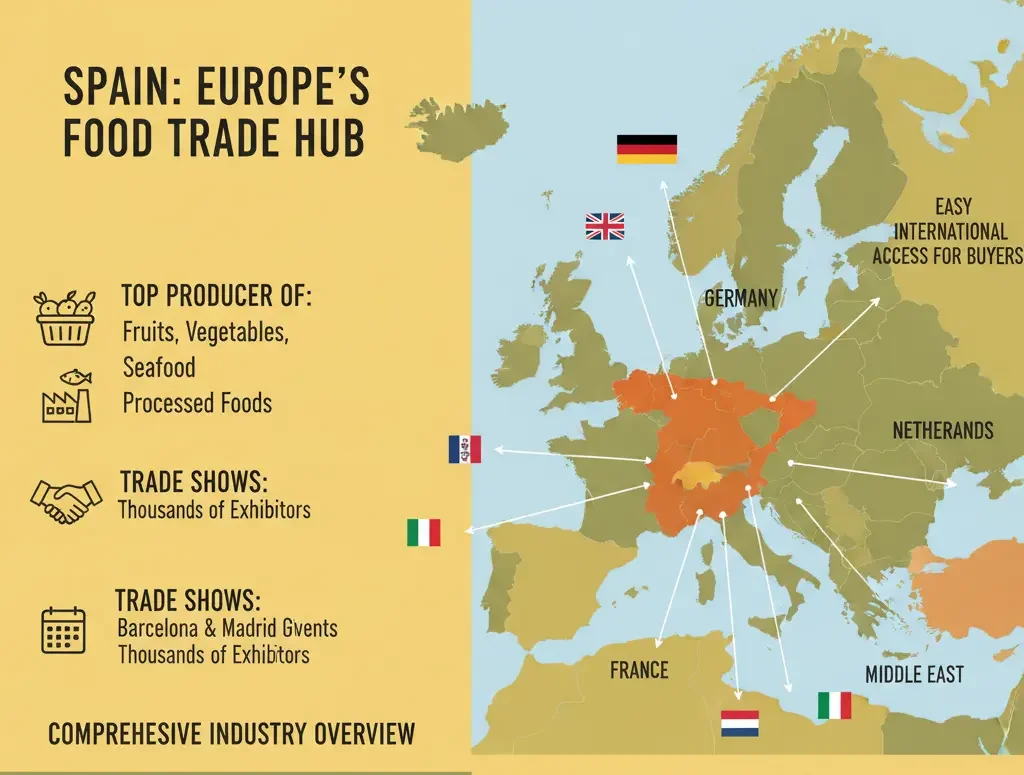
The country’s exhibition venues in Barcelona and Madrid support large, global events with thousands of exhibitors. Spain also benefits from strong international connections, making it easy for buyers from the UK, Germany, France, the Netherlands, Italy and the Middle East to attend.
Spanish trade events cover multiple categories — fresh produce, FMCG, seafood, packaging and food technology — giving retailers a complete view of the industry in one place. Suppliers use these shows to build partnerships, test new ideas and understand what retailers expect for the next buying season.
Alimentaria Barcelona
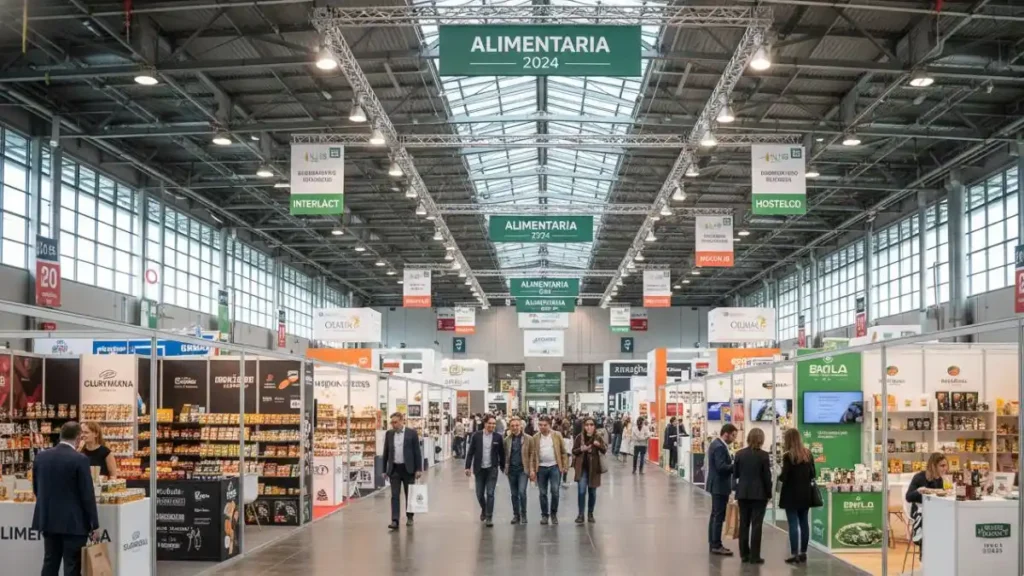
Alimentaria is Spain’s flagship global food and beverage event. It attracts retailers, distributors, manufacturers, importers and food-service buyers from dozens of countries.
Event details:
-
Location: Fira Barcelona, Gran Via Venue
-
City: Barcelona, Spain
-
Timing: Every two years (latest edition: March–April 2024; next in 2026)
-
Audience: Retail buyers, distributors, importers, private-label teams, food-service operators
-
Focus areas: Packaged foods, beverages, dairy, meat, snacks, frozen foods, global suppliers, private label
Retail buyers attend Alimentaria to review new product ranges, identify upcoming trends and evaluate suppliers from Europe, Asia and Latin America. Many supermarket category teams use the show to compare innovation across chilled, ambient and frozen categories.
Suppliers use Alimentaria to present reformulated products, sustainable packaging, convenience formats and export-ready lines. The show is particularly strong for Mediterranean products, Latin American brands and premium categories that are gaining traction in Europe.
Alimentaria acts as an early signal for new food trends. Plant-based innovation, premium convenience meals and healthier snacks often appear here before they spread across European shelves.
Fruit Attraction Madrid
Fruit Attraction is Spain’s main fresh-produce event and one of Europe’s most important trade fairs for fruit and vegetables. It brings together growers, cooperatives, exporters, packaging suppliers and supermarket buying teams.
Event details:
-
Location: IFEMA Madrid
-
City: Madrid, Spain
-
Timing: Annually in October
-
Audience: Supermarket produce buyers, growers, distributors, logistics partners, packaging companies
-
Focus areas: Fresh fruit and vegetables, varietal development, cold-chain, post-harvest technology, packaging
Retailers attend Fruit Attraction to secure supply for winter and spring programs. They meet growers from Murcia, Valencia, Andalusia and across the Mediterranean to understand crop quality, expected volumes and climate impact.
Growers use the show to highlight new varieties, sustainability improvements, irrigation systems and digital traceability tools. Packaging and post-harvest suppliers demonstrate solutions that improve quality and reduce waste.
Because the show takes place in autumn, it plays a major role in shaping supermarket sourcing plans and promotional calendars across Europe.
Seafood Expo Barcelona
Seafood Expo Barcelona is a major international platform for the seafood and aquaculture industry. It brings together fish processors, importers, logistics companies, cold-chain specialists and retail seafood buyers.
Event details:
-
Location: Fira Barcelona, Gran Via Venue
-
City: Barcelona, Spain
-
Timing: Annually in April
-
Audience: Retail seafood buyers, wholesalers, importers, processors, aquaculture companies
-
Focus areas: Fresh and frozen seafood, certifications, traceability, sustainability, cold-chain logistics, value-added products
Retailers use this event to understand supply conditions for salmon, cod, tuna, shrimp, hake and other chilled or frozen species. It is an important time to gather information about pricing, quality, availability and certification standards.
Suppliers showcase responsible sourcing programs, digital tracking systems and new value-added formats such as marinated fillets and ready-to-cook seafood. Packaging and cold-chain companies present solutions that protect freshness and reduce losses.
The event is especially important because seafood is a category where quality and reliability vary widely between suppliers. Retailers depend on trusted partners, and Seafood Expo helps them secure stable relationships.
Hispack (Packaging)
Hispack is Spain’s largest packaging exhibition and a major European reference point for packaging innovation. It covers materials, machinery, automation, sustainability and packaging design for retail, FMCG and logistics.
Event details:
-
Location: Fira Barcelona, Gran Via Venue
-
City: Barcelona, Spain
-
Timing: Every two years (latest edition: May 2024; next in 2027)
-
Audience: Retail buyers, private-label teams, packaging engineers, machinery suppliers, sustainability leads
-
Focus areas: Packaging materials, machinery, automation, recycling, smart labels, shelf-life technologies, logistics efficiency
Retailers attend Hispack to understand recyclable materials, lightweight packaging options and emerging cost-efficient solutions. Many supermarket private-label teams use this event to plan packaging updates linked to new sustainability regulations.
Suppliers showcase new machinery, automation systems, compostable and recyclable formats and enhanced paper or plastic materials. Logistics companies present equipment that improves warehouse efficiency, reduces waste and speeds up packing operations.
Hispack holds extra importance in 2025 because EU packaging rules and recycling targets continue to tighten. Retailers use the event to align strategies with upcoming requirements.
What Each Event Focuses On
Each Spanish trade event plays a different role in the industry.
Alimentaria focuses on the broader food and beverage landscape. It is ideal for retailers reviewing packaged goods, private-label ranges and global innovation across categories.
Fruit Attraction focuses on fresh produce. Retailers attend to secure seasonal supply, understand crop developments and meet growers directly.
Seafood Expo focuses on chilled and frozen seafood. It helps buyers evaluate quality, sustainability and traceability for a high-value category.
Hispack focuses on packaging solutions across the full chain. Packaging managers, sustainability leads and private-label teams use it to plan long-term packaging changes.
Together, these events help supermarkets prepare for the next year’s buying strategies.
Buyer Opportunities
For buyers, Spain’s 2025 trade events offer clear advantages.
Retailers can meet suppliers directly, compare multiple regions and understand real-time supply conditions. This helps them assess quality, pricing, logistics and sustainability.
Trade shows also reveal new ideas. Packaging innovations, reformulated products and new convenience formats help supermarkets refresh categories in response to shopper trends.
These events are efficient for negotiation, because buyers can meet dozens of suppliers in a short period. Many retailers also use them to prepare for annual discussions, check new certifications and plan their promotional calendars.
Trade fairs allow buyers to benchmark themselves against competitors. Retail teams can see what other European supermarkets are launching or prioritising.
Supplier Strategies for Standing Out
Suppliers attending Spanish trade events face strong competition, so clear strategy is essential.
Retailers respond well to suppliers who demonstrate consistent quality, reliable delivery and transparent communication. Showing stable supply during climate challenges is especially important for fresh produce and seafood.
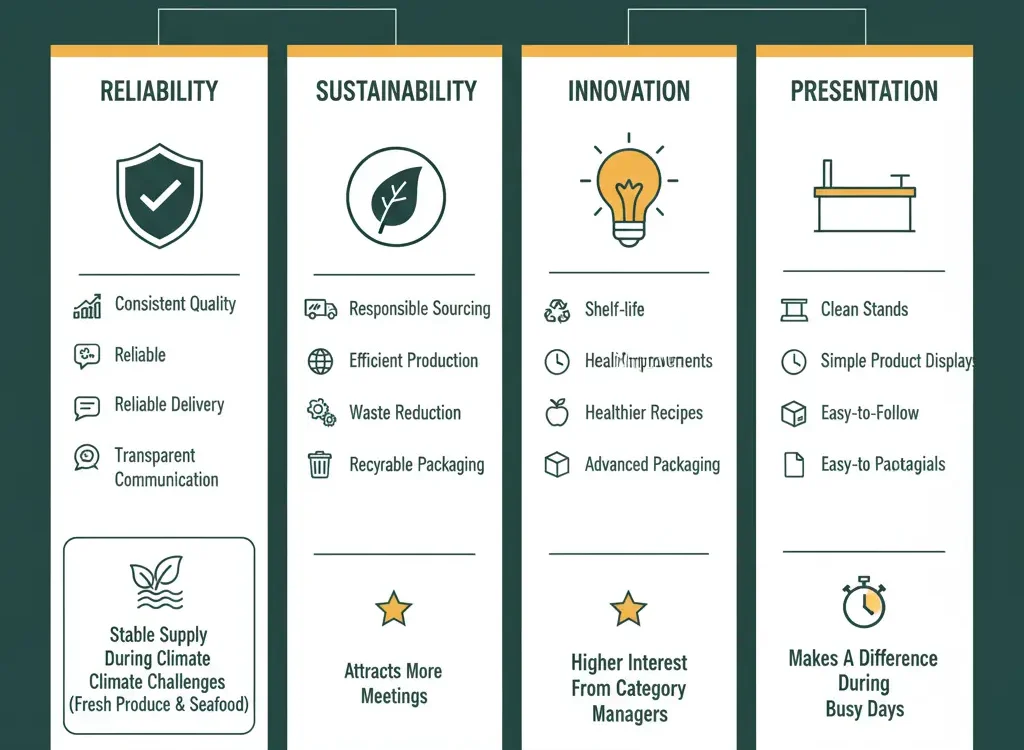
Sustainability matters. Buyers expect suppliers to show responsible sourcing, efficient production, waste reduction and recyclable packaging. Exhibitors with strong sustainability stories attract more meetings.
Innovation is another way to stand out. Suppliers who bring new ideas — such as shelf-life improvements, healthier recipes or advanced packaging — gain higher interest from category managers.
Presentation also matters. Clean stands, simple product displays and easy-to-follow materials make a difference during busy trade-show days.
Trends Seen Across Spanish Trade Shows
Several cross-industry trends appear across all of Spain’s major trade events in 2025.
Sustainability remains the strongest. Retailers want recyclable packaging, cleaner supply chains and lower emissions. Suppliers show new materials, automation solutions and efficient cold-chain models.
Digitalisation continues to grow. Exhibitors highlight AI forecasting tools, automation, traceability, warehouse robotics and real-time monitoring systems.
Premiumisation is rising. Retailers look for high-quality products, strong flavour, provenance and convenience. This trend influences fresh produce, seafood, packaged foods and private label.
Health remains a major theme. Suppliers show natural ingredients, reduced sugar, plant-based options and high-quality proteins.
Regional identity is becoming more important. Products with clear origin and transparent production methods attract buyer attention.
Why Spain’s Trade Events Matter in 2026
Spain’s 2025 trade events will shape retail and supplier strategies for 2026.
Retailers use insights from these shows to build sourcing plans, update private-label lines and evaluate long-term supplier partnerships. Trends observed at these events influence category resets across Europe.
Suppliers who perform well at Spanish events often secure new listings or expand export markets. Strong follow-up after meetings is essential for turning interest into long-term agreements.
Technology trends appearing at Hispack or Seafood Expo — such as new packaging formats or cold-chain tools — often become industry standards the following year.
Spain’s central role in food production and retail innovation ensures that its trade shows remain essential reference points for European supermarket strategies.
Editor’s Note: This article uses publicly available information and general insights about Spain’s 2025 food, fresh produce, seafood and packaging events. No unpublished data or private commercial reports were used. Internal links: Trade Events / Interviews, Fresh Produce, Packaging.