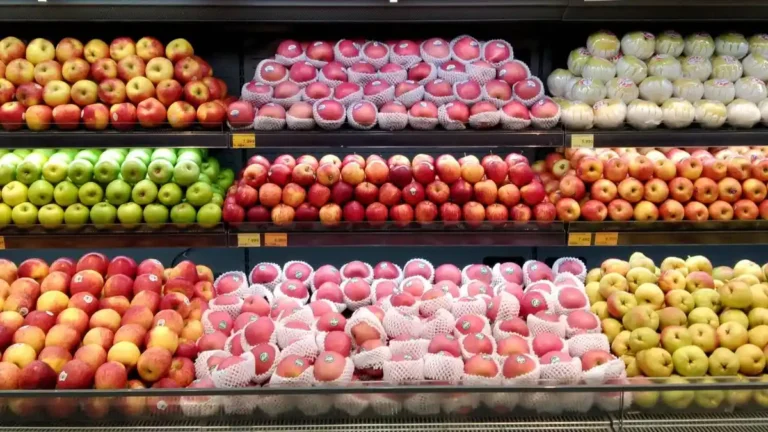

The UK apple market is increasingly split between two very different businesses. On one side are traditional commodity varieties such as Royal Gala, Braeburn and Granny Smith. These still account for most supermarket volumes and much of Britain’s domestic production. On the other are closely managed club brands such as Pink Lady®, Jazz™, Kanzi® and Magic Star®. They use licensing systems, controlled supply chains and premium marketing. This protects margins and supports higher retail prices.
This divide is becoming increasingly important for growers. Recent data from British Apples & Pears Limited (BAPL) shows that the UK needs new orchards each year. Around 369 hectares must be planted annually just to maintain current production.
However, growers are planning to plant only around 144 hectares annually. BAPL’s latest market figures show that British apple and pear sales reached a record 180,506 tonnes in the 2025/26 season. This shows strong supermarket demand even as growers face higher production costs.
The reasons are straightforward. Labour, energy and storage costs are rising. Returns from commodity apples are weak. Together, these pressures make new orchard investment harder to justify. As a result, the British apple industry is entering a period of under-investment that could have long-term implications for domestic supply.
At a glance
- Commodity apples still dominate UK production volumes.
- Club brands continue to gain premium supermarket shelf space.
- Royal Gala accounts for around 30% of UK orchard hectarage.
- More than half of Britain’s dessert apple crop comes from Gala orchards.
- Pink Lady remains a premium retail leader despite limited UK production.
- British growers are planting fewer orchards than required to maintain supply.
- Rising cold-storage costs are putting further pressure on profitability.
Top 10 Apple Brands and Varieties in the UK
| Rank | Brand / Variety | Category | Market Position |
|---|---|---|---|
| 1 | Pink Lady® | Managed Club Brand | Premium retail value leader |
| 2 | Jazz™ | Managed Club Brand | Premium crunch segment leader |
| 3 | Royal Gala | Commodity Variety | Britain’s dominant production apple |
| 4 | Braeburn | Commodity Variety | Major mainstream supermarket apple |
| 5 | Granny Smith | Commodity Variety | Leading green apple category |
| 6 | Kanzi® | Managed Club Brand | Fast-growing premium brand |
| 7 | Bramley | Culinary Variety | UK’s cooking apple leader |
| 8 | Cox’s Orange Pippin | Heritage Variety | Traditional British variety |
| 9 | Magic Star® | Managed Club Brand | Fast-growing premium challenger |
| 10 | Golden Delicious | Commodity Variety | Long-established supermarket staple |
1. Pink Lady® – The Premium Value Monarch
- Category: Managed Club Brand (Cultivar: Cripps Pink)
- IP Manager: Coregeo and Apple and Pear Australia Limited (APAL)
- UK Orchard Footprint: about 2% of UK orchard hectarage.
Pink Lady is arguably the most powerful apple brand in British supermarkets despite limited domestic production.
The variety requires long sunshine hours and warmer growing conditions, making the UK heavily dependent on imports. The brand’s commercial strength comes from strict supply management. Fruit that does not meet colour, size and sugar specifications cannot be sold under the Pink Lady label.
This creates an effective price floor and enables the brand to command a significant premium over standard dessert apples. For retailers, Pink Lady delivers premium positioning and strong consumer recognition. For growers, it demonstrates the commercial power of controlled supply.
2. Jazz™ – Building a Premium Global Franchise
- Category: Managed Club Brand
- Commercial Model: Licensed production and global marketing programme.
Jazz has become one of the UK’s most successful premium apples because of its consistency and year-round availability. The brand’s licensing system provides growers with access to a premium segment that is less exposed to commodity pricing pressures.
3. Royal Gala – Britain’s Volumetric Anchor
- Category: Commodity Open-Source Variety
- UK Orchard Footprint: about 30% of total British orchard area and more than half of domestic dessert apple production.
Royal Gala is the giant of the British apple industry. Its success has also become its greatest challenge. Any grower can plant Gala without paying a licensing fee. As a result, supply has grown significantly over the past two decades.
Combined with supermarket price competition, this has placed enormous pressure on grower margins. New Gala plantings have slowed sharply as production costs continue to rise.
4. Braeburn – The Margin Squeeze Story
- Category: Commodity Open-Source Variety
- IP Manager: None.
- UK Orchard Footprint: One of Britain’s largest commercial apple varieties and a significant part of domestic dessert apple production.
Braeburn remains a major supermarket apple because of its strong storage capability and long selling season.
The variety is widely grown in the UK and is a permanent feature in supermarket fruit aisles. However, Braeburn is facing the same economic pressures as Royal Gala. Rising labour costs, higher energy prices and increasing controlled-atmosphere storage expenses have significantly reduced grower margins.
Because Braeburn operates outside a managed licensing system, growers have little protection from supermarket price competition. For many producers, the variety’s long-term profitability is under growing pressure. This has helped slow new orchard planting.
5. Granny Smith – The Permanent Green Presence
- Category: Commodity Open-Source Variety
- IP Manager: None.
- UK Orchard Footprint: Limited domestic production, with the market heavily dependent on imports.
Granny Smith occupies a unique position in British supermarkets as the dominant green apple variety. Despite the emergence of many premium club brands, no other apple has managed to challenge its position in the tart green segment.
The UK relies heavily on imports from the Southern Hemisphere and continental Europe. This allows retailers to maintain year-round supply. Unlike British-grown commodity apples, Granny Smith is less exposed to the economics of UK orchard investment. However, its dependence on imports means retailers remain exposed to shipping costs, currency fluctuations and global supply chain disruption.
6. Kanzi® – The Shelf Space Winner
- Category: Managed Club Brand.
- IP Manager: GKE NV.
- UK Orchard Footprint: Growing steadily as British growers diversify into premium branded varieties.
Kanzi has become one of the UK’s most successful club apples, securing permanent listings across major supermarket chains and steadily increasing its market presence.
The variety benefits from a tightly managed supply chain, strict quality standards and coordinated international marketing programmes. For growers, Kanzi offers a more attractive economic model than many commodity apples. Its premium position supports stronger prices and greater protection from oversupply.
For retailers, the variety offers differentiation and supports premium produce strategies.
7. Bramley – Britain’s Culinary Institution
- Category: Culinary Variety.
- IP Manager: None.
- UK Orchard Footprint: Significant domestic production concentrated primarily in England.
Bramley occupies a unique position in the British apple industry because it is almost entirely separated from the premium dessert apple market. Demand comes from cooking, baking and food manufacturing rather than snacking trends. This gives the variety a distinct commercial role.
Its strong heritage and specialised use have helped Bramley maintain stable demand despite dramatic changes elsewhere in the apple sector. The variety remains indispensable to supermarkets and food manufacturers serving the British baking market.
8. Cox’s Orange Pippin – Heritage Under Pressure
- Category: Heritage Variety.
- IP Manager: None.
- UK Orchard Footprint: Orchard acreage has declined significantly over the past two decades.
Cox’s Orange Pippin was once one of Britain’s dominant dessert apples and remains one of the country’s most celebrated heritage varieties. However, the apple presents significant commercial challenges.
The variety can be difficult to grow, delivers lower yields than many modern cultivars and is increasingly vulnerable to changing weather patterns. As supermarkets have expanded premium branded ranges and focused on more consistent varieties, Cox has gradually lost shelf space. Nevertheless, it retains strong cultural significance and remains highly valued by consumers seeking traditional British flavours.
9. Magic Star® – The New Premium Challenger
- Category: Managed Club Brand.
- IP Manager: Better3Fruit.
- UK Orchard Footprint: about 2% of UK orchard hectarage and expanding.
Magic Star has emerged as one of the most interesting growth stories in the British apple sector. The variety’s growth shows how quickly managed brands can gain ground. They offer retailers something different and give growers better returns than commodity apples.
Its growing orchard footprint also reflects a broader industry trend, with producers increasingly seeking varieties that deliver stronger margins and greater protection from supermarket price pressure. For retailers, Magic Star provides another premium branded option capable of driving value growth within the produce department.
10. Golden Delicious – The Enduring Utility Variety
- Category: Commodity Open-Source Variety.
- IP Manager: None.
- UK Orchard Footprint: Limited commercial production compared with Gala and Braeburn.
Golden Delicious has largely transitioned from being a leading supermarket apple into an important utility variety. Although its direct retail presence has declined, the variety continues to play an important role in value packs, processing channels and mixed fruit programmes.
Its greatest significance today may be its contribution to modern apple breeding. Golden Delicious has been used extensively as a parent cultivar in the development of many successful modern varieties and club brands grown around the world.
The Great Up-Rooting Crisis
The biggest issue facing the British apple sector is not consumer demand. It is grower confidence. British growers need to plant about 369 hectares of orchards each year to maintain production levels, yet current planting intentions are less than half that amount.
Without increased investment and improved grower returns, domestic production could gradually decline.
The Cold-Storage Energy Trap
Modern apple production depends on controlled-atmosphere storage. Apples harvested in autumn are often stored for up to ten months to provide year-round supermarket supply. Operating these facilities requires substantial energy investment. The rise in electricity costs has significantly increased the financial burden on growers and packhouses.
Club brands are often better positioned to absorb these costs because their premium pricing supports higher returns. Commodity growers have much less protection.
The Retailer Performance Divide
Different retailers have adopted different strategies.
Volume Champions
Retailers such as Aldi and Lidl have expanded promotions of British-grown Gala and Braeburn, helping support domestic volumes.
Premium Brand Leaders
Sainsbury’s, Waitrose and Marks & Spencer dedicate a larger share of shelf space to premium branded apples, using club varieties to strengthen premium positioning and increase average basket value.
What Happens Next?
The future of the British apple sector may depend on whether growers can secure sustainable returns.
Club brands are expected to continue gaining market share because they offer better margin protection and stronger retailer differentiation.
At the same time, under-investment in traditional orchards raises questions about the long-term resilience of British apple production and the future supply of home-grown fruit to the UK’s supermarket sector.
The UK apple market is no longer simply a battle between varieties.
It has become a contest between open-source commodity production and tightly managed intellectual property, with supermarkets, growers and consumers all shaping the outcome.
For the UK fresh produce industry, the challenge will be balancing premium branded apples with the need to maintain a strong domestic growing base. For the UK supermarket sector, securing reliable supplies of British apples while meeting consumer demand for premium branded fruit is likely to become an increasingly important strategic issue over the coming decade.
Ultimately, the future of the UK fresh produce market may depend on whether growers, retailers and policymakers can create an economic environment that encourages new orchard investment and protects the long-term sustainability of British apple production.
Editor’s Note: This feature is based on industry data and market information from British Apples & Pears Limited (BAPL), UK orchard census reports, retailer produce assortments, grower organisation publications, company information from apple brand owners and licensing groups including Coregeo, Apple and Pear Australia Limited (APAL), GKE NV and Better3Fruit, as well as publicly available fresh produce market reports and supermarket category analysis.
Orchard hectarage figures, planting intentions and production trends reflect the latest available British apple industry data at the time of publication. Retail distribution and supermarket positioning may vary by season and individual retailer ranging decisions.