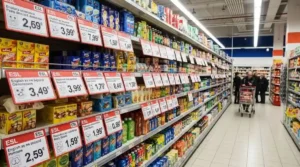

Armenia’s FMCG sector is becoming more commercially structured as supermarket retail expands beyond traditional neighborhood trade into larger, centralized grocery networks.
Chains such as Yerevan City, SAS, Nor Zovq, and Carrefour Armenia are steadily changing how suppliers compete across pricing, shelf positioning, logistics, packaging standards, and inventory management.
That shift is increasing pressure on FMCG manufacturers to improve national distribution coverage, cold-chain efficiency, warehouse operations, and retail execution. At the center of that transition are a small group of companies that now dominate large sections of Armenia’s grocery economy across beverages, confectionery, bottled water, and processed food.
Top FMCG Companies in Armenia At a Glance
| Rank | Company | FY Revenue | Strategic Role |
|---|---|---|---|
| 1 | Coca-Cola HBC Armenia | Private | National beverage distribution leader |
| 2 | Jermuk Group | Private | Dominant mineral water producer |
| 3 | Pepsi-Cola Bottler Armenia | Private | Major soft drink bottling network |
| 4 | Grand Candy | Private | Largest domestic confectionery producer |
| 5 | Natfood | Private | Processed meat and cold-chain supplier |
1. Coca-Cola HBC Armenia
Founded: 1995
Headquarters: Yerevan, Armenia
Coca-Cola HBC Armenia operates one of the largest FMCG distribution systems in the Armenian market.
While the company is primarily associated with carbonated beverages, its commercial importance inside Armenian retail extends much further. The company manages a broad multi-category beverage portfolio that includes juices, sports drinks, energy products, bottled water, and premium beverage distribution.
That wide portfolio gives the business unusually strong leverage inside supermarket procurement negotiations.
Large grocery operators increasingly prefer suppliers capable of handling multiple beverage categories through a single logistics structure. Coca-Cola HBC Armenia benefits directly from that operational advantage.
Its products maintain strong visibility across supermarkets, convenience stores, restaurants, hotels, and wholesale channels throughout Armenia.
The company also plays a major role in retail refrigeration placement and promotional execution. In many Armenian supermarkets, beverage visibility is closely tied to supplier-controlled cooling infrastructure, category agreements, and promotional funding support.
Operationally, Coca-Cola HBC Armenia remains one of the country’s most influential grocery suppliers and regularly ranks among Armenia’s largest taxpayers.
As modern retail continues expanding, suppliers with large-scale warehouse infrastructure and nationwide route-to-market capabilities are likely to strengthen their position further.
2. Jermuk Group
Founded: 1951
Headquarters: Jermuk, Armenia
Jermuk Group remains one of the most commercially important domestic FMCG manufacturers in Armenia.
Water represents a highly competitive grocery category across the Caucasus region, and Jermuk continues to dominate large sections of Armenia’s bottled mineral water market.
Its flagship mineral water products maintain major shelf-space visibility inside both independent stores and organized supermarket chains.
Beyond domestic retail, the company also serves as an important Armenian export business, with products distributed across CIS countries and selected international markets.
That export exposure matters operationally because it pushes the company toward stricter production standards, packaging quality requirements, and international compliance expectations.
Inside Armenian grocery retail, bottled water has become increasingly important as supermarkets continue allocating larger floor space to convenience beverages and premium hydration categories.
Jermuk’s long-established consumer recognition gives retailers a dependable high-volume product line with stable turnover rates.
The company’s market dominance also reflects the growing importance of local FMCG manufacturing inside Armenia’s retail supply chain.
While international brands remain highly visible, Armenian supermarket operators still depend heavily on strong domestic producers capable of supplying national-scale demand consistently.
3. Pepsi-Cola Bottler Armenia
Founded: 1996
Headquarters: Yerevan, Armenia
Pepsi-Cola Bottler Armenia represents one of the most important competitive forces in Armenia’s beverage sector.
Operated locally through Jermuk International LLC, the company maintains direct competition with Coca-Cola HBC Armenia across multiple retail categories.
That rivalry shapes large sections of Armenia’s beverage pricing environment.
Supermarket buyers frequently manage parallel negotiations involving promotional placement, refrigeration access, discount campaigns, and seasonal shelf allocation between the two global beverage systems.
For grocery retailers, balancing those supplier relationships is commercially important because beverage categories remain among the highest-volume traffic drivers inside supermarkets and convenience retail.
Pepsi-Cola Bottler Armenia also benefits from the global recognition of PepsiCo brands while maintaining local bottling operations inside Armenia.
That combination helps reduce import dependency while strengthening retail availability across the country.
The company’s operational relevance is particularly visible in convenience retail and impulse-purchase categories where soft drinks, flavored beverages, and ready-to-drink products continue generating stable consumer demand.
As Armenian supermarkets continue modernizing checkout layouts and chilled beverage sections, suppliers with strong merchandising capabilities are expected to remain highly influential.
4. Grand Candy
Founded: 2000
Headquarters: Yerevan, Armenia
Grand Candy has developed into one of Armenia’s largest domestic food manufacturing businesses by workforce scale and production output.
The company operates across confectionery, bakery products, chocolate, packaged sweets, and broader food manufacturing categories.
One of Grand Candy’s strongest competitive advantages is its dual-distribution structure.
Unlike many FMCG manufacturers that rely entirely on wholesale retail partnerships, Grand Candy combines supermarket distribution with its own branded retail store network.
That gives the business stronger direct visibility into consumer purchasing behavior while also maintaining broad penetration across independent supermarkets and organized grocery chains.
Its large domestic production footprint also reduces dependence on imported confectionery products in several categories.
This matters commercially because Armenian retailers continue facing pricing pressure tied to currency fluctuations, transportation costs, and imported product volatility.
Domestic suppliers capable of maintaining stable local manufacturing are becoming increasingly valuable for supermarket procurement teams trying to protect margins.
Grand Candy also reflects a broader industrial trend taking place inside Armenia’s FMCG ecosystem.
Local manufacturers are investing more heavily in automated production lines, packaging modernization, and retail-ready presentation standards to remain competitive against imported European and regional brands.
5. Natfood
Founded: 1995
Headquarters: Yerevan, Armenia
Natfood has become one of Armenia’s most important processed meat and refrigerated food suppliers.
The company is best known for brands including Biella and Natura and operates large-scale meat processing infrastructure built to European production standards.
Its operations are especially important as Armenian supermarkets continue expanding frozen food, refrigerated grocery, and packaged meat categories.
Cold-chain reliability remains one of the biggest operational challenges across emerging grocery markets.
Maintaining temperature-controlled logistics, refrigerated warehousing, and nationwide distribution consistency requires significantly higher infrastructure investment compared with ambient packaged goods.
Natfood’s production and distribution model therefore gives it a strategic position inside Armenia’s grocery supply chain.
The company’s manufacturing expansion has also benefited from international financing support, including backing connected to the European Bank for Reconstruction and Development.
That level of industrial investment highlights the growing importance of modern food manufacturing inside Armenia’s wider retail economy.
For supermarket operators, strong local meat processors help reduce dependency on imported chilled products while improving delivery speed and shelf replenishment reliability.
Industry Outlook
Armenia’s FMCG sector is entering a more competitive operational phase.
The biggest shift is no longer simple retail expansion. The larger structural change is the modernization of supermarket infrastructure itself.
As organized grocery chains continue investing in centralized procurement systems, warehouse automation, refrigeration upgrades, and category management tools, supplier expectations are changing rapidly.
Retailers increasingly expect:
- Faster replenishment cycles
- Stable nationwide distribution
- Better retail-ready packaging
- Improved inventory visibility
- Stronger cold-chain performance
- Promotional execution consistency
That creates both pressure and opportunity for Armenia’s largest FMCG manufacturers.
Domestic producers that successfully modernize logistics and production systems may strengthen their long-term supermarket relationships.
At the same time, imported FMCG competition from regional and European suppliers is likely to intensify as Armenia’s retail market becomes more structured.
What Happens Next
The next phase of Armenia’s grocery sector will likely focus less on store count growth and more on operational efficiency.
Retailers are increasingly prioritizing centralized distribution, automated inventory management, and supplier reliability as competition inside organized grocery retail increases.
That trend is already influencing wider Armenia FMCG operations, Armenia packaging investment, Armenia supermarket logistics, and Armenia fresh produce supply-chain planning.
As that happens, areas such as Armenia supermarket technology and Armenia cold-chain infrastructure are expected to receive greater investment from both retailers and major suppliers.
Packaging modernization is also becoming more important as beverage producers and food manufacturers upgrade production systems to meet export standards and improve shelf presentation across organized retail.
For suppliers, the market remains relatively small compared with larger Eastern European economies.
But Armenia’s retail infrastructure is becoming more modern, more commercially disciplined, and more attractive for long-term FMCG investment.
Editor’s Note: This report is based on publicly available company information, market visibility, manufacturing scale, supermarket distribution relevance, and operational influence inside Armenia’s grocery sector.
Company revenues remain privately held in many cases because several major Armenian FMCG businesses are privately owned enterprises.